







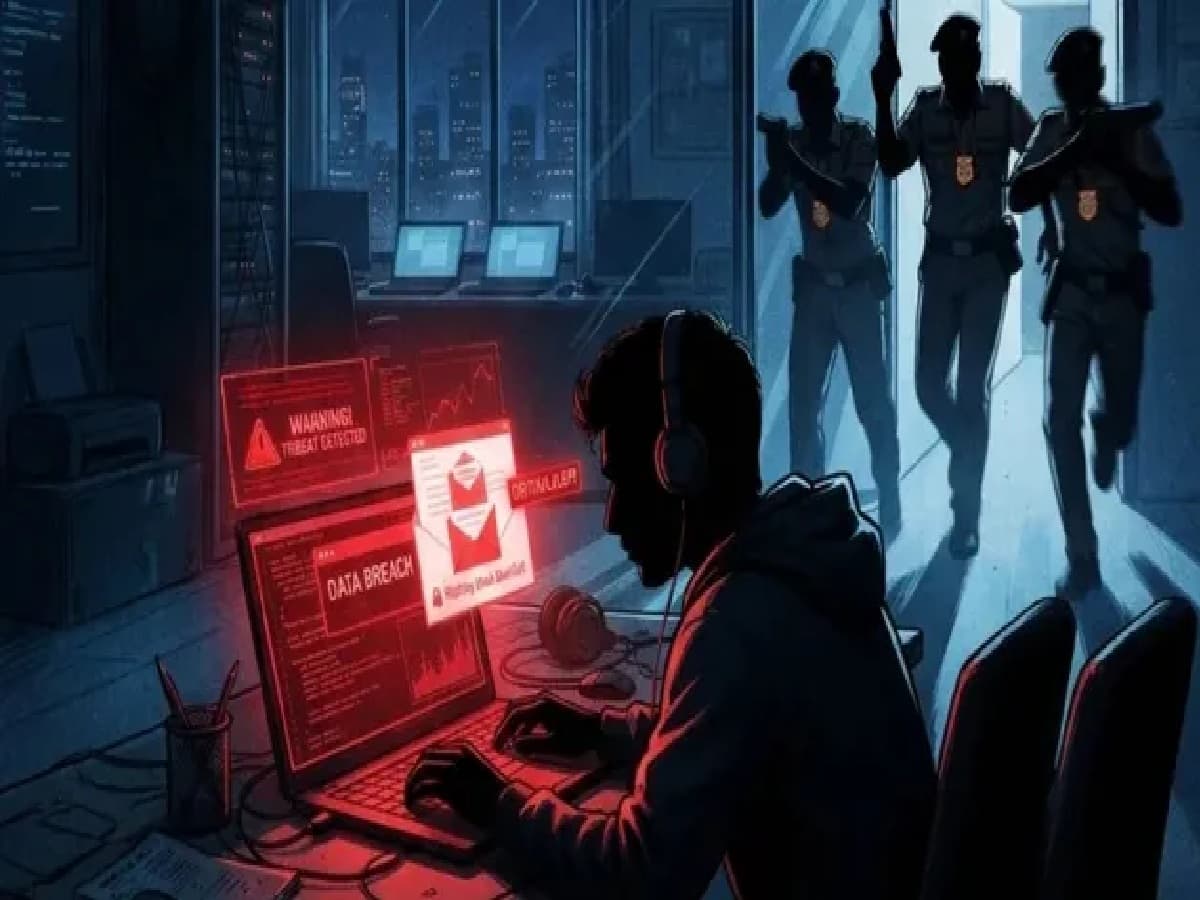
Mumbai Bomb ThreaAts: US-Based Tamil Nadu Techie Behind 1,500 Hoaxes
A sweeping multi-state cybercrime investigation into waves of disruptive bomb-threat emails targeting India's financial capital has zeroed in on two distinct digital trails spanning overseas tech workspaces and underground bulk email-account networks. Highlighted across national security, cyber-investigation, and metropolitan desks on Friday, November 27, 2026, Mumbai Police have linked 28-year-old software engineer Sharath Subramaniam Shankar—a native of Tirunelveli district in Tamil Nadu who worked in the United States—to dozens of hoax bomb threats sent to prominent landmarks across Mumbai, as well as roughly 1,500 fake threat emails dispatched to institutions nationwide over the past two years. Detained by the Tamil Nadu Anti-Terrorism Squad (ATS) at Chennai airport in July 2026 upon returning from the US following intelligence shared by Mumbai investigators, Shankar had masked his identity behind VPNs and layered anonymity tools before a single digital slip—replying to a probing investigator's message from his personal email ID—exposed his real identity. The targeted sites in Mumbai included Brihanmumbai Municipal Corporation (BMC) offices, Metro stations, the Bombay Stock Exchange (BSE)—which received an RDX bomb scare on June 10—various courts, schools, and actor Amitabh Bachchan's bungalow, triggering repeated evacuations, bomb-disposal sweeps, and sniffer-dog checks that all proved to be hoaxes. At the same time, Mumbai Crime Branch's Criminal Intelligence Unit (CIU) and local police are examining a second track involving 24-year-old Ankit Shankhwar of Ghatampur in Kanpur, Uttar Pradesh, arrested by the Uttar Pradesh ATS for allegedly operating a bulk fake email-ID supply racket that sold accounts to overseas buyers—including a Bangladeshi handler—for roughly $50,000 (around ₹47 lakh via USDT transfers routed from countries such as Türkiye and Egypt), with some of those supplied IDs allegedly used to send fresh hoax threats to Mumbai landmarks as recently as November 12, 2026.
Mumbai Hoax Bomb-Threat Investigation: Two Suspects & Digital Trails
To bring together how Mumbai Police traced US-based Tamil Nadu engineer Sharath Subramaniam Shankar across 1,500 suspected hoax emails, the parallel Uttar Pradesh ATS probe into Kanpur suspect Ankit Shankhwar's bulk fake email network and $50,000 foreign crypto trail, and the operational impact of repeated bomb-threat protocols across Mumbai, the tables below organize verified investigative details:
Key Suspects & Parallel Cyber Probes in the Mumbai Threat Cases
| Suspect & Origin | Arresting Agency & Timeline | Alleged Role & Digital Trail |
| Sharath Subramaniam Shankar (28, native of Tirunelveli, Tamil Nadu; US-based software engineer) | Detained by Tamil Nadu ATS at Chennai airport in July 2026 on intelligence shared by Mumbai Police; remains in Tamil Nadu custody while Mumbai Police prepare formal interrogation. | Suspected of sending ~1,500 hoax bomb-threat emails across India over two years—including dozens targeting Mumbai's BMC, Metro, BSE (June 10 RDX threat), courts, schools, and Amitabh Bachchan's bungalow—using VPNs until replying to a police decoy email from his personal email ID. |
| Ankit Shankhwar (24, resident of Ghatampur area, Kanpur, Uttar Pradesh) | Arrested by Uttar Pradesh ATS in Kanpur (late October 2026); role under active verification by Mumbai Crime Branch (CIU) and local Mumbai police. | Allegedly created and sold bulk fake email IDs—including to a Bangladeshi citizen—receiving roughly $50,000 (~₹47 lakh) via USDT linked to contacts in Türkiye and Egypt; initial UP ATS findings linked supplied IDs to November 12, 2026 Mumbai threat mails. |
Targeted Mumbai Landmarks & Standard Emergency Protocol
| Targeted Institution / Site | Security & Civic Response Triggered | Investigation Outcome |
| BMC Offices, BSE & Courts | Immediate building evacuations, perimeter cordons, Bomb Detection and Disposal Squad (BDDS) sweeps, and sniffer-dog checks. | All threats confirmed as hoaxes after exhaustive physical and technical checks. |
| Metro Stations, Schools & Celebrity Residence | Heightened access checks, commuter/student disruptions, and multi-unit police deployment across Mumbai zones. | Highlighted how anonymous mass emails strain emergency responders even when no explosives exist. |
Why Fake Email Suppliers and VPN Anonymity Complicate Cyber Tracing
Cybercrime investigators across Mumbai, Chennai, Kanpur, Lucknow, and New Delhi point out that modern hoax-email campaigns often separate account creation from message dispatch. While technically skilled offenders use commercial VPNs and encrypted relays to mask IP addresses, bulk account vendors like those uncovered in Kanpur allegedly generate thousands of pre-verified email credentials using proxy networks and sell them via spreadsheets for cryptocurrency—requiring close interstate coordination between state ATS units, Mumbai Crime Branch, and international service providers to unmask the real operators.
What Police Agencies Are Examining Next
With Sharath Subramaniam Shankar already under interrogation in Tamil Nadu and Ankit Shankhwar's device records and crypto transactions under scrutiny by UP ATS and Mumbai Crime Branch's CIU, senior officers in Mumbai say custodial questioning will focus on establishing exact motives, checking whether any overlap exists between separate threat waves, and identifying overseas buyers or handlers behind recent hoax campaigns across Mumbai, Chennai, Kanpur, Lucknow, and New Delhi.




