







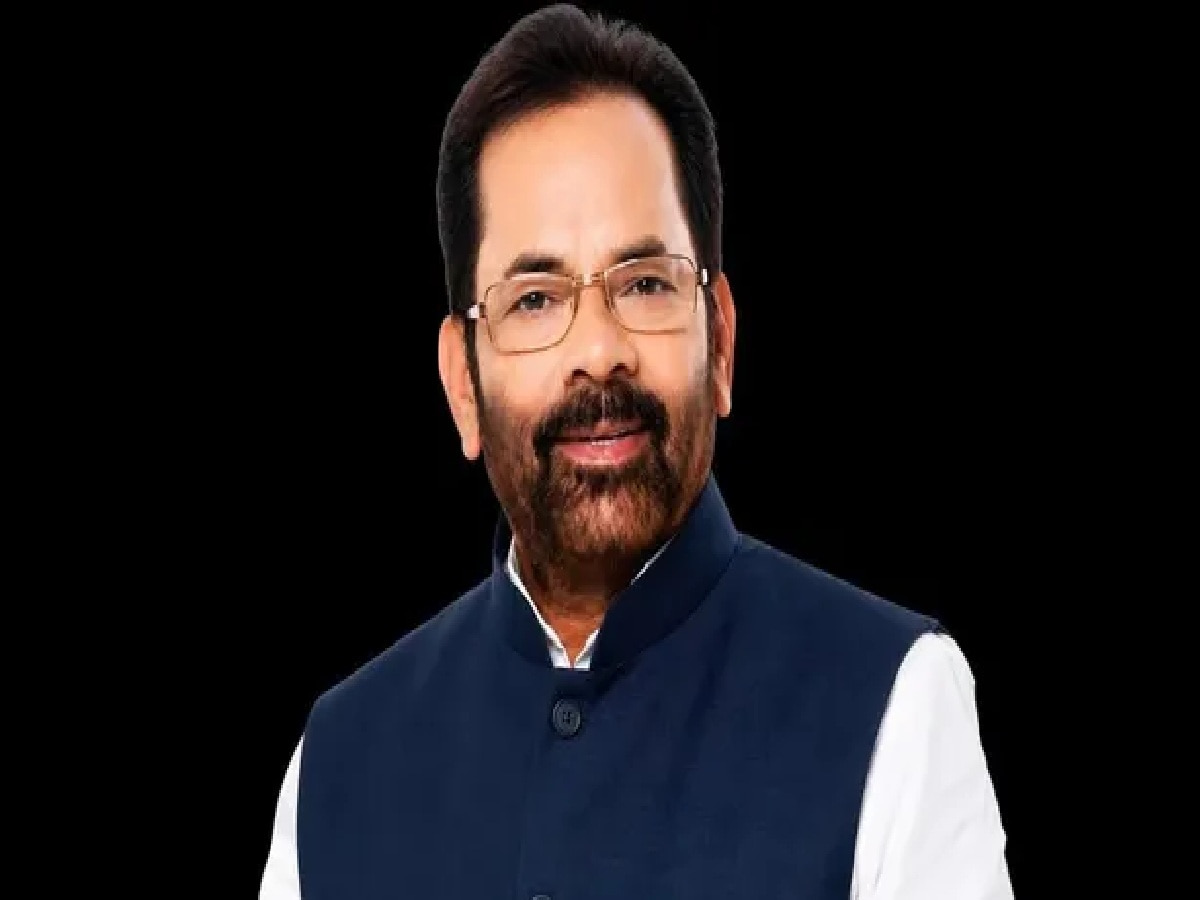
Mukhtar Abbas Naqvi Recounts Jan Sangh to BJP’s 75-Year Rise Under Modi
Reflecting on the historic evolution of India's ruling party, former Union Cabinet Minister Mukhtar Abbas Naqvi detailed the relentless journey of ideological commitment, democratic struggle, and grassroots expansion that transformed the Bharatiya Jana Sangh into the contemporary Bharatiya Janata Party (BJP). Speaking on the party’s foundational ethos, Naqvi underscored that the movement arose in October 1951 anchored in the core philosophies of Integral Humanism, Swadeshi economics, cultural nationalism, a united India, and administrative decentralization. At a time when the political landscape was dominated by a seemingly unassailable Congress monopoly and alternate voices were reduced to a drop in the ocean, the Jan Sangh turned repeated electoral setbacks into stepping stones. Emphasizing that political growth is forged through austerity rather than opportunistic power grabs, Naqvi observed that the movement steadily illuminated the country's democratic arena like a steady lamp, ultimately expanding to govern states representing 78 percent of India's population.
From 1951 Genesis to Defeating the Emergency: The Electoral Crucible of Bharatiya Jana Sangh
The party's electoral journey began modestly in India's inaugural 1952 general elections, where the newly minted Jan Sangh secured three Lok Sabha seats and garnered over 3 percent of the popular vote. Maintaining an upward trajectory through ideological consistency, it expanded to four seats and 6 percent vote share in 1957, climbed to 14 seats and 7 percent in 1962, and registered a significant breakthrough in 1967 by capturing 35 parliamentary seats with a 10 percent vote share. Even during the high-voltage nationalist wave following the 1971 Bangladesh Liberation War, when the ruling Congress dominated the political sphere, the Jan Sangh held its ground with 22 seats and 8 percent of the vote. However, the subsequent concentration of power, bureaucratic corruption, and authoritarian suppression of grassroots agitations—such as the Navnirman movement in Gujarat and the Jayaprakash Narayan-led student uprising in Bihar—culminated in the historic 1975 Allahabad High Court verdict unseating Prime Minister Indira Gandhi for electoral malpractice in Rae Bareli. The subsequent imposition of the 19-month internal Emergency led to the mass incarceration of thousands of political activists, youth leaders, and spiritual figures, eventually paving the way for the historic 1977 merger of the Jan Sangh, Socialist Party, Lok Dal, Congress (Organization), and United Socialist Party into the Janata Party, which decisively dismantled the Congress monopoly across North India.
Rising From the Ashes of 1984: The Atal-Advani Resurgence and Vajpayee Governance
Following the eventual collapse of the Janata Party due to internal factionalism, the founding cadre revived their independent political identity, formally establishing the Bharatiya Janata Party on April 6, 1980, having sat out the January 1980 elections during the transition. Entering the 1984 Lok Sabha contest in the tragic aftermath of Indira Gandhi's assassination, the party was reduced to just two seats despite securing 8 percent of the national vote, prompting political rivals to derisively label the leadership as "Hum Do, Hamare Do" in reference to Atal Bihari Vajpayee and Lal Krishna Advani. Defying political isolation and untouchability, the BJP staged a remarkable resurgence in 1989, expanding its footprint from Kashmir to Kanyakumari with 85 seats and a 12 percent vote share. The party continued its nationwide surge by winning 120 seats (20% vote) in 1991, 161 seats (21% vote) in 1996, and 182 seats with 26 percent vote share in 1998 to form the central government under Atal Bihari Vajpayee. Re-securing 182 seats (24% vote) in 1999, the Vajpayee administration delivered five years of stable governance, followed by periods in the parliamentary opposition after securing 138 seats in 2004 and 116 seats in 2009.
The Modi Era, Ballot Over Bullets: Overcoming Dynastic Entitlement and Street Anarchy
The party entered an unprecedented era of electoral dominance under Prime Minister Narendra Modi, securing a decisive single-party majority of 282 seats (32% vote) in 2014, expanding to an emphatic 303 seats (38% vote) in 2019, and maintaining continuity with 240 seats and a 37 percent vote share in 2024. Pointing out that neither the Jan Sangh nor the BJP ever sponsored anarchy, unconstitutional street protests, or clandestine regime-change operations to capture office, Naqvi contrasted the BJP’s institutional discipline with historical precedents where non-Congress prime ministers like Morarji Desai, Chaudhary Charan Singh, Chandra Shekhar, H.D. Deve Gowda, and I.K. Gujral were systematically destabilized and pulled down. Highlighting that Modi has emerged as the "Global Hero of Ground Zero" through 25 uninterrupted years of executive governance from Gujarat to New Delhi, Naqvi condemned political adversaries who deploy misinformation campaigns—such as the discredited Rafale narratives or theatrical protests at Jantar Mantar—to delegitimize democratic outcomes. Emphasizing that governments in the world's largest democracy are decided strictly by the sovereign power of the ballot rather than the coercion of bullets or manufactured street agitation, Naqvi asserted that the nation will never permit its constitutional republic to be treated as a dynastic playground.




