







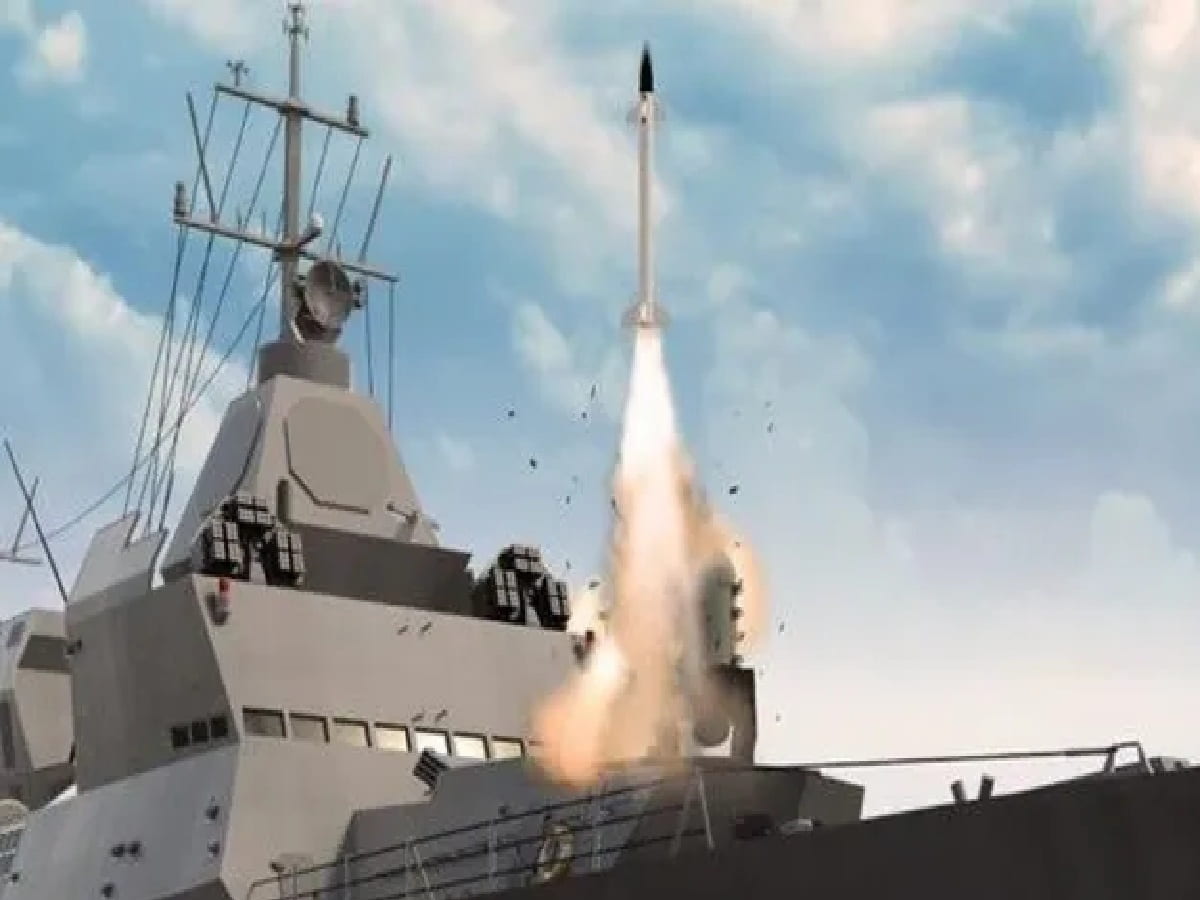
India Signs ₹1,976 Cr Deal with Israel to Upgrade Navy's Barak Missiles
Reinforcing India's multi-layered maritime air-defence shield across the Indo-Pacific and Indian Ocean Region, the Ministry of Defence (MoD) has inked a major ₹1,976.40 crore contract with state-owned Israeli defence giant Israel Aerospace Industries (IAI) to comprehensively modernize the Barak Point Defence Missile System deployed onboard frontline Indian Navy warships. Formally signed in New Delhi on Wednesday, November 18, 2026, in the presence of Defence Secretary Rajesh Kumar Singh, the agreement marks a decisive operational step following the Defence Acquisition Council's (DAC) August 2025 clearance. Concluded under the Ministry's Other Capital Procurement Procedure—the dedicated acquisition framework governing mid-life modernization and life-extension of vital in-service combat systems—the contract encompasses end-to-end hardware and software upgrades alongside systematic obsolescence management. Originally inducted into the Indian Navy beginning in 2000 after the Kargil conflict underscored the urgent need for rapid close-in shipborne anti-missile protection, the Barak-1 surface-to-air missile system safeguards premier naval platforms—including the aircraft carrier INS Vikramaditya, Delhi-class destroyers, and Shivalik- and Brahmaputra-class frigates—against low-flying sea-skimming anti-ship missiles, hostile fighter aircraft, and unmanned aerial vehicles (UAVs). By replacing aging electronic subsystems with modern digital processing and enhanced fire-control features, the upgrade ensures India's surface fleet remains lethal, resilient, and combat-ready while indigenous replacements such as DRDO's Vertical Launch Short Range Surface-to-Air Missile (VL-SRSAM) advance toward full-scale induction. For defence analysts, naval personnel, and readers across New Delhi, Mumbai, Visakhapatnam, Kochi, Karwar, Chennai, Lucknow, Kanpur, and Bengaluru, the agreement highlights the enduring strategic depth of the India–Israel defence partnership.
Inside the ₹1,976.40 Crore Barak Missile Upgrade: Contract Scope and Naval Impact
To clarify the technical scope, procurement route, and operational role of the modernized Barak system aboard Indian Navy warships, the table below summarizes every verified detail from the Ministry of Defence announcement:
| Contract Parameter | Verified Details (November 18, 2026) | Strategic & Operational Significance |
| Contract Value & Signatories | ₹1,976.40 crore contract signed in New Delhi between India's Ministry of Defence (MoD) and Israel Aerospace Industries (IAI) in the presence of Defence Secretary Rajesh Kumar Singh. | Advances the August 2025 Defence Acquisition Council (DAC) approval into active industrial execution. |
| Procurement Category | Concluded under the Other Capital Procurement Procedure. | Streamlines life-extension and modernization of proven operational combat systems rather than buying brand-new platforms. |
| Technical Scope of Work | Comprehensive hardware and software overhaul combined with obsolescence management to replace aging electronic and mechanical components. | Eliminates supply-chain bottlenecks for legacy circuit boards and processors while adding modern anti-air combat features. |
| Naval Role & Warship Platforms | Point Defence Surface-to-Air Missile (SAM) system protecting frontline warships—including INS Vikramaditya, Delhi-class destroyers, and Shivalik- & Brahmaputra-class frigates. | Forms a warship's critical inner air-defence shield against sea-skimming anti-ship missiles, drones, and hostile aircraft. |
Why Obsolescence Management and Point Defence Matter in Modern Naval Warfare
In contemporary maritime conflict—where proliferating anti-ship cruise missiles, loitering munitions, and low-altitude sea-skimming threats compress reaction windows to mere seconds—a warship's point defence system serves as its vital last line of kinetic protection. Unlike area air-defence systems such as the long-range Barak-8 (jointly developed by DRDO and IAI for Kolkata- and Visakhapatnam-class destroyers) that shield an entire naval task force, the Barak-1 system is engineered to intercept incoming threats closing in directly on the host vessel.
Because frontline warships remain in active commission for three to four decades, embedded radar processors, fire-control computers, and electronic assemblies inevitably face component obsolescence. Under the new IAI contract, engineers will systematically replace discontinued subsystems, upgrade real-time signal-processing software, and integrate enhanced target-tracking capabilities—extending the system's operational relevance against next-generation aerial threats.
Bridging Operational Readiness Until Indigenous VL-SRSAM Induction
Strategically, the ₹1,976.40 crore upgrade functions as a crucial capability bridge. While India's Defence Research and Development Organisation (DRDO) is actively progressing with trials and integration of the indigenous Vertical Launch Short Range Surface-to-Air Missile (VL-SRSAM) under the Aatmanirbhar Bharat initiative, upgrading the proven Barak fleet guarantees zero capability gaps at sea during the transition. Together, sustained bilateral modernization with trusted partners like Israel and accelerating indigenous missile development ensure the Indian Navy maintains unchallenged maritime vigilance across vital sea lanes.




