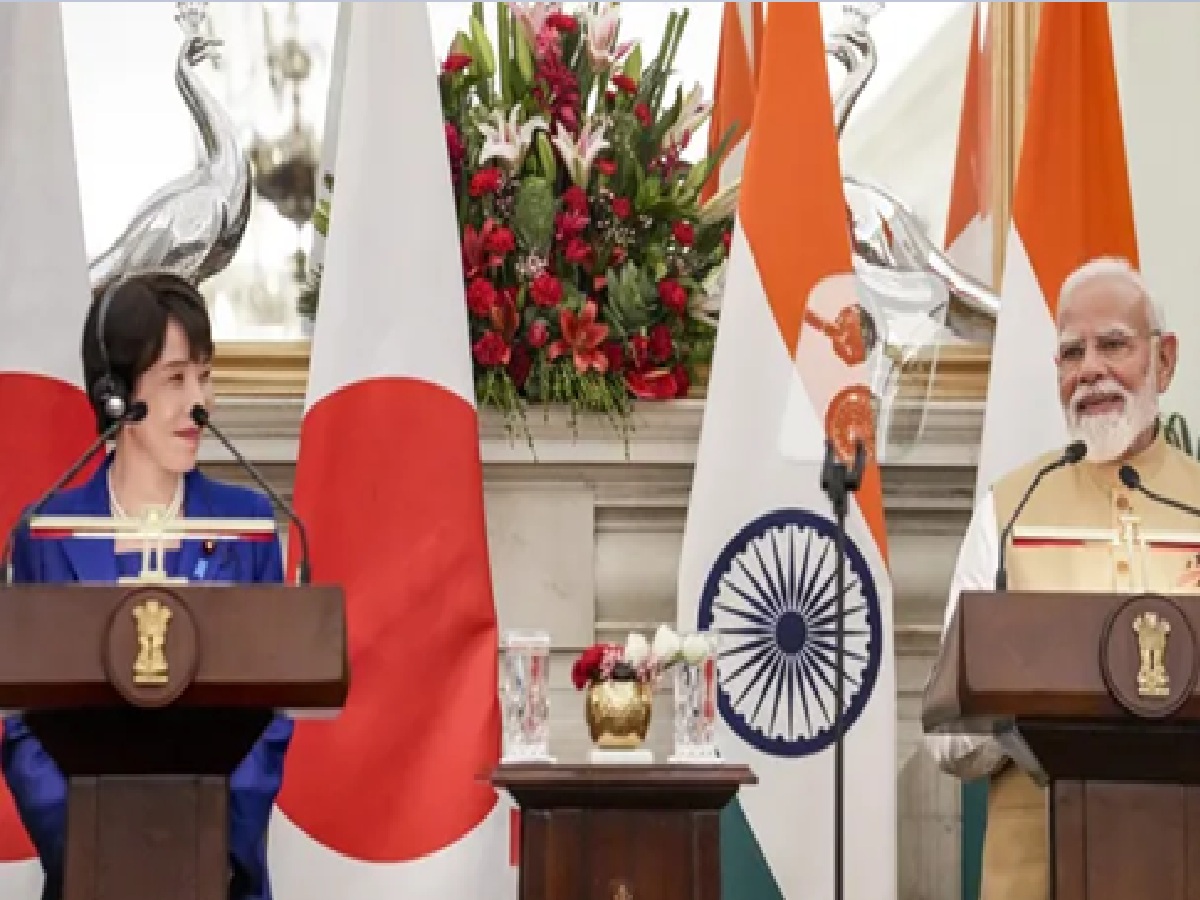
India-Japan Summit: PM Modi and PM Takaichi Forge Strategic Alliance for a Free and Rules-Based Indo-Pacific
In a landmark diplomatic move, Prime Minister Narendra Modi and Japanese Prime Minister Sanae Takaichi concluded their annual summit in New Delhi today, setting an ambitious course for the future of the Indo-Pacific. Amidst shifting global dynamics, the two leaders reaffirmed their shared commitment to a "free, prosperous, and rules-based" maritime order. As the world’s leading democratic and market-driven economies, India and Japan have positioned themselves as the twin pillars of regional stability, pledging to collaborate on everything from advanced technology to defense and energy security.
Tech Synergy: India’s Software Power Meets Japanese Precision
A defining highlight of this year's summit is the intensified focus on technology, particularly in the realm of Artificial Intelligence (AI). With a new joint statement on AI, India’s rapidly growing AI ecosystem is set to merge with Japan’s world-class precision engineering. PM Modi noted that this confluence would provide a massive impetus to global AI development. Beyond software, the two nations signed their first-ever joint defense project: a naval radio antenna system. This initiative marks a new chapter in defense cooperation, signaling a shift toward indigenous co-development under the "Make in India" framework.
Economic Security and the $10 Billion Investment Surge
The economic partnership between the two nations is reaching unprecedented heights. PM Modi highlighted that over 100 new business agreements have been inked in the past year alone, attracting more than $10 billion in Japanese investment to India. Looking toward the future, the two countries have outlined a roadmap to facilitate 10 trillion yen in Japanese investment into India over the next decade. Central to this is a "Joint Roadmap for Economic Security," designed to insulate both nations from global supply chain shocks. This strategy focuses on securing critical strategic sectors, including semiconductors, quantum computing, and advanced materials.
Energy Resilience and Future Mobility
Recognizing the vulnerabilities exposed by the ongoing crisis in West Asia, India and Japan are prioritizing energy security. A major initiative launched today is the India-Japan Biogas project, which aims to establish 1,000 biogas and organic fertilizer plants across Indian villages—a move that promotes both clean energy and rural livelihood. Furthermore, the countries are expanding their cooperation into green hydrogen, nuclear energy, and battery technology. To mirror the historic success of the automotive sector, a new "Next Generation Mobility Partnership" was established, targeting advancements in aviation, shipbuilding, and logistics.
Strategic Defense and the Path Ahead
Japanese Prime Minister Sanae Takaichi underscored the urgency of these ties, noting that the two nations are bracing against the "weaponization of economic issues" and measures that undermine free-market economies. Looking ahead, Takaichi confirmed that the Japan Maritime Self-Defense Force and the Indian Navy will expand joint exercises in the Indian Ocean, with a focus on naval maintenance and repair. As both nations continue to navigate an uncertain geopolitical landscape, they have instructed their respective departments to convene a "2+2" ministerial meeting before the end of the year, ensuring that this strategic alignment remains on a fast track for regional security.