






India Clinched Consensus on 'New Delhi Declaration 2026' at 18th BRICS Summit Before Beijing 2027
Amid persistent friction in West Asia, an ongoing European conflict entering its fourth year, and escalating uncertainty driven by unilateral global trade barriers, Indian diplomacy has delivered a defining masterclass in multilateral statecraft at the 18th BRICS Summit. Chaired by India in the national capital, the two-day high-stakes conference concluded on Sunday with all member states unanimously adopting the landmark "New Delhi Declaration 2026." Echoing the historic consensus achieved during the 2023 G20 New Delhi Summit, Indian negotiators demonstrated strategic patience, institutional equilibrium, and persistent dialogue to unite divergent geopolitical blocs, earning explicit accolades from Russian President Vladimir Putin, Chinese President Xi Jinping, and Iranian President Masoud Pezeshkian, with prominent Chinese state media outlets also praising India’s stewardship.
Bridging Iran-UAE Friction: Marathon Backchannel Diplomacy Delivers Breakthrough
The consensus on the New Delhi Declaration was far from guaranteed. Just months prior in May, deep ideological rifts between Iran and the United Arab Emirates over proposed phrasing on West Asian conflicts had completely stalled joint statements. Acting as a vital diplomatic conduit, External Affairs Minister S. Jaishankar maintained round-the-clock contact with top leadership in Tehran and Abu Dhabi, while Indian sherpas and specialized drafting teams engaged in grueling, all-night negotiation sessions. India resolved the linguistic deadlock by adopting country-agnostic language emphasizing restraint, the protection of civilians and civilian infrastructure, territorial sovereignty, and diplomatic settlements. Furthermore, Indian interlocutors facilitated direct talks between President Pezeshkian and Abu Dhabi Crown Prince Sheikh Khalid bin Mohammed bin Zayed, eliminating longstanding procedural roadblocks.
Counter-Terrorism, Gaza Ceasefire, and Reforming Global Bretton Woods Architecture
The comprehensive final declaration mirrors core geopolitical and economic priorities shared across emerging economies while advancing India's national security interests:
-
Explicit Condemnation of Cross-Border Terror: The summit document reiterated an unyielding, zero-tolerance stance against terrorism in all manifestations, incorporating an explicit mention of the Pahalgam terrorist strike.
-
Middle East Stability and Nuclear Safety: The declaration called for urgent humanitarian relief, an immediate ceasefire, and an enduring two-state framework in Gaza, while voicing acute concern over escalating risks to civilian nuclear facilities.
-
UNSC Restructuring and Local Currency Trade: The bloc united in demanding structural overhauls of legacy global institutions, specifically endorsing permanent seats on the United Nations Security Council for India and Brazil. Leaders also voiced firm opposition to unilateral sanctions, agreeing to scale up cross-border trade settlements in local currencies to insulate their economies from third-party exchange shocks.
Global South Leadership: Modi Champions Shift from Rule-Followers to Rule-Makers
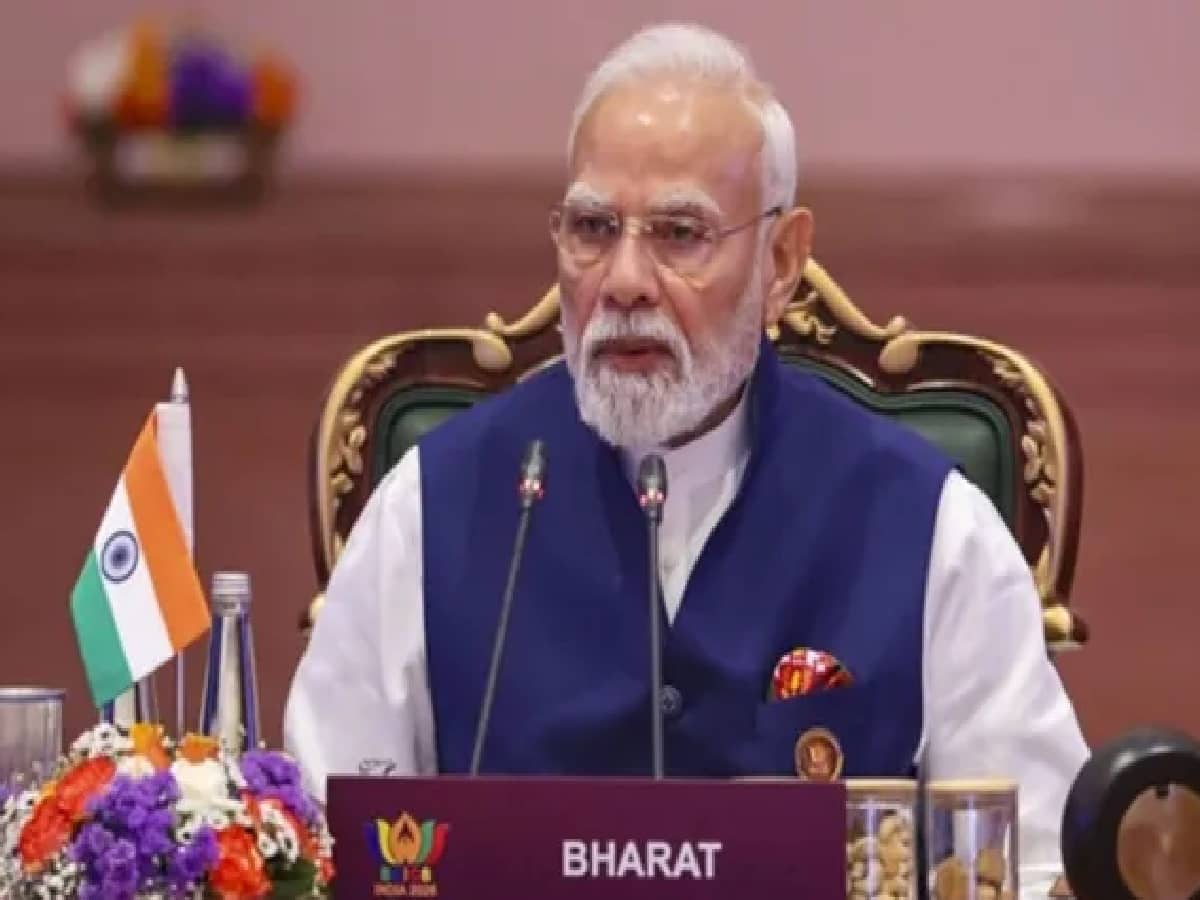
Throughout the plenary discussions, Prime Minister Narendra Modi positioned the strategic interests of the developing world at the heart of the summit. Modi pointed out that while developing countries consistently shoulder the heaviest burden during international disruptions, they remain marginalized when decisions are codified in global corridors. Delivering a blunt critique of status-quo international governance, Modi stated that developing countries must transcend the subordinate role of passive order-followers and actively assume the mantle of global rule-makers. This agenda ensured that Indian priorities—including digital public infrastructure (DPI), democratic AI governance, and resilient critical mineral supply networks—were firmly incorporated into the declaration. Concluding the New Delhi session, India endorsed China’s upcoming 2027 presidency, setting the stage for the next summit in Beijing while institutionalizing a resilient, non-Western multilateral architecture.