







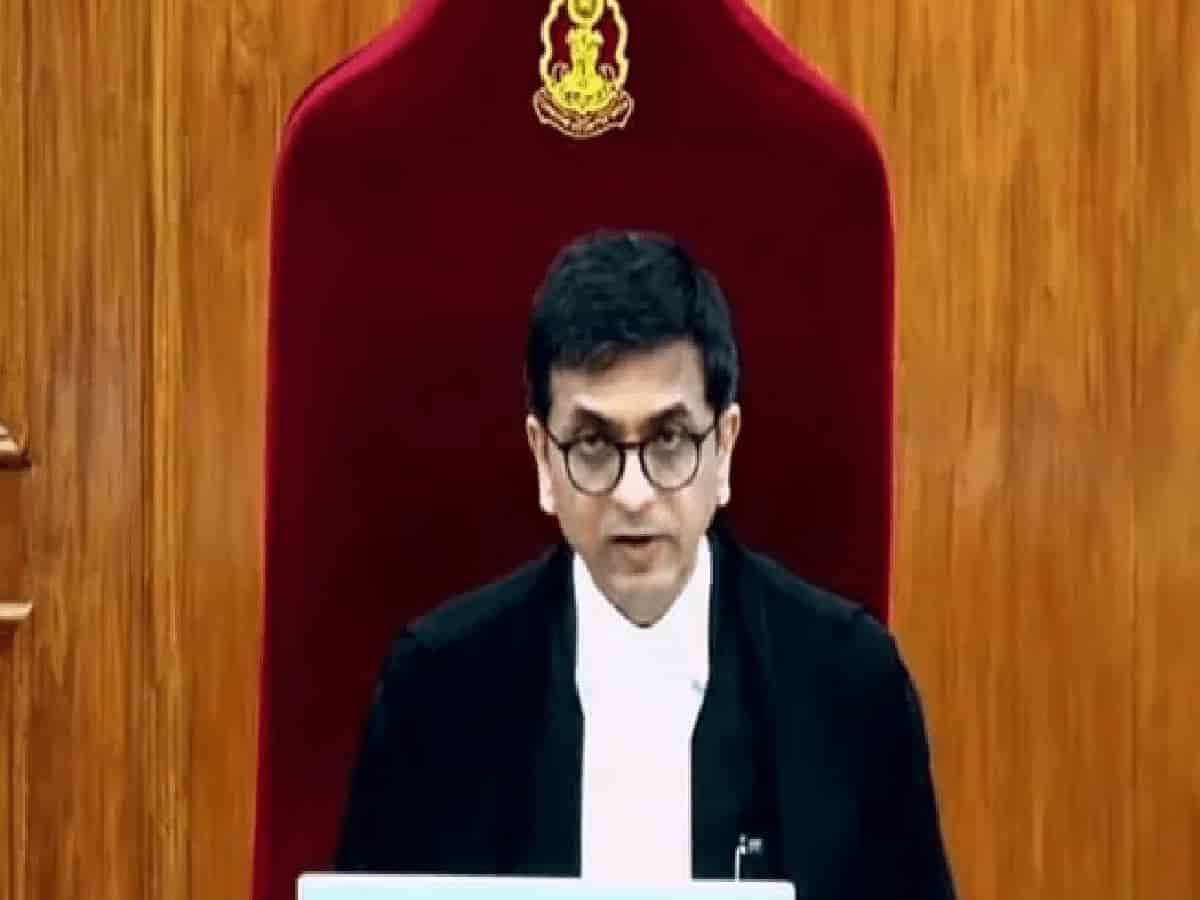
Former SC Judge Sanjay Kishan Kaul Questions Ex-CJI Chandrachud
In a rare public peek into the inner workings of India's highest judicial appointment mechanism, former Supreme Court judge Justice Sanjay Kishan Kaul has raised critical questions regarding the operational style and administrative decisions of former Chief Justice of India (CJI) D.Y. Chandrachud. Set to be published in his forthcoming memoir, 'Without Fear or Favour', Justice Kaul's disclosures allege an excessive inclination toward executive deference, specifically highlighting concerns over informal consultations with the government prior to formal collegium deliberations. The revelations have triggered nationwide legal and political debate regarding institutional independence, prompting opposition leaders to question whether traditional checks and balances within the judicial collegium system were diluted.
The Eleventh-Hour Candidate: Inside the Six-Vacancy Collegium Meeting
Justice Kaul's upcoming memoirs provide a detailed account of behind-the-scenes friction during a crucial Supreme Court Collegium meeting convened to fill six judicial vacancies:
-
Consensus on Five Names: According to Justice Kaul, five judicial appointments had already been thoroughly vetted, agreed upon, and mutually locked in prior to the formal convening of the collegium.
-
The Last-Minute Sixth Name: On the immediate way to the official meeting, Justice Chandrachud reportedly introduced a surprise sixth candidate for consideration, which Justice Kaul firmly rejected, stating he would never accept that specific recommendation.
-
The Pre-Approval Dilemma: Justice Kaul recounts being taken to an adjoining private room where the then-CJI contemplated making a phone call to gauge the central government's opinion before the collegium formally deliberated on the candidacy.
-
Resisting Executive Pre-Vetting: Stressing the core principles of judicial autonomy, Justice Kaul asserted that the collegium must remain insulated from executive preferences, warning that seeking informal pre-approval fundamentally undermines the independence of the constitutional bench.
'Consultation vs Pre-Approval': Institutional Precedents and Strained Ties
Addressing the fundamental distinction between constitutional consultation and prior executive concurrence, the former jurist outlined long-term institutional risks:
-
Erosion of Judicial Autonomy: Justice Kaul noted that while institutional consultation between the judiciary and the executive is a constitutional requirement, seeking what effectively amounted to "pre-approval" prior to internal collegium debates established a compromising institutional precedent.
-
The Burden on Shorter Tenures: While Justice Chandrachud defended the practice as an established convention, Justice Kaul warned that an incumbent CJI blessed with a rare two-year tenure possessed the institutional strength to push back against executive pressure—a luxury future Chief Justices with tenures lasting only months would be unable to sustain.
-
Strained Working Dynamics: Having served together on the Supreme Court Collegium since June 2022 until his retirement in December 2023, Justice Kaul acknowledged that divergent viewpoints over handling relations with the executive placed a measurable strain on their professional relationship.
Political Repercussions: Congress Raises Concern Over Institutional Independence
The revelations quickly crossed into the political sphere, triggering sharp reactions regarding constitutional governance:
-
Congress Flags Judicial Overreach: The Congress party voiced deep concern over the independence of premier democratic institutions under the Narendra Modi-led government, stressing that the judiciary must remain wholly free from ruling-party interference.
-
Jairam Ramesh Cites Manuscript: All India Congress Committee (AICC) General Secretary in charge of Communications Jairam Ramesh highlighted excerpts of the memoir, arguing that the reported softness toward executive approval compromises the foundational role of the Supreme Court as the guardian of the Constitution.
-
Debate on Collegium Reforms: Legal analysts and civil rights advocates point to Justice Kaul's candid reflections as renewed evidence that the opaque nature of collegium deliberations demands transparent, rules-based procedural frameworks to safeguard the judiciary from political influence.




