







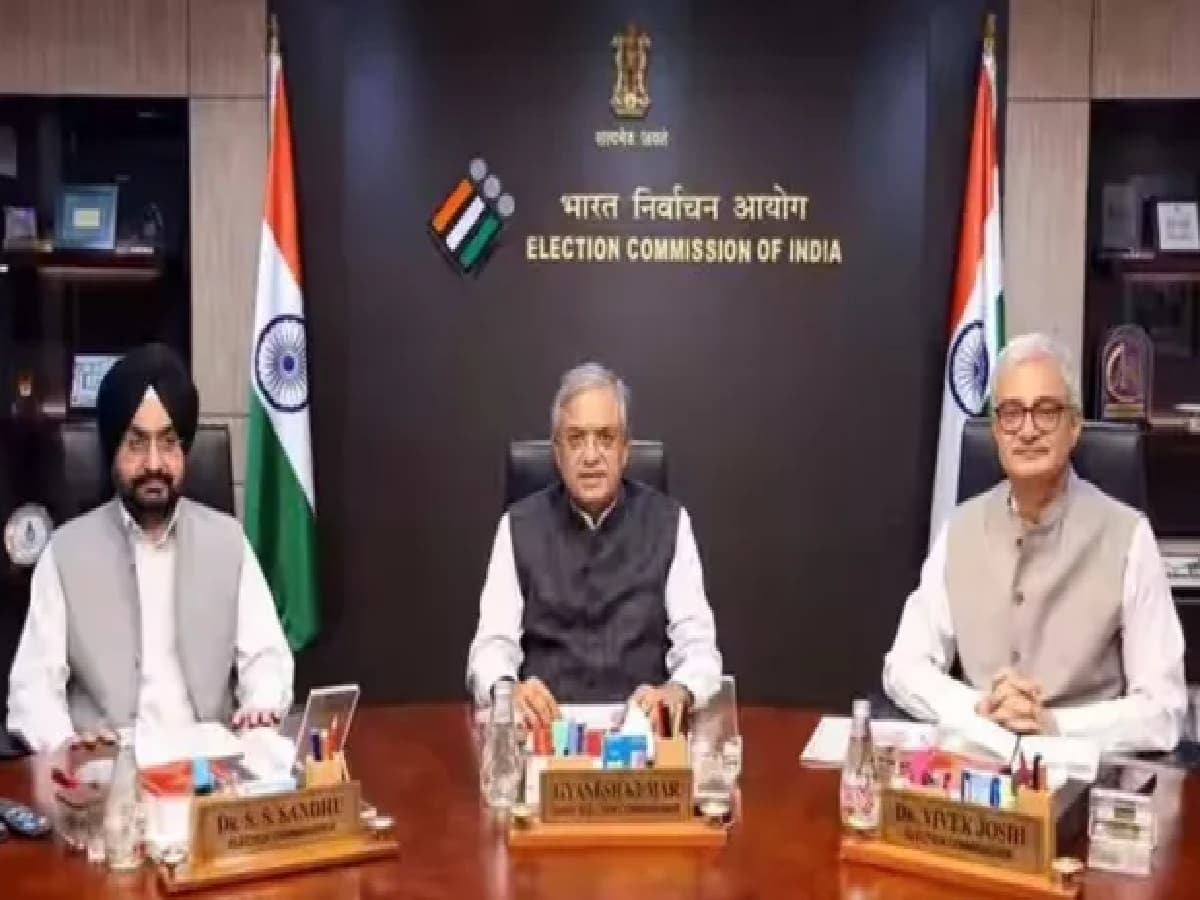
Election Commission Counters Bias Claims in Supreme Court
In a comprehensive counter-affidavit submitted before the Supreme Court of India ahead of its crucial hearing on Tuesday, October 27, 2026, the Election Commission of India (ECI) firmly rejected allegations of unilateral overreach in the Special Intensive Revision (SIR) of electoral rolls, asserting that all institutional decisions governing the nationwide voter list exercise were arrived at unanimously by the full commission. Rebutting claims that Chief Election Commissioner (CEC) Gyanesh Kumar acted independently of fellow commissioners, the poll body clarified that the statutory Form 6—prescribed under the Registration of Electors Rules, 1960, for enrolling new voters—has not undergone any administrative alteration or amendment. The commission explained that the declaration form collected during the ongoing verification drive functions as an entirely separate document designed specifically to match an applicant's legacy credentials with archival voter records, seeking the outright dismissal of petitions that challenged the procedural validity of the revision process.
Unanimity Across the Triumvirate: Section 18 Compliance and Decoupling Internal Notes from Final Orders
Formally placed on record by Deputy Election Commissioner Prakash Yeturu in response to a petition filed by Rakesh Kumar Singh—which the apex court has clubbed alongside a related plea moved by Congress leader Rahul Gandhi and other opposition representatives—the affidavit outlined the rigorous collective procedure governing commission rulings. The submission documented that all foundational orders concerning the SIR, including directives dated June 24, 2025, October 27, 2025, and May 14, 2026, received the unanimous approval of Chief Election Commissioner Gyanesh Kumar and Election Commissioners Sukhbir Singh Sandhu and Vivek Joshi. Addressing media leaks that claimed up to 14 decisions were pushed through despite internal reservations, the ECI explained that internal file notations, preliminary observations, queries, and working comments recorded as files circulate between commissioners do not represent final statutory determinations. Invoking Section 18 of the Chief Election Commissioner and other Election Commissioners (Appointment, Conditions of Service and Term of Office) Act, 2023, the poll panel affirmed that its deliberations strictly follow established statutory procedures where decisions are forged through consensus or determined by majority. Strongly condemning the unauthorized leak of raw internal working files to media outlets, the commission urged the bench to dismiss demands seeking the CEC’s removal, pointing out that Article 324(5) of the Constitution safeguards the office of the CEC with removal procedures identical to those of a Supreme Court judge—a threshold the court recognized when it previously declined to issue an interim stay against the commission's administrative leadership on October 5.
Form 6 Integrity Preserved: Separate Online Interface, Doorstep BLO Verification, and IIT-IISc Audit
Addressing concerns regarding public confusion over voter enrolment documents, the Election Commission emphasized that the Central Government alone holds statutory authority to amend Form 6 under the Registration of Electors Rules, 1960. To resolve any perceptual ambiguity caused by the previous digital display layout during the online application process, the commission confirmed that starting October 21, 2026, the standard Form 6 and the supplementary SIR declaration have been separated into distinct modules across its digital portals. Crucially, the poll body assured the apex court that electors whose names are missing from legacy registers will not be routinely subjected to intimidating physical summons; instead, Booth-Level Officers (BLOs) are mandated to conduct door-to-door visits to verify records, collect requisite documentation, and upload entries directly onto the specialized ECINET platform. Personal hearings before an Electoral Registration Officer (ERO) will remain confined exclusively to exceptional circumstances, and no deletion or inclusion of a voter can occur without a formal reasoned order issued by a competent ERO. Reinforcing the technological integrity and transparency of the digital rollout, the commission confirmed that an independent expert panel comprising scholars from the Indian Institute of Technology (IIT) Madras and the Indian Institute of Science (IISc), Bengaluru, has been actively deployed to conduct an exhaustive technical review of the ECINET infrastructure.




