







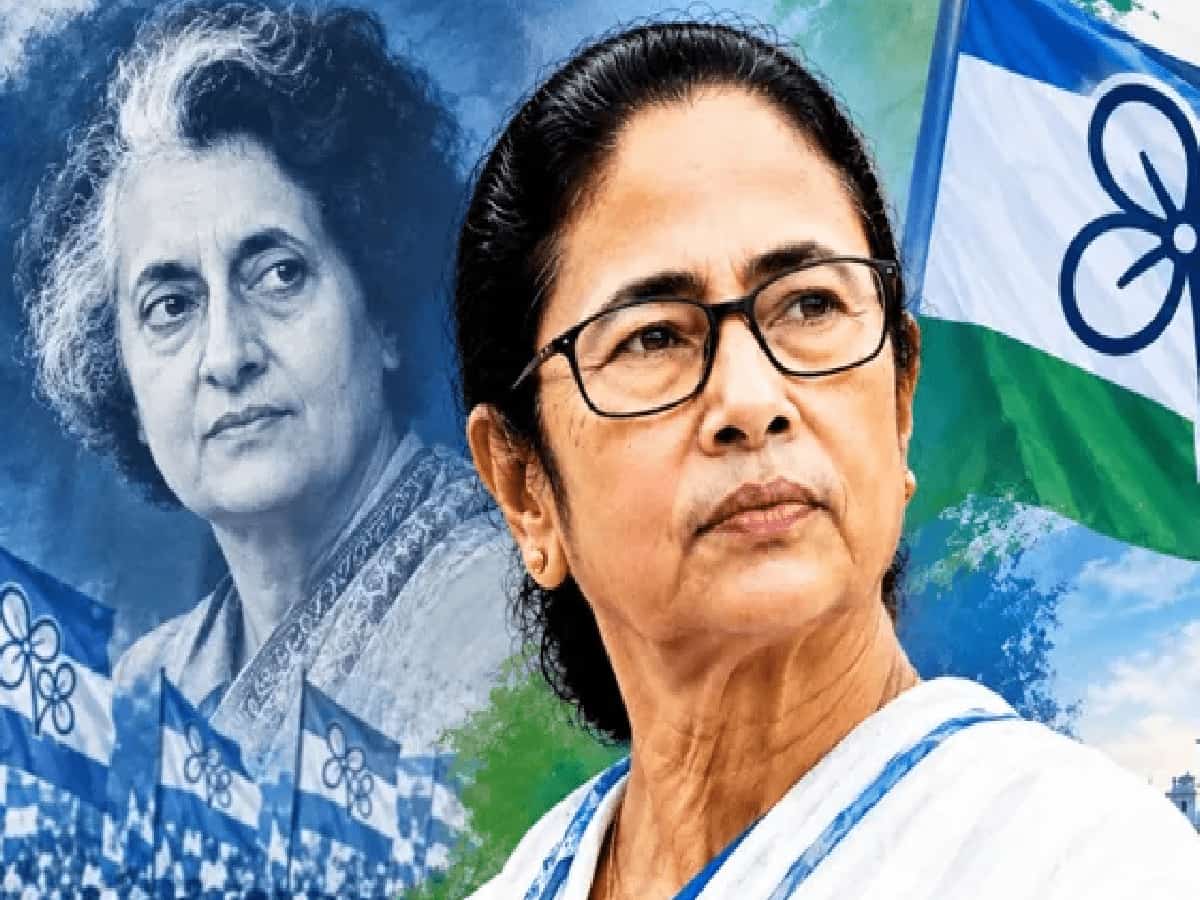
EC Freezes TMC Symbol: Mamata’s Crisis Mirrors 1969 Indira Battle
In an unprecedented political upheaval rocking West Bengal, the Election Commission of India (ECI) has provisionally frozen the iconic party name "All India Trinamool Congress" alongside its historic election symbol, the "Jora Ghas Phool" (Pair of Grass Flowers). Hand-drawn personally by party supremo Mamata Banerjee when she broke away from the Indian National Congress in 1998, the emblem—depicting two blossoms emerging from a single root to signify grassroots unity—had served as the visual identity of Trinamool for 28 years. Invoking Paragraph 15 of the Election Symbols (Reservation and Allotment) Order, 1968, the poll panel suspended the usage of both the title and the emblem amid competing claims of legitimacy filed by two rival camps, barring either side from using the original credentials until a definitive adjudication determines the authentic faction.
Interim Allotments for October 6 Bypolls: Football Player vs. Envelope Symbols
With high-stakes assembly by-elections approaching on October 6 across Nandigram and Rajnagar, both contending factions submitted their provisional preferences to Nirvachan Sadan via late-night digital filings. Acting swiftly on the parallel submissions, the Election Commission allocated interim identities to ensure ballot participation. Mamata Banerjee’s camp has been officially recognized for the upcoming contests under the nomenclature "Mamata All India Trinamool Congress," receiving the "Football Player" poll symbol. Concurrently, the breakaway front orchestrated by Arup Roy and Ritabrata Banerjee has been granted the identity "Democratic Trinamool Congress" and will contest under the "Envelope" symbol, setting up a direct confrontation in the poll arena.
The 1969 Indira Gandhi Precedent: Majority Strength Under Paragraph 15 Scrutiny
The unfolding legal and administrative dispute draws immediate historic parallels to the seismic 1969 Indian National Congress vertical split involving then-Prime Minister Indira Gandhi and the Congress (Organisation) Syndicate. When evaluating rival claims under Paragraph 15 of the 1968 Symbols Order, the Election Commission historically applies a three-pronged test evaluating the party's fundamental aims, its formal internal constitution, and numeric organizational majority. During the 1969 dispute, the first two legal tests proved inconclusive, prompting the Commission to award the original party status to Indira Gandhi's faction in January 1971 based purely on verified majority strength among elected Members of Parliament, state legislators, and All India Congress Committee delegates—a framework subsequently validated by the Supreme Court of India.
Internal Revolt Fractures Trinamool After 28 Years of Absolute Command
The regulatory freeze follows the deepest internal rebellion in Trinamool Congress's 28-year history, which surfaced publicly after 58 rebel MLAs defied party whips to elevate expelled leader Ritabrata Banerjee as the Leader of the Opposition, overriding Mamata Banerjee's nominee Sovandeb Chattopadhyay. The regional crisis intensified rapidly when 20 Lok Sabha parliamentarians, spearheaded by senior leader Kakoli Ghosh Dastidar, broke ranks to align with the NCPI. With the poll authority initiating formal evidence-gathering to ascertain which group commands decisive backing across legislative, parliamentary, and state-level organizational bodies, the upcoming administrative resolution will decisively redefine West Bengal's political landscape.