Demographic Shifts: Centre Asks States for 15-Year Religious Data
In a significant nationwide policy exercise, the High-Level Committee on Demographic Changes, constituted under the Union Ministry of Home Affairs (MHA), has directed all states and union territories to submit detailed, time-sequenced data tracing changes in religious demographics over the past 15 years. The directive mandates a focused assessment of demographic trends across sensitive border belts, major industrial hubs, and general administrative districts, alongside specific inquiries into the shifting religious composition of tribal communities since 2011. Chaired by retired High Court Judge Justice Prakash Prabhakar Navlekar, the panel was established following Prime Minister Narendra Modi's announcement of the High-Powered Demographic Mission on August 15, 2025. Through a formal communication, the committee instructed state administrations to compile time-sequenced records from existing district-level archives and share administrative assessments regarding long-term structural shifts in regional population dynamics.
Granular Parameters: Birth Registrations, Identity Documentation, and Land Alienation
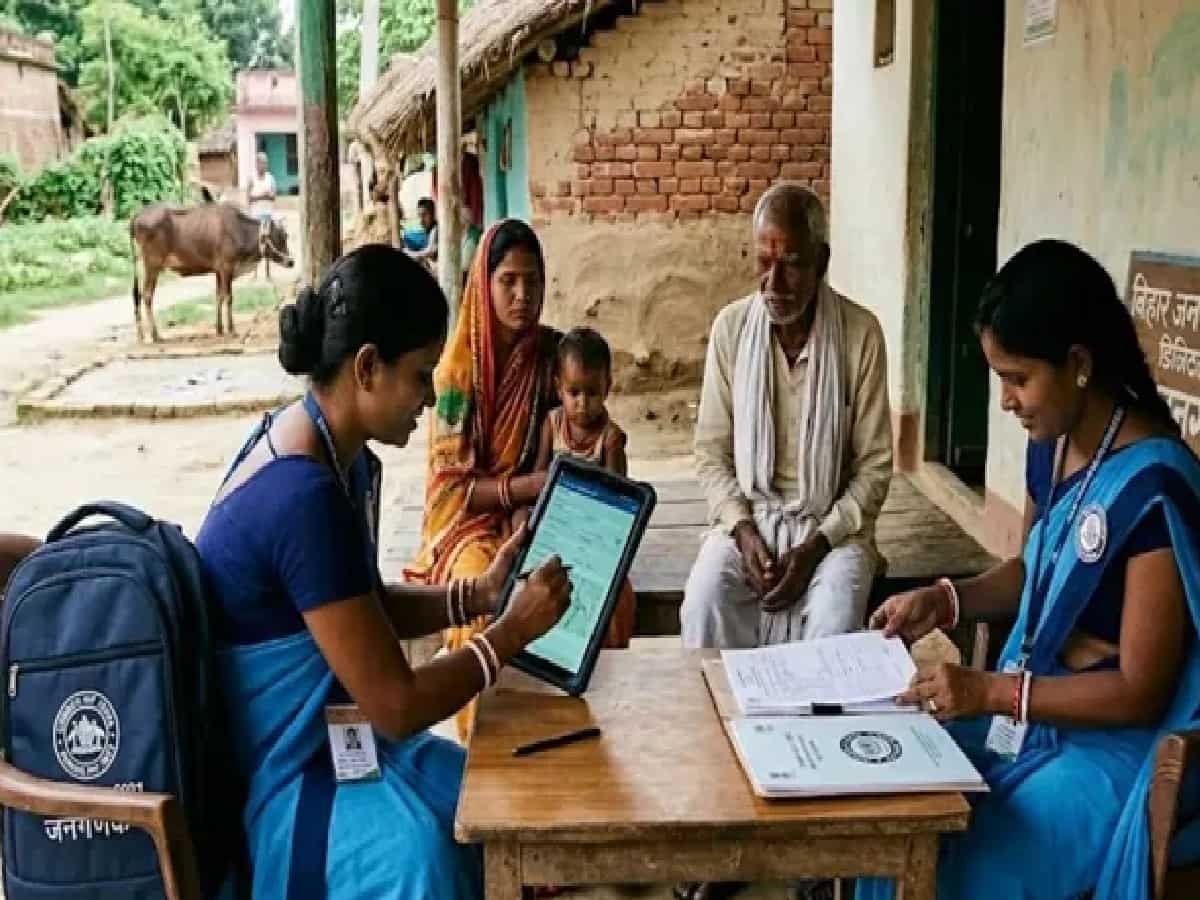
The mandate requires states and union territories to supply granular, district-wise, and community-stratified data on vital statistics, covering all registered births over the last 15 years. Authorities have been specifically asked to document institutional versus non-institutional deliveries, registrations submitted past the statutory 21-day window, and any flagged cases of suspected documentation fraud. Beyond vital statistics, the committee has sought comprehensive field reports on local administrative surveys covering places of worship such as temples, mosques, and churches, alongside sudden spikes or anomalies observed in the issuance and enrolment of foundational identity credentials, voter identity cards, or public distribution ration cards. The investigative net further extends to transport records, asking departments to evaluate vehicle registration patterns, unexpected surges in commercial permits within border belts, evolving property transfer patterns in tribal tracts, unauthorized occupation of indigenous lands, and the proliferation of government-aided, private, or faith-based educational institutions established in tribal geographies over the last decade and a half.
Implementation Challenges and Ground Tours: States Flag Absence of Religion-Linked Metrics
As regional administrations begin reviewing the directive, several state secretariats have voiced practical hurdles in extracting retrospective data along religious lines, noting that many public utilities, property registries, and commercial transport databases do not capture community affiliations as standard data fields. Addressing these concerns, high-level central sources indicated that the exercise is currently in an exploratory stage and state administrations will not be forced to reconstruct figures where statutory records do not natively collect religious parameters, adding that alternative statistical modeling and field sampling methodologies may be adopted to gauge regional population trends. Furthermore, in an official communication to Union Home Minister Amit Shah, the high-level committee affirmed that its members will embark on direct field visits across various states and union territories to cross-reference ground realities with administrative reports, while coordinating with key central ministries to synthesize findings on long-term demographic transformations.