







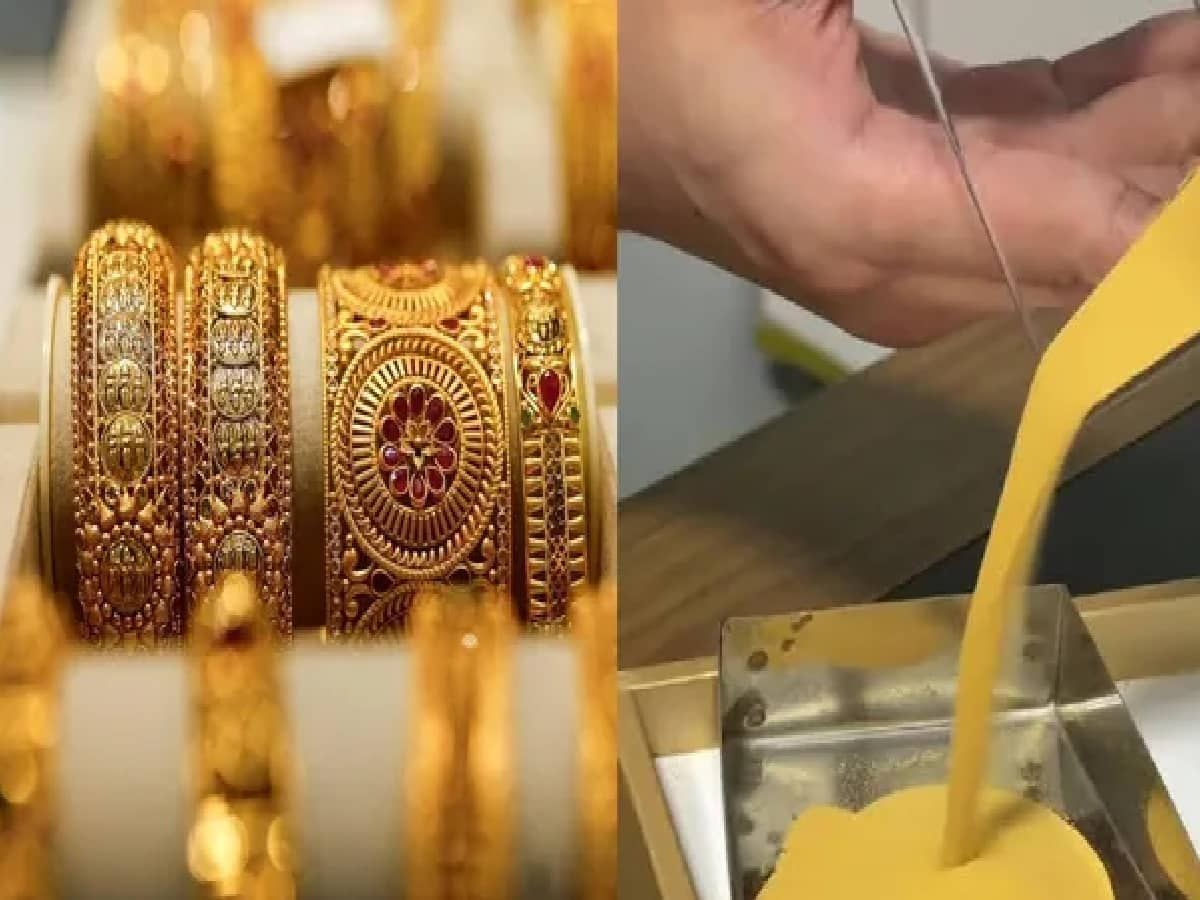
Chinese Rhenium Powder Mixed in Gold Passes 24K Purity & Hallmarking
Just as India's peak wedding season drives millions of households into bullion showrooms, an alarming gold adulteration racket has come to light, raising serious questions about the reliability of routine purity testing machines and hallmarking centres across the country. Investigative findings from Rajasthan—corroborated by trade circles in Maharashtra and West Bengal—reveal that fine rhenium powder, allegedly manufactured in China and distributed through agents in several Indian cities, is being melted and blended with pure gold to artificially inflate its weight without triggering alarms on standard testing equipment. According to disclosures tied to a Shenzhen-based supplier and a Mumbai dealer who supplied a one-gram sample for ₹5,000, this heavy metallic powder can be mixed into gold in substantial proportions while completely evading conventional touchstone, acid, and standard showroom X-ray checks. In a controlled test conducted with a jeweller in Jodhpur, 1 gram of rhenium powder was alloyed with 7.83 grams of 24-carat gold, yielding an 8.83-gram lump that standard testing machines erroneously certified as 24-carat pure gold. Even more troubling, when additional alloying metal was added to craft a 9.580-gram ornament intended for retail sale, a hallmarking centre stamped it with a 22-carat (22K916) hallmark, and a showroom machine read 93.70% gold—despite the ornament's actual gold content standing at just 81.73%, roughly equivalent to 20-carat purity. Compounding consumer anxiety, a draft audit report by the Comptroller and Auditor General (CAG) recently flagged severe regulatory gaps, revealing that 81 percent of registered jewellers across India were not inspected during the 2024–25 fiscal year. For gold buyers, families, jewellers, and market regulators across New Delhi, Mumbai, Jaipur, Jodhpur, Lucknow, Kanpur, Varanasi, Kolkata, Chennai, Ahmedabad, and Bengaluru, understanding how rhenium masks its presence and how to safeguard hard-earned savings has never been more urgent.
How Chinese Rhenium Powder Fools Standard Purity Machines and Hallmarking
To understand why rhenium—a rare, silvery-grey transition metal—has become the adulterator's tool of choice, metallurgists point to its deceptive physical and spectroscopic properties. The table below breaks down how the Jodhpur experiment exposed the flaw and why routine testing instruments struggle to spot rhenium:
| Testing / Adulteration Stage | Verified Findings & Technical Parameters (November 2026) | Impact on Gold Buyers & Hallmarking Integrity |
| Supply Chain & Cost Arbitrage | Shenzhen-based agent claimed dealers operate in multiple Indian cities (suspected entry via Maharashtra & West Bengal); 1g sample sourced in Mumbai for ₹5,000. | While rhenium is rare globally, its per-gram price remains far below prevailing 24K gold rates in India, creating huge illicit margins for fraudsters. |
| 24-Carat Mixture Test (Jodhpur) | 1g rhenium powder + 7.83g 24K gold = 8.83g alloy; standard testing equipment identified the blended 8.83g bar as 24-carat gold. | Because rhenium's density (~21.02 g/cm³) is slightly higher than gold's (19.32 g/cm³), simple weight and hydrostatic density checks fail to flag an anomaly. |
| 22-Carat Jewellery & HUID Stamp | Alloyed further into a 9.580g ornament; a hallmarking centre issued a 22K916 hallmark, and a showroom machine showed 93.70% gold without detecting rhenium. | Actual gold content was only 81.73% (~20-carat purity)—meaning consumers pay full 22K prices while losing nearly 10% of the gold value. |
| Why Standard XRF Machines Miss It | In lower-resolution X-ray fluorescence (XRF) detectors, rhenium's spectral L-lines overlap closely with gold's energy peaks, causing software to merge rhenium into the gold reading. | Detecting rhenium reliably requires high-resolution calibrated XRF spectroscopy, electron microscopy, or destructive fire-assay testing. |
CAG Audit Flags Oversight Gaps as 81% of Registered Jewellers Go Uninspected
The rhenium revelation lands alongside sobering regulatory findings from the Comptroller and Auditor General (CAG). According to a draft CAG audit covering the 2024–25 financial year, 81 percent of BIS-registered jewellers went completely uninspected, while the Bureau of Indian Standards (BIS) also fell short of its targeted inspections of Assaying and Hallmarking Centres by 43.7 percent. Industry analysts warn that without frequent market surveillance, surprise sample lifting, and mandatory upgrades to high-resolution spectrometer calibration across hallmarking labs, sophisticated heavy-metal adulterants could erode public trust in the Hallmark Unique Identification (HUID) ecosystem.
Essential Precautions Every Gold Buyer Should Take Before Purchasing Jewellery
Metallurgical experts and consumer protection advocates advise buyers not to panic, noting that not all testing labs or reputable showrooms are vulnerable, provided strict buying discipline is followed:
-
Buy Only From Established, Reputable Jewellers: Purchase bullion and ornaments from trusted, long-standing merchants with transparent buyback policies and verifiable supply chains.
-
Verify All Three BIS Hallmark Elements: Ensure every piece bears the BIS logo, the purity grade (such as 22K916), and a valid 6-digit alphanumeric HUID code, which you can verify instantly on the BIS Care mobile app.
-
Always Collect a Proper GST Tax Invoice: Insist on a computer-generated GST bill clearly itemizing net gold weight, caratage, making charges, and HUID numbers—never settle for rough estimates or cash slips.
-
Request High-Resolution Testing When in Doubt: If you suspect an ornament's authenticity, have it evaluated at a BIS-recognized Assaying and Hallmarking Centre equipped with high-resolution spectroscopic analysis or accredited laboratory testing.




