







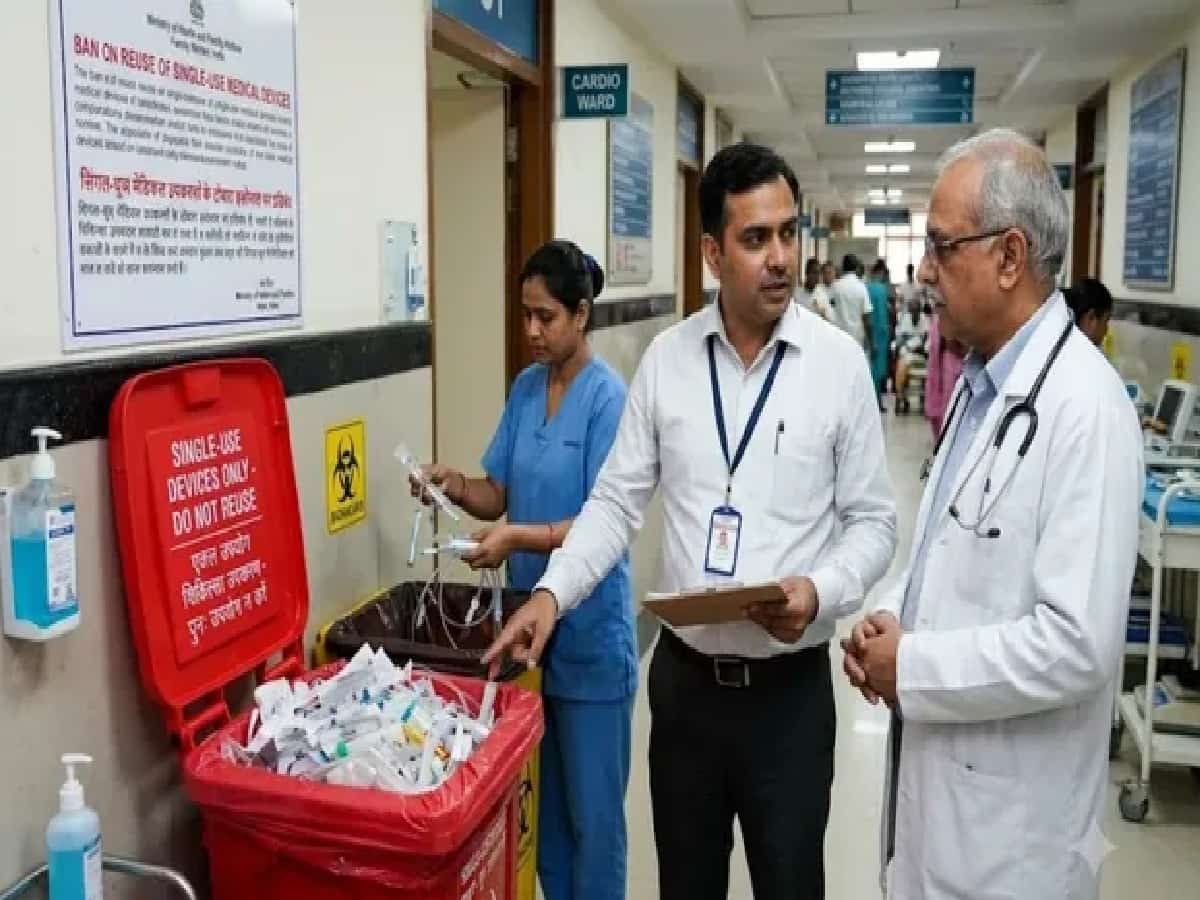
Centre Imposes Nationwide Ban on Reusing Single-Use Medical Devices
Cracking down on hazardous healthcare practices across the country, the Central Government has ordered all government, private, and corporate medical establishments to immediately halt the re-sterilization and reuse of single-use medical devices and disposable surgical supplies. In an urgent regulatory directive issued by the Directorate General of Health Services (DGHS) dated October 16, authorities warned that reprocessing single-use hardware fundamentally compromises patient safety and dramatically elevates the risk of fatal hospital-acquired cross-infections, mechanical failure, reduced functional efficacy, and severe clinical complications, particularly in critical care and emergency procedures. The central directive instructs healthcare administrators, state drug controllers, and public health authorities to enforce zero tolerance, mandating that any medical instrument designed and certified for single use must strictly follow the original manufacturer’s instructions and be permanently discarded after a single application.
Cardiology to Oncology: High-Risk Devices and Violations of Medical Device Rules
The DGHS intervention follows alarming regulatory findings indicating that multiple private and corporate healthcare facilities have been routinely re-sterilizing precision-engineered single-use devices across high-acuity specialties, including cardiology, nephrology, oncology, neurosurgery, and cardiothoracic and vascular surgery (CTVS). The hardware most commonly subjected to illicit reprocessing in Indian hospitals includes cardiac catheters and coronary guidewires deployed during delicate angiography and angioplasty procedures, advanced dialysis equipment, specialized surgical instruments, and even disposable syringes and hypodermic needles. The health directorate underscored that altering or re-sterilizing these items breaches fundamental statutory standards, violating provisions under the Drugs and Cosmetics Act of 1940, the Medical Devices Rules of 2017, the Clinical Establishments (Registration and Regulation) Act of 2010, and mandatory biomedical waste disposal and hospital infection control protocols.
Billing Frauds Under the Lens: AiMeD Welcomes Move as States Tasked With Crackdown
Beyond direct clinical dangers, the DGHS communication—circulated to all state health departments, Union Territory administrations, the Drugs Controller General of India (DCGI), and the Central Government Health Scheme (CGHS)—red-flagged predatory billing practices where hospitals charged vulnerable patients the full retail price for previously used items or claimed duplicate reimbursements from government healthcare schemes. While reminding healthcare facilities of a previous CGHS office memorandum on the subject issued in November 2016, the latest mandate places the burden of rigorous surveillance, spontaneous facility audits, and punitive action squarely on state health authorities and drug inspectors, even though the order stops short of specifying an updated audit calendar or fixed monetary penalty matrix. Welcoming the ban, the Association of Indian Medical Device Industry (AiMeD) urged robust enforcement, with forum coordinator Rajiv Nath noting that violating manufacturer instructions creates dangerous legal ambiguities around medical liability, calling on the Union Government to establish traceable digital logs of device procurement, usage, and disposal to ensure disposable medical technology is never compromised to cut institutional operational costs.




