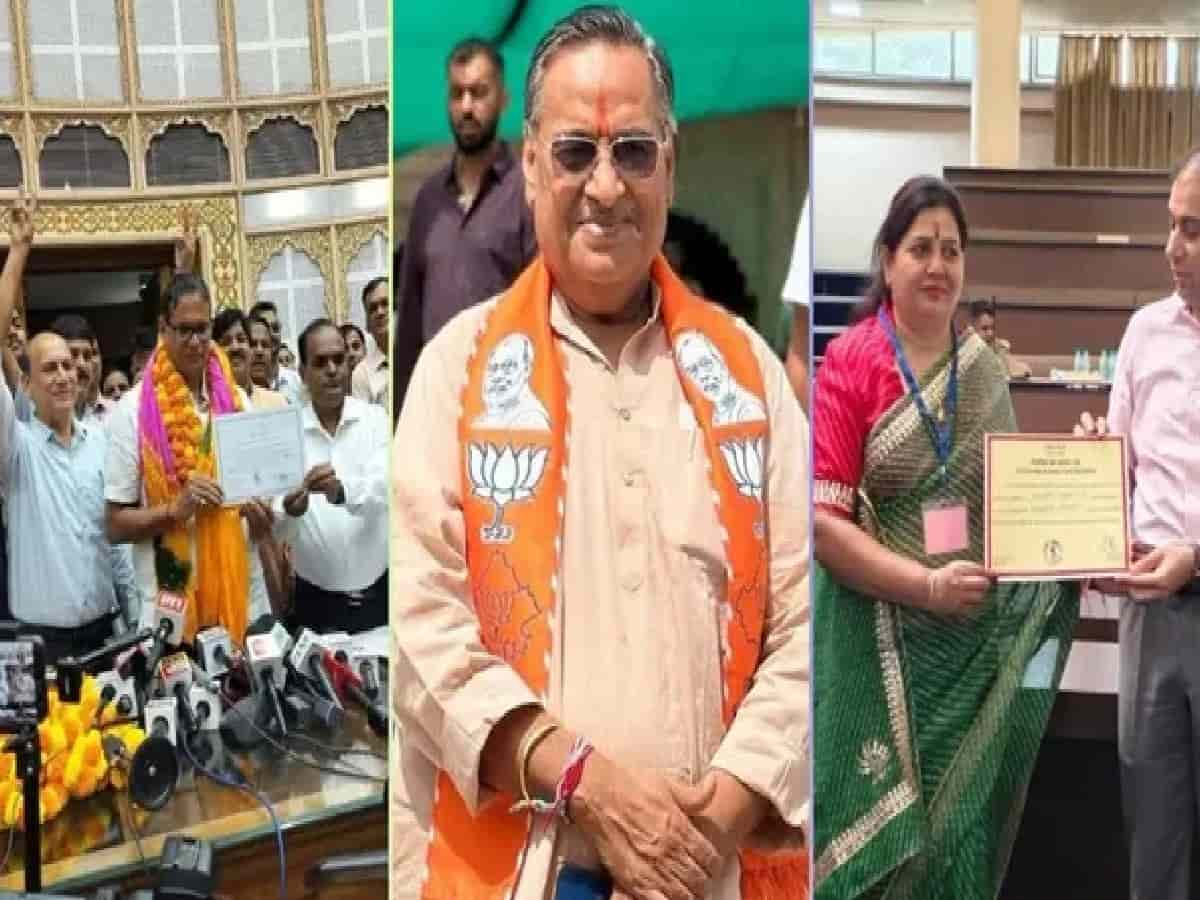
BJP Sweeps Rajasthan Mayoral Polls: Wins 9 of 10 Corporations
In a decisive display of grassroots political dominance, the Bharatiya Janata Party has achieved a near-total clean sweep across the urban local bodies of Rajasthan. The ruling party swept the high-stakes mayoral elections held across three of the state’s most prominent metropolitan cities—Jaipur, Jodhpur, and Kota. The municipal elections, conducted under tight administrative vigilance, culminated in clear, unassailable majorities for the BJP nominees across all three municipal corporations. This comprehensive victory cements the party’s administrative hold over Rajasthan’s urban infrastructure and governance corridors, relegating the principal opposition Congress to negligible pockets across the desert state. Political observers in Jaipur view these results as a ringing public endorsement of the party's development blueprint, civic administration policies, and double-engine governance model.
The New Urban Custodians: Sunil Kothari, Anusuiya Goswami, and Prasanna Mehta
The high-profile election saw seasoned organizational leaders elevated to lead Rajasthan's municipal nerve centers. In the state capital, Sunil Kothari was formally elected as Mayor of the Jaipur Municipal Corporation after securing solid cross-ward council support. In the educational and coaching capital of Kota, BJP stalwart Anusuiya Goswami clinched the prestigious mayoral chair, promising accelerated infrastructure upgrades and streamlined citizen service delivery. Meanwhile, in Jodhpur—the traditional political bastion of veteran Congress leadership—Prasanna Mehta registered an emphatic win to claim the mayoral chain. The election of these three leaders signals a focused push by the BJP toward modernizing urban planning, improving sanitation metrics, and upgrading mass transit across Rajasthan's primary urban growth engines.
The 9-1 Corporation Equation: Congress Reduced to a Lone Outpost in Bikaner
With Friday's decisive poll outcomes, the saffron party has established an ironclad grip over local urban governance, securing nine out of the ten municipal corporations across Rajasthan. The first phase of mayoral contests, concluded across seven municipal corporations the previous week, had already witnessed widespread saffron victories in key regional hubs including Udaipur, Ajmer, Bharatpur, and Alwar. Following Friday's triumph in Jaipur, Jodhpur, and Kota, the opposition Congress has been reduced to governing a solitary municipal corporation in Bikaner. The lopsided 9-1 balance of power across the state's top-tier urban bodies highlights the deep structural erosion of the opposition's urban vote bank, leaving the Congress struggling to mount effective local challenges against the BJP's formidable organizational machinery.
Decisive Four-Hour Counting Blitz: Swift Verdict Confirms Historic Mandate
The electoral timeline on voting day moved with brisk efficiency across all three municipal headquarters. Ward councillors began casting their ballots at designated polling booths starting promptly at 10:00 AM under multi-tiered security arrangements. Voting concluded smoothly by early afternoon, paving the way for immediate ballot verification and counting. By 2:00 PM, returning officers had officially declared the election results for all three municipal corporations, confirming comfortable victory margins for each of the three BJP nominees. The rapid declaration of results triggered jubilant celebrations outside municipal headquarters, with hundreds of party workers waving party flags, bursting firecrackers, distributing traditional sweets, and garlanding the newly elected mayors.
Dominating Grassroots Governance: BJP Holds 203 of 309 Municipal Bodies Statewide
The sweeping mayoral victories in Jaipur, Kota, and Jodhpur mirror the BJP’s overwhelming hegemony across the broader local self-governance landscape of Rajasthan. At present, the party controls 203 out of the total 309 urban municipal bodies, municipal councils (Nagar Parishads), and town municipalities (Nagar Palikas) spread across the state. This vast urban network ensures frictionless alignment between state-level policy execution and municipal ward-level funding. Political analysts point out that controlling both the legislative assembly and over two-thirds of all urban local bodies provides the BJP with unprecedented operational ease to push forward ambitious smart-city projects, road infrastructure expansions, and digitized civic services, setting a commanding tone for upcoming state and national political cycles.