







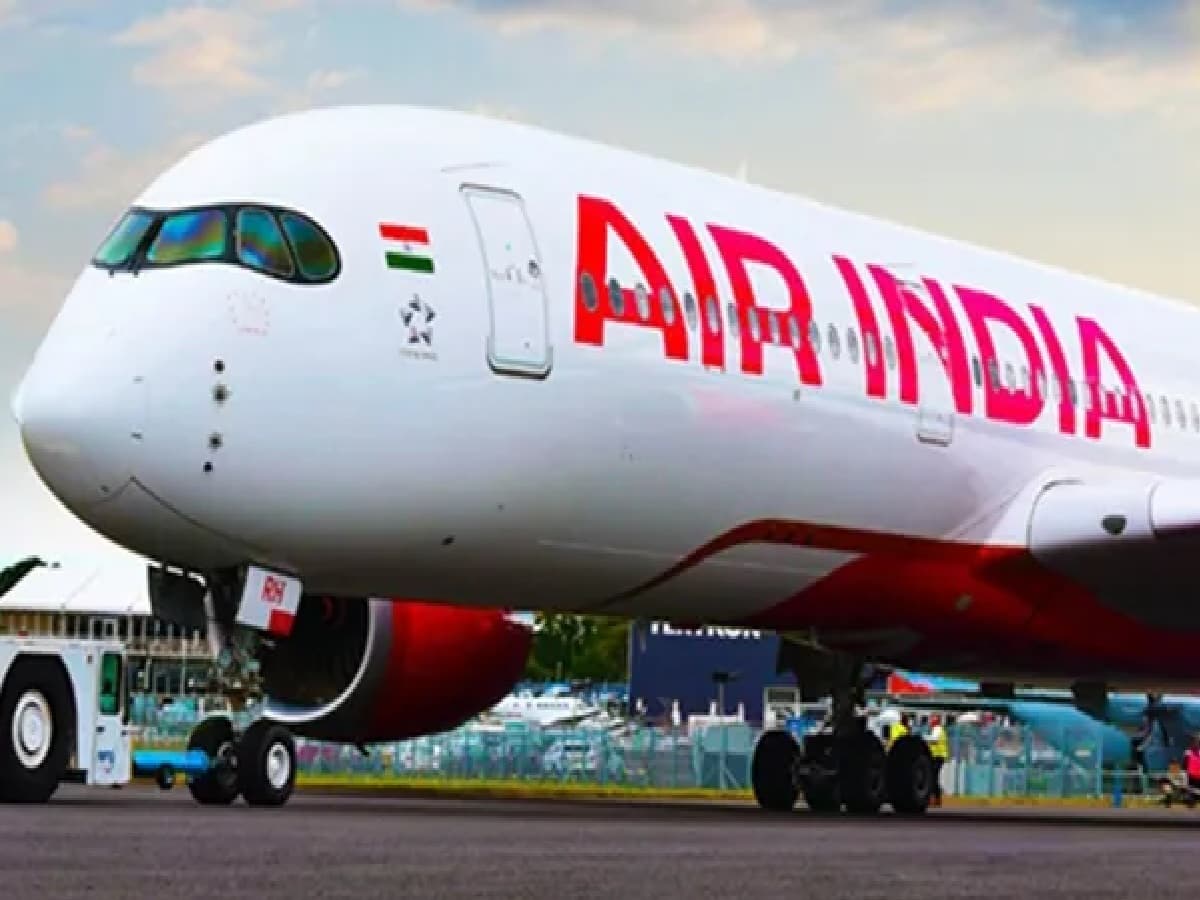
Air India Shifts US & Europe Flights to Mumbai Over Pak Airspace Ban
To counter severe flight detours and fuel costs caused by Pakistan's airspace closure, Air India is expanding long-haul flights to Europe and the US from Mumbai, evaluating Bengaluru as its third international hub, and accelerating deliveries from its 600-aircraft order book.
In a major strategic restructuring of India’s long-haul aviation map, Air India is recalibrating its international network to operate a significantly larger volume of flights to Europe and the United States out of Mumbai, primarily to offset operational penalties triggered by the prolonged closure of Pakistani airspace to Indian carriers. Announcing the network realignment at the 'Aviation India and South Asia, 2026' summit on Tuesday, Air India Chief Executive Officer and Managing Director Tewolde Gebremariam explained that the northern airspace blockade has placed a far heavier detour and fuel burn penalty on departures out of New Delhi than on southern and western coastal gateways like Mumbai. While confirming that European and American routes will remain operational from the national capital, Gebremariam emphasized that decentralizing long-haul departures across the subcontinent is essential, revealing that the carrier is also actively exploring the viability of establishing Bengaluru as its third dedicated operational hub for westward international routes.
Navigating the Airspace Handicap: Why Mumbai and Bengaluru Are Central to Westward Expansion
The strategic pivot toward Mumbai addresses a structural competitive imbalance that has strained Indian carriers on westbound intercontinental routes. While global competitors continue to navigate alternative corridors without reciprocal restrictions, Indian airlines are forced to take elongated southern deviations over the Arabian Sea, driving up operating overheads amid escalating jet fuel prices and broader geopolitical volatility. To mitigate these route inefficiencies and protect passenger travel times, shifting capacity to Mumbai allows Air India to minimize flight circuitousness while capitalizing on western India's commercial demand. Furthermore, anchoring Bengaluru as an additional operational node will provide direct long-haul connectivity to South India’s high-yield corporate and tech travelers, distributing passenger volumes away from congested northern hubs and insulating the airline’s international flight banks from localized airspace constraints.
600-Jet Pipeline: Leveraging 70 Upcoming Wide-Body Deliveries to Recapture Global Market Share
To consolidate this route restructuring and aggressively reclaim international passenger share from foreign legacy carriers, Air India is deploying a dual focus on rigorous cost management and broad fleet modernization. The carrier's operational strength currently stands at 171 aircraft, including an active fleet of 61 wide-body planes suited for medium- and long-haul sectors. Backing this global expansion is Air India’s historic pipeline of 600 ordered aircraft, with approximately 540 passenger jets scheduled for phased delivery over the coming years. Critically, around 70 of these pending deliveries consist of advanced wide-body aircraft engineered for ultra-long-haul intercontinental missions, providing the airline with the capacity, cabin upgrades, and fuel efficiency required to scale up direct non-stop frequencies to North America and Europe across Mumbai, Delhi, and Bengaluru simultaneously.




