White House Confirms Trump And Modi Will Resolve Russian Oil Tariff Dispute Amid US Senate Sanctions Bill
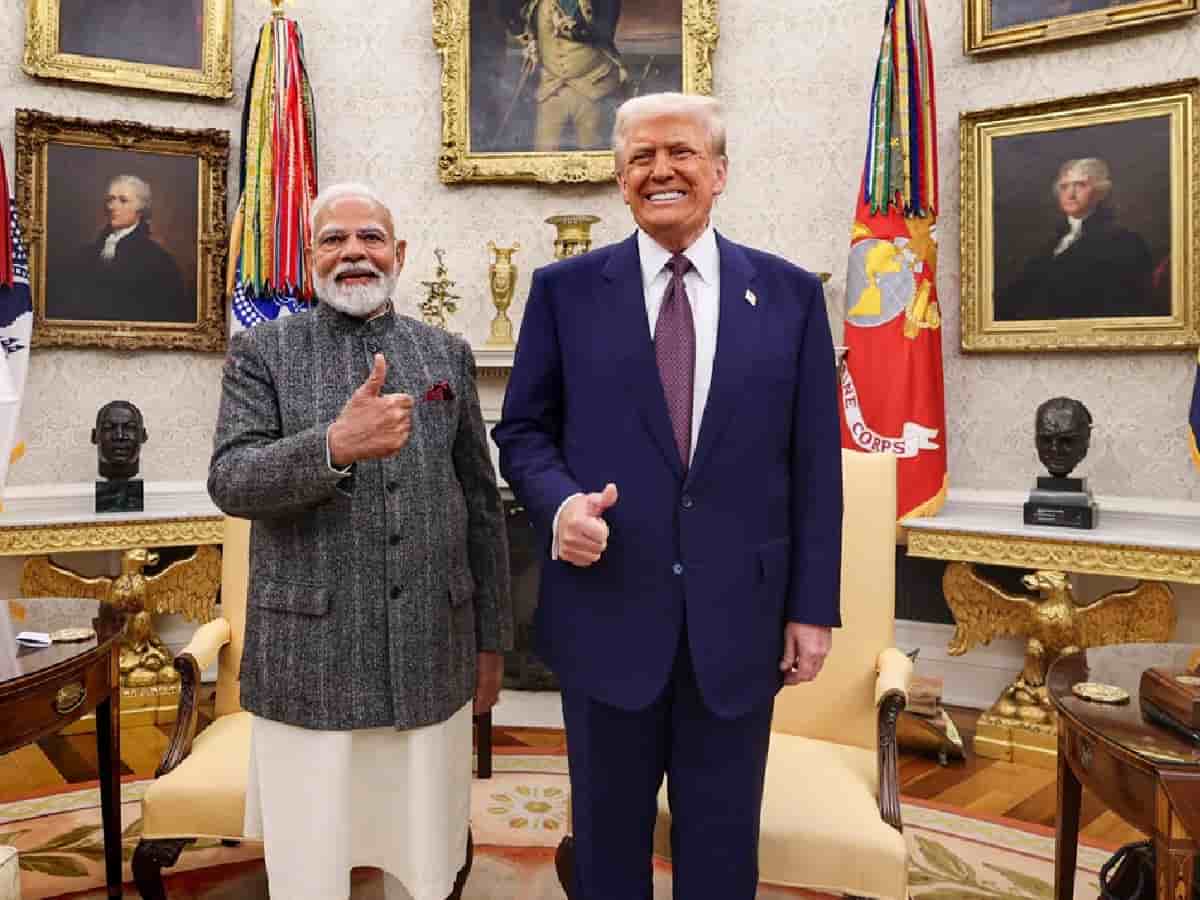
The United States administration has stepped forward to address mounting international trade tensions, expressing firm confidence that bilateral diplomacy between Washington and New Delhi will successfully navigate the latest legislative hurdles. A senior White House trade adviser emphasized on Tuesday that US President Donald Trump and Indian Prime Minister Narendra Modi possess a robust, highly effective working relationship capable of resolving friction arising from proposed secondary tariffs on India's crude oil imports from Russia.
The diplomatic reassurances follow the recent passage of a stringent legislative package by the United States Senate. The newly approved bill grants executive authority to the president to slap sweeping 100 percent tariffs on the top five global importers of Russian energy products. Lawmakers backing the bill argue that continued energy trade with Moscow inadvertently helps sustain military expenditures in the ongoing conflict in Ukraine.
Peter Navarro On Trump-Modi Relations And Trade Dynamics
Addressing the unfolding trade situation, White House trade adviser Peter Navarro pointed out that India's engagement with Russian energy markets scaled up significantly only after the outbreak of the Ukraine war in 2022. Despite the rapid shifts in global supply chains, Navarro maintained an optimistic outlook regarding bilateral outcomes.
Highlighting the interpersonal rapport between the two leaders, Navarro stated that President Trump and Prime Minister Modi share an exceptionally strong working dynamic. He remarked that both heads of government will tackle and resolve the trade issue through mutual dialogue, eliminating any necessity for external interference. Meanwhile, recent analytical reports from the Center for Research on Energy and Clean Air (CREA) indicate that Indian refiners continue securing vital supplies, with crude oil imports from Russia touching record volumes for consecutive months, driven by economic necessity and market demand.
US Senate Sanctions Bill And Global Energy Impacts
The legislative pressure stems from the overwhelming passage of the 'Lindsey O. Graham Sanctioning Russia and Iran Act of 2026', which cleared the US Senate by a decisive bipartisan vote of 86 to 11. Named in honor of the late Senator Lindsey Graham, the sweeping bill targets the primary international buyers of Russian and Iranian hydrocarbons—namely China, India, Azerbaijan, Hungary, and Slovakia.
In addition to empowering the executive branch to enforce prohibitive 100 percent duties on goods originating from nations heavily reliant on Russian energy, the act formally extends the 1996 Iran Sanctions Act through 2031. Proponents of the legislation, including newly seated lawmakers carrying forward Senator Graham's legislative legacy, maintain that major economies supporting energy trade must ultimately weigh commercial ties with Western markets against acquiring discounted Russian crude. As diplomatic channels remain open, all eyes are on how Washington and New Delhi will approach the evolving economic matrix.