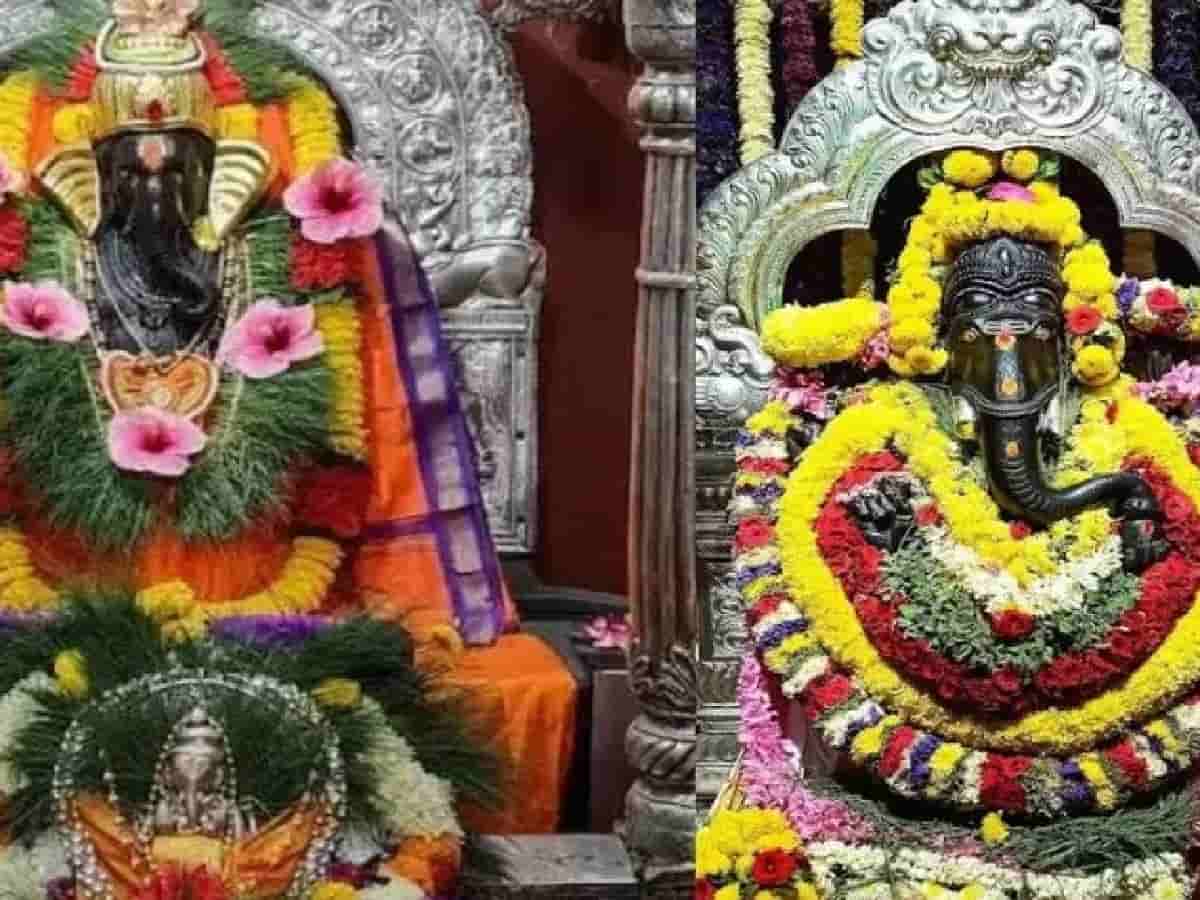
Secrets of Andhra Pradesh’s Kanipakam Temple Where an Idol Cured Three Brothers and Continues to Grow
As nationwide Ganesh Chaturthi 2026 celebrations reach peak spiritual fervor, lakhs of pilgrims across South India are converging at one of the country's most enigmatic and miraculous pilgrimage sites: the Sri Varasiddhi Vinayaka Temple located in Kanipakam, nestled in the Chittoor district of Andhra Pradesh. Unlike conventional shrines housing sculpted murtis consecrated through human hands, the sanctum sanctorum here enshrines a self-manifested (Swayambhu) idol of Lord Ganesha positioned deep within a perennial water well. Beyond its sacred waters, the temple has commanded global curiosity due to an enduring divine phenomenon: the stone idol of Sri Varasiddhi Vinayaka physically expands in dimension over the passage of decades, necessitating continuous adjustments to the silver armor (Kavacham) that adorns the deity.
The Miracle of the Blood-Stained Well: How Three Disabled Brothers Were Healed
The miraculous emergence of the presiding deity is rooted in a centuries-old local legend involving three agrarian brothers who suffered severe physical impairments—one was mute, another deaf, and the third visually impaired. Facing an acute drought that threatened their farmland, the trio set out to dig a irrigation well in their agricultural plot. While manually excavating the earth with an iron spade, their tool struck a dense, submerged stone mass. To their utter horror, fresh crimson blood welled up from the fissure, instantly coloring the wellspring water red. The moment the holy water made contact with the laborers, an instant physiological miracle unfolded: the blind brother regained his eyesight, the mute brother found his voice, and the deaf brother had his hearing restored. Rushing to the site after hearing the commotion, stunned villagers dug deeper to discover the self-manifested black stone idol of Lord Ganesha rising from the waters, leading to the distribution of the miraculous spring water as sacred Theertham.
Architectural Legacy: From Chola Emperor Kulothunga I to the Grandeur of Vijayanagara
The historical evolution of the Kanipakam shrine mirrors the architectural milestones of medieval South Indian dynastic history. Royal epigraphs and temple records trace the original structural foundation to the early 11th century, constructed under the patronage of Chola monarch Kulothunga Chola I to honor the Swayambhu deity. Centuries later, in 1336, the rulers of the emergent Vijayanagara Empire embarked on an expansive architectural campaign, erecting towering Rajagopurams, mandapams, and stone-carved colonnades that transformed the modest village shrine into a massive temple complex. To this day, the natural holy spring inside the inner sanctum remains perennially full, with the base of the Ganesha idol perpetually submerged in fresh flowing water.
Brahmotsavam Celebrations: 21 Days of Grand Rites and Divine Justice Vows
The shrine becomes the epicenter of devotional congregation during the Bhadrapada month, coinciding with the annual 21-day Brahmotsavam festival launched on Ganesh Chaturthi. During this sacred festival, the temple administration conducts elaborate Vedic homams, sacred chariot processions (Rathotsavam), and ceremonial floral sevas that attract devotees from Andhra Pradesh, Tamil Nadu, and Karnataka. Kanipakam is also culturally revered across the Deccan as a court of ultimate divine truth, where pilgrims take solemn "Pramanam" (oaths) before Sri Varasiddhi Vinayaka to resolve longstanding legal and ethical disputes, firm in their faith that the remover of obstacles dispels injustice, resolves severe illnesses, and fulfills every righteous prayer.