Chhath Puja in the Spotlight: Who Is Chhathi Maiya and Why Is This Grand Festival Celebrated
Across northern India, Bihar, and the Purvanchal region of Uttar Pradesh, few spiritual observances rival the sanctity and ascetic discipline of Chhath Mahaparv. While deeply embedded in folk traditions for millennia, the sacred festival recently captured nationwide mainstream attention following the release of the soul-stirring track "Chhathi Maiya" from Sidharth Malhotra and Tamannaah Bhatia’s upcoming cinematic project "The One." The track's viral reception across streaming platforms has ignited curiosity among younger generations and urban audiences eager to understand the rich spiritual symbolism, strict austerities, and ancient traditions dedicated to Chhathi Maiya and the Sun God.
Puranic Origins: The Divine Bond of Goddess Shashthi and Lord Surya
Rooted in the ancient verses of the Brahmavaivarta Purana and Skanda Purana, Chhathi Maiya is identified as Goddess Devasena—the mind-born daughter of Lord Brahma and the sister of the Sun God, Lord Surya. Celebrated as the sixth form of Prakriti (Mother Nature), she is the divine patroness of fertility, maternal vitality, and children's welfare. Worshippers observe rigorous spiritual vows during this period to pray for the longevity, sound health, and enduring prosperity of their offspring, believing that sincere offerings earn the divine protective shield of Mother Shashthi.
From Holy Dip to Pure Feasting: The Discipline of Nahay-Khay and Kharna
The four-day spiritual journey follows strict physical and mental cleansing routines, beginning with Nahay-Khay, where devotees take a holy dip in sacred water bodies before preparing a sattvik meal of bottle gourd (kaddu), Bengal gram lentils, and rice using clean earthen vessels to purify the mind and body. The discipline deepens on the second day with Kharna, where devotees observe day-long fasting before cooking traditional jaggery rice pudding (rasiya) and whole-wheat rotis over an outdoor clay stove using mango wood fuel. Once this sacred prasad is offered to Chhathi Maiya and consumed after twilight, the devotees commence their demanding 36-hour waterless (nirjala) fast.
Sacred Offerings at Sunset and Sunrise: The Reverence of Sandhya and Usha Arghya
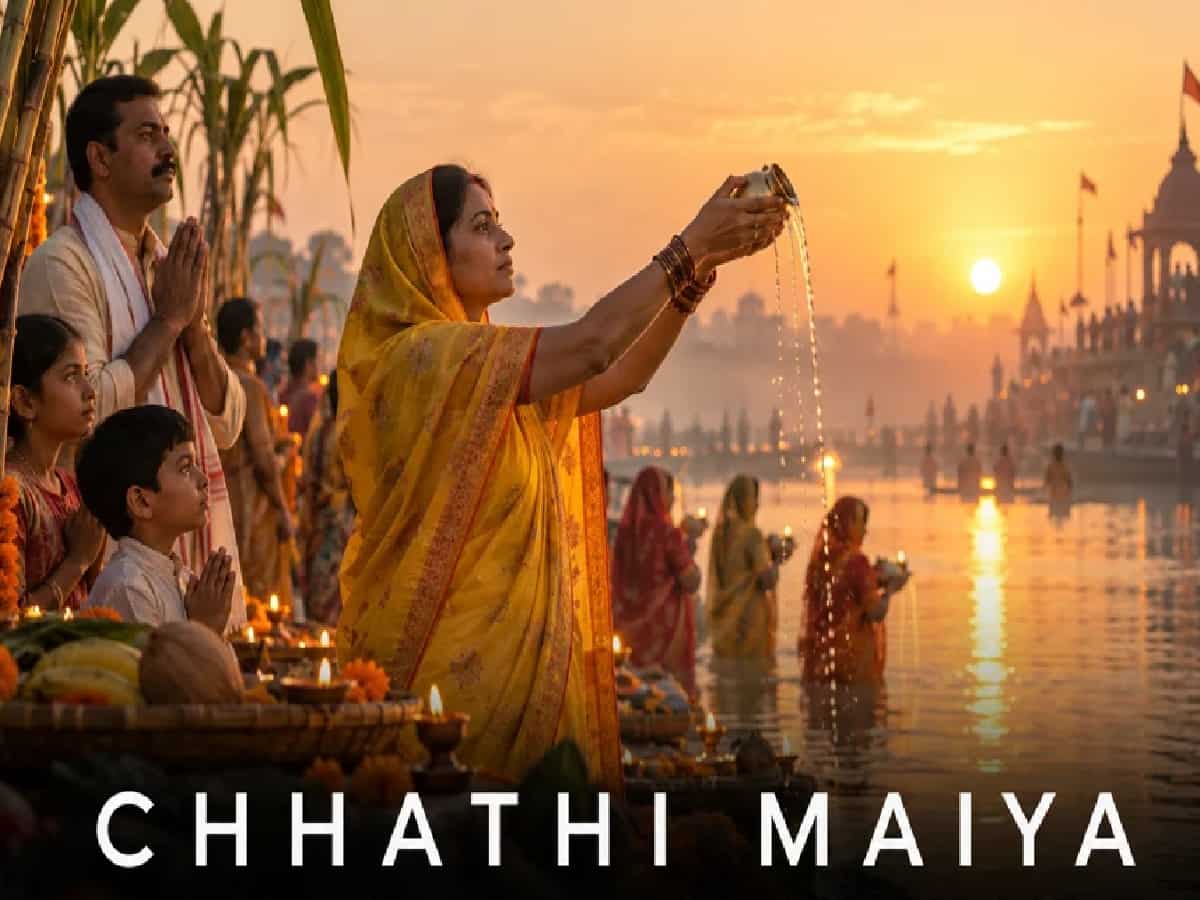
The defining visual essence of Chhath unfolds during the final two days along decorated riverbanks and water ghats. On the third day, worshippers carrying bamboo baskets (daura and soop) laden with seasonal fruits, sugarcane, and the auspicious wheat-and-jaggery delicacy thekua step waist-deep into the water to offer Sandhya Arghya to the setting sun—a rare spiritual tradition honoring the departing daylight. The grand festival reaches its conclusion at dawn on the fourth day with Usha Arghya, where identical offerings and milk libations are presented to the rising sun, followed by the breaking of the fast (Parana) as families gather to distribute sacred prasad and seek ancestral blessings.
Chhath Puja 2026: Complete Ritual Calendar and Dates
Vedic panchang calculations outline the schedule for the 2026 festive cycle:
-
Nahay-Khay (Day 1): Friday, November 13, 2026
-
Kharna (Day 2): Saturday, November 14, 2026
-
Sandhya Arghya (Day 3): Sunday, November 15, 2026
-
Usha Arghya and Parana (Day 4): Monday, November 16, 2026