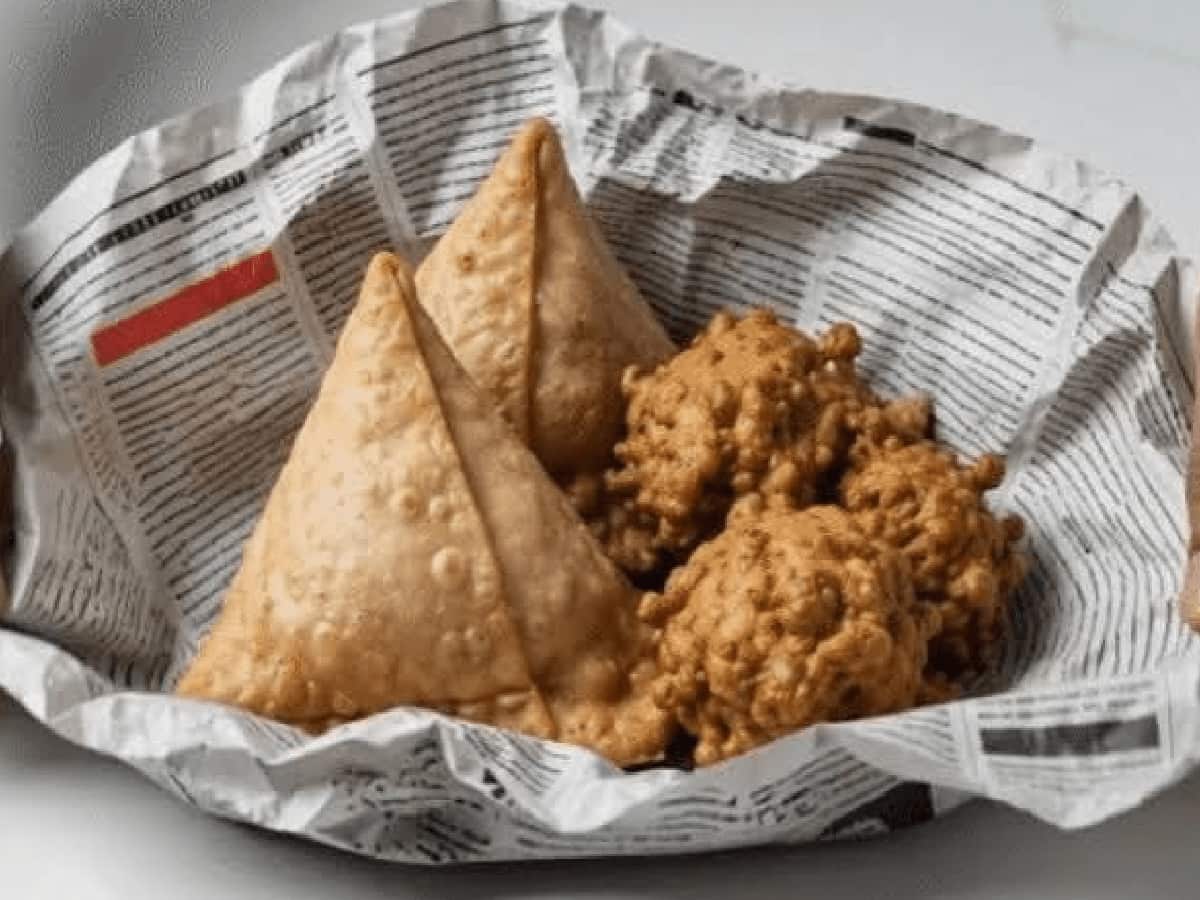
Stop Eating Samosas and Kachoris: Discover the Dangerous Health Risks of Toxic Printing Inks and Germs
Across India, biting into piping-hot, crispy roadside snacks like samosas, kachoris, and pakoras is a beloved culinary ritual. For ultimate convenience and thriftiness, street vendors frequently serve these greasy treats wrapped in old newspapers or lined with newsprint. While this practice seems completely harmless at first glance, health experts and food safety authorities issue a stern warning: eating hot and oily foods wrapped in newspaper is a silent hazard that can severely damage your digestive system and invite dangerous infections over time.
The Hidden Danger: Toxic Chemicals in Printing Inks
Newspapers are printed using industrial-grade inks that contain a cocktail of harmful chemicals, petroleum solvents, bioactive dyes, and heavy metals:
-
Leaching into Food: When boiling-hot, greasy, and oily snacks like samosas or kachoris are placed directly onto newspaper, the heat and oil act as solvents.
-
Chemical Absorption: This chemical reaction causes the toxic printing dyes and heavy metals to leach straight into your food, which you then unknowingly consume.
Severe Impact on Your Digestive System and Gut Health
Ingesting newspaper ink—even in microscopic quantities over a prolonged period—triggers cumulative health complications:
-
Digestive Distress: Experts note that the chemicals present in newsprint irritate the lining of the gastrointestinal tract, leading to chronic stomach issues, indigestion, acid reflux, and metabolic disturbances.
-
Long-Term Risks: While snacking off a newspaper once or twice might not cause immediate catastrophic illness, making it a regular habit exposes the body to hazardous toxins linked to organ damage and hormonal disruption.
High Risk of Bacterial Infections and Food Poisoning
Beyond chemical toxicity, handling hygiene poses an equally alarming threat:
-
Contaminated Journey: Before reaching your plate, newspapers pass through countless hands, transport vehicles, and dusty storage facilities, accumulating invisible layers of dirt, pathogens, and microorganisms.
-
Direct Transfer: Placing fresh, edible food on dirty newsprint directly transfers bacteria and germs into your meal, dramatically spiking the risk of food poisoning, severe stomach infections, and bacterial dysentery. Hotter foods make this transfer even more efficient.
Safe and Healthy Alternatives for Food Packaging
To protect yourself and your family from preventable food contamination, adopt these safe daily habits:
-
Insist on Food-Grade Materials: Always request vendors to use certified food-grade packaging paper or plain greaseproof sheets.
-
Opt for Safe Containers: Butter paper, cardboard paper boxes, or traditional steel and ceramic containers remain the safest and most hygienic choices.
-
At Home Practices: Avoid using old newspapers as lining material in kitchen baskets, roti boxes, or snack trays; switch entirely to clean plates and washable containers.