







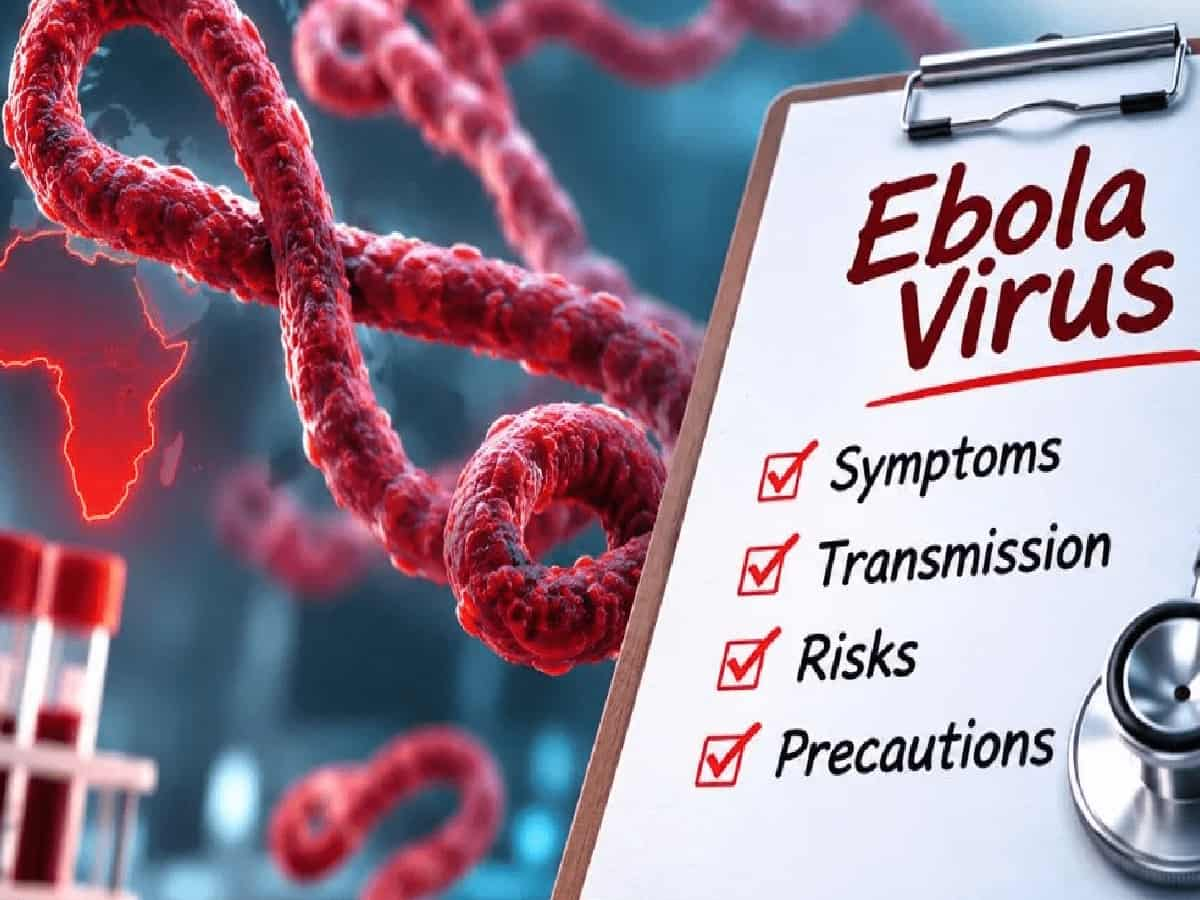
Ebola Outbreak in Africa: Can It Spread to India
With fresh waves of the Ebola virus disease surging across parts of Central Africa—most notably in the Democratic Republic of Congo (DRC), where cumulative outbreak reports cite more than 11,000 infections and over 5,300 fatalities—public health authorities and everyday citizens worldwide are closely watching whether the deadly pathogen could cross international borders. As global air travel connects major Indian transit hubs such as New Delhi, Mumbai, Bengaluru, Hyderabad, and Lucknow with international destinations, concerns have resurfaced regarding India’s vulnerability to an imported outbreak. Addressing these anxieties in a detailed medical awareness briefing, Dr. Randeep Guleria, Chairman of the Institute of Internal Medicine, Respiratory and Sleep Medicine at Medanta and former Director of AIIMS New Delhi, clarified the scientific realities of Ebola transmission. Dr. Guleria emphasized that while health agencies must maintain strict airport vigilance, there is no reason for public panic in India because Ebola behaves fundamentally differently from respiratory viruses like COVID-19.
In the Democratic Republic of Congo, containment teams face formidable logistical hurdles—including regional armed conflict, remote terrain, fragile road networks, and community mistrust—that complicate contact tracing and vaccination drives. However, Dr. Guleria explained that modern epidemiological protocols, coupled with the biological mechanics of how the virus spreads, make a COVID-style global pandemic exceedingly unlikely.
Ebola vs. COVID-19: Why the Pandemic Risk Remains Low
The primary question occupying public discourse is whether Ebola can spread rapidly through crowded markets, offices, or public transport like SARS-CoV-2. Dr. Guleria underscored that Ebola is strictly not an airborne infection. Unlike influenza or COVID-19, the virus does not transmit through casual proximity, breathing shared room air, or brief respiratory droplets when an asymptomatic person coughs or sneezes nearby.
"Unlike COVID-19, Ebola is not an airborne infection, and that is why there is no need for panic," Dr. Guleria explained. "Transmission occurs only through direct physical contact with the infected bodily fluids and secretions of a symptomatic patient." Furthermore, Dr. Guleria highlighted the clinical importance of the incubation period, which typically spans between 2 and 21 days after exposure. Crucially, an infected individual is not contagious during this silent incubation phase; they only become capable of transmitting the virus once active clinical symptoms appear. Because symptomatic patients are typically visibly unwell, health authorities can identify, isolate, and trace contacts far more effectively than with silent airborne spreaders.
How the Virus Transmits: Zoonotic Origins and Post-Recovery Persistence
Ebola is a zoonotic pathogen, meaning it originates in wildlife reservoirs—predominantly fruit bats and non-human primates across Central and Western Africa—before spilling over into human populations through direct contact with infected animals or bushmeat. Once inside human communities, the virus spreads person-to-person via direct contact with blood, saliva, vomit, feces, urine, sweat, or breast milk, as well as contaminated needles, bedding, or surfaces. Consequently, healthcare workers and family caregivers face the highest exposure risk unless equipped with rigorous Personal Protective Equipment (PPE).
Dr. Guleria also recalled a notable clinical precedent from the 2014 West African outbreak, when a recovered patient traveling from Sierra Leone arrived in India. Medical surveillance during that episode documented that even after a patient recovers clinically and clears the virus from their bloodstream, trace genetic material of the Ebola virus can persist inside immune-privileged bodily secretions for months. In that documented case, the virus remained detectable in semen for up to three months, and medical literature has similarly observed persistence in ocular fluids (tears), underscoring why recovered travelers require ongoing medical follow-up and safe-sex counseling.
Recognizing Early and Severe Symptoms of Ebola Virus Disease
Early diagnosis is vital for survival and containment, yet initial manifestations of Ebola closely mimic common tropical illnesses such as malaria, typhoid, dengue, or severe viral gastroenteritis. According to Dr. Guleria, early symptoms typically emerge abruptly and include:
-
High fever and profound fatigue
-
Severe headache and generalized muscle or body aches
-
Sore throat and pharyngitis
-
Abdominal pain, stomach cramps, watery diarrhea, and vomiting
If left unmanaged, the illness can escalate rapidly during its second week into multi-organ dysfunction. In advanced stages, patients may develop neurological confusion, altered sensorium, and skin rashes. As the virus damages blood vessel walls and disrupts clotting factors, patients can experience internal and external hemorrhaging—including bleeding from the gums, nose, stool, or vomiting blood—alongside a life-threatening clotting disorder known as Disseminated Intravascular Coagulation (DIC) and Acute Respiratory Distress Syndrome (ARDS).
Fatality Rate, Supportive Care, and Essential Precautions for India
Ebola carries a high historical case fatality rate averaging around 50 percent (varying between 25 and 90 percent depending on the viral strain and speed of medical intervention). While targeted monoclonal antibody therapies exist for specific strains, Dr. Guleria emphasized that aggressive early supportive care—including intravenous fluid resuscitation, electrolyte balancing, blood pressure stabilization, oxygen therapy, and treatment of secondary infections—dramatically improves survival odds. Patients who pull through may occasionally experience post-recovery sequelae such as joint pain, arthritis, eye inflammation, or lingering fatigue.
For India, Dr. Guleria’s prescription is calm, science-backed preparedness rather than alarmism. Public health agencies must maintain thorough thermal and symptom screening at international airports for passengers arriving from Central and Western Africa, enforce strict hospital infection-control protocols, and ensure rapid isolation facilities are ready if a suspected traveler reports fever within 21 days of transit. For ordinary citizens, staying informed through verified medical channels and avoiding unverified social media rumors remains the strongest safeguard.