







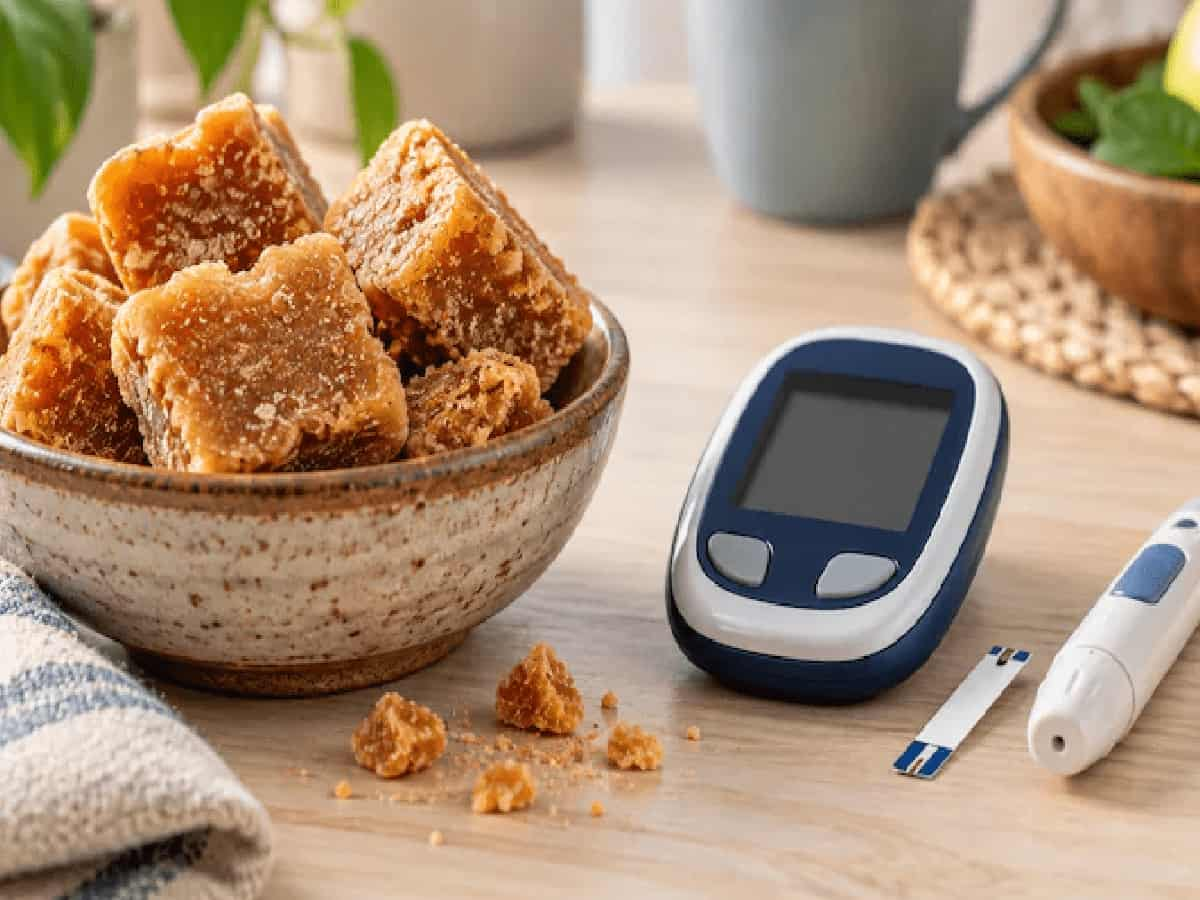
Can Diabetics Eat Jaggery, Doctors Reveal the Truth About Gur
Across Indian households—especially during the winter months and festive season when traditional sweets like til-gud, gajak, and gur ki kheer fill kitchens—there is a deeply rooted belief that replacing refined white sugar with jaggery (gur) makes desserts completely safe for people living with diabetes. Family elders frequently recommend swapping table sugar for natural jaggery in morning tea or post-meal treats, assuming that because jaggery is unrefined and plant-based, it will not spike blood glucose levels. However, modern clinical nutritionists and endocrinologists caution that this widespread assumption can put diabetic patients at serious risk of sudden hyperglycemia.
While jaggery undeniably retains trace minerals and antioxidants that refined white sugar loses during industrial bleaching and crystallization, its fundamental biochemical impact on human blood sugar remains strikingly similar. Understanding how the body metabolizes gur is essential for anyone managing Type 1 or Type 2 diabetes across India.
What Scientific Research Says About Jaggery and Blood Glucose
Nutritional studies and metabolic research indexed on scientific platforms such as ResearchGate confirm that traditional jaggery—prepared by boiling concentrated sugarcane juice or date palm sap without chemical refining—contains measurable amounts of iron, magnesium, potassium, calcium, and plant polyphenols. In healthy individuals without metabolic disorders, these micronutrients support digestion, help prevent iron-deficiency anemia, and offer mild antioxidant protection.
However, from a glycemic standpoint, clinical data reveals a crucial caveat: jaggery possesses a high Glycemic Index (GI), typically estimated around 84, which is even higher than that of standard refined table sugar (sucrose), whose GI sits near 65. Because jaggery is rapidly broken down into glucose in the digestive tract, it enters the bloodstream quickly, triggering sharp post-meal blood sugar spikes. Therefore, researchers emphasize that diabetic patients cannot treat jaggery as a "free food" or an unrestricted substitute for sugar.
Jaggery vs. Refined Sugar: Why Natural Does Not Mean Sugar-Free
The primary confusion surrounding jaggery stems from conflating nutritional density with glycemic safety. While white sugar consists of nearly 99.9 percent pure sucrose stripped of all vitamins and minerals, jaggery is still composed of roughly 85 to 90 percent simple carbohydrates—primarily sucrose, glucose, and fructose—alongside moisture and trace minerals.
Gram for gram, jaggery delivers nearly the same caloric load and carbohydrate count as refined white sugar. When a person with impaired insulin sensitivity consumes a piece of jaggery after dinner, the pancreas must still secrete insulin to clear the incoming glucose surge from the bloodstream. Overconsuming jaggery under the false impression that it is "medicinal" or "diabetes-friendly" frequently leads to elevated HbA1c readings, insulin resistance, and long-term vascular complications.
When Can a Diabetic Patient Consume Jaggery in Moderation?
Medical experts stress that people managing diabetes should treat jaggery with the exact same portion discipline they apply to white sugar. For individuals whose blood sugar levels are poorly controlled, experiencing frequent spikes, or requiring high insulin doses, doctors generally advise avoiding jaggery altogether.
Conversely, if a patient’s HbA1c levels are well-stabilized within target ranges and their treating physician or clinical dietitian approves a tightly measured carbohydrate budget, an occasional, tiny portion—such as half a teaspoon of grated jaggery—may be accommodated within a balanced meal. Even then, pairing small carbohydrates with dietary fiber, healthy fats, or protein helps slow gastric emptying and blunts rapid glucose absorption. Any dietary adjustment should always factor in a patient's age, kidney function, current medications, and total daily carbohydrate allowance.
Smarter Sweet Alternatives to Satisfy Cravings Safely
Rather than relying on jaggery, honey, or brown sugar—all of which trigger similar blood glucose elevations—endocrinologists recommend turning to genuinely low-glycemic, nutrient-rich alternatives when sweet cravings strike:
-
Whole Low-GI Fruits: Fresh berries, guava, apples, pears, and oranges provide natural sweetness wrapped in soluble dietary fiber, which slows sugar absorption and promotes fullness.
-
Cinnamon-Infused Beverages: Brewing Ceylon cinnamon sticks into warm water or unsweetened tea imparts a naturally sweet, aromatic flavor while supporting healthy insulin sensitivity.
-
Unsweetened Herbal Teas: Infusions made with tulsi, ginger, cardamom, or chamomile satisfy after-meal palate cravings without adding calories or carbohydrates.
-
Plant-Based Zero-Calorie Sweeteners: Pure stevia leaf extract or monk fruit sweeteners offer sweetness without raising blood glucose or insulin levels when used in moderation.




