







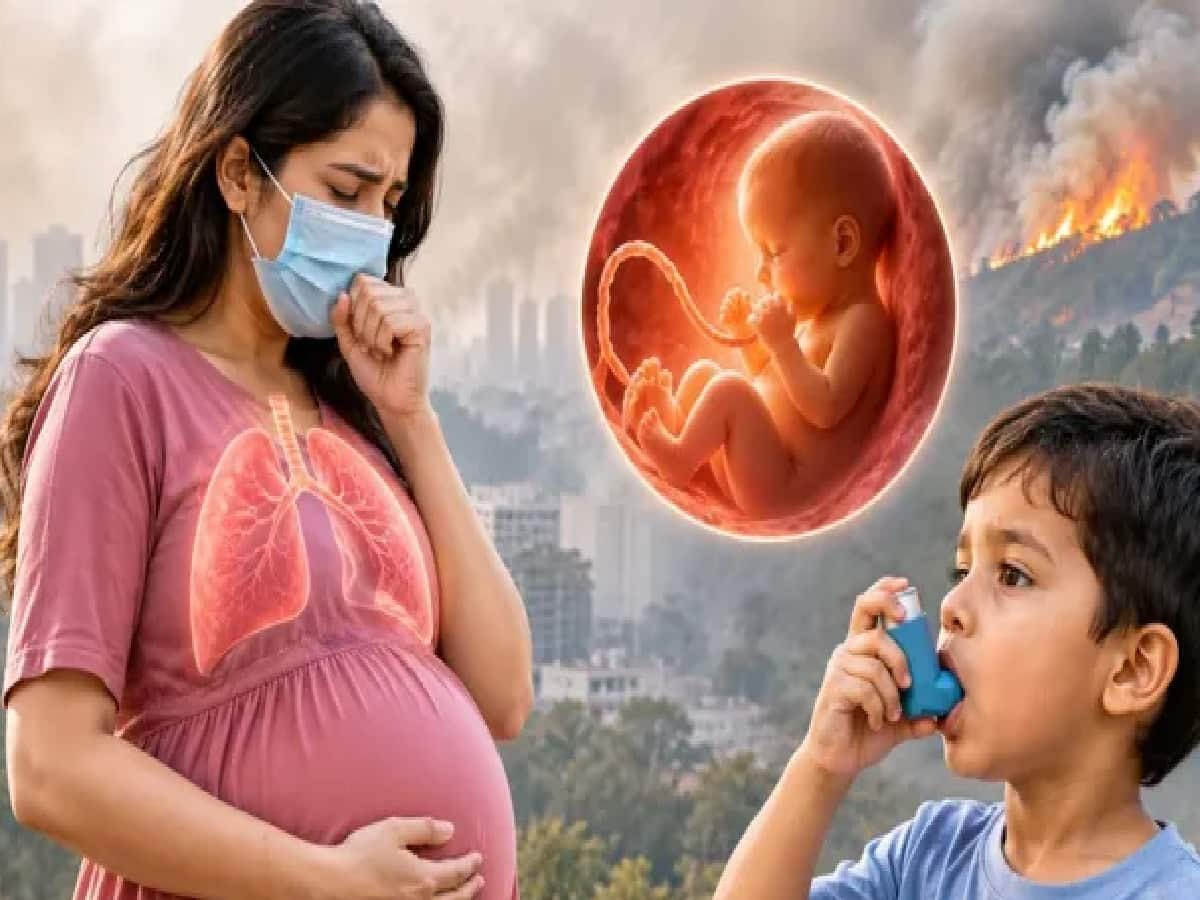
Air Pollution in Pregnancy Linked to Higher Childhood Asthma Risk
Exposure to toxic air pollution and heavy smoke during pregnancy does not merely affect an expectant mother's breathing—it can quietly shape her unborn baby’s respiratory health long before birth. According to new research led by scientists at the University of California, Davis (UC Davis) Medical Center and presented at the 2026 Annual Scientific Meeting of the American College of Allergy, Asthma and Immunology (ACAAI) in Phoenix, children whose mothers inhaled elevated levels of fine particulate matter (PM2.5) and wildfire smoke during the second and third trimesters of pregnancy face a significantly higher risk of developing asthma in early childhood. Examining health records from 1,097 full-term children, the study identifies critical gestational windows during which fetal lungs are especially vulnerable to airborne pollutants. For expectant parents, obstetricians, and pediatricians across New Delhi, Lucknow, Noida, Ghaziabad, Gurugram, Kanpur, Patna, Mumbai, Kolkata, and Bengaluru—cities where winter smog, crop-residue smoke, and high PM2.5 levels frequently spike—these findings highlight why protecting pregnant women from polluted air during mid-to-late gestation is vital for lifelong child lung health.
Inside the UC Davis Study of 1,097 Full-Term Children
To understand how prenatal air quality affects respiratory outcomes after birth, researchers led by Dr. Anh Nguyen of UC Davis Medical Center analyzed medical data from 1,097 full-term children (born at 37 weeks of gestation or later) whose mothers were pregnant during the severe Northern California wildfires between 2017 and 2020. The cohort combined participants from the Bio-Specimen Assessment of Fire Effects (B-SAFE) study alongside birth records from UC Davis Medical Center.
Using daily maternal exposure modeling, investigators tracked two distinct categories of airborne hazards across each stage of pregnancy and around delivery: general fine particulate matter (PM2.5) and wildfire-specific smoke pollution. Crucially, the team adjusted their statistical models for confounding factors—including the child’s age and sex, gestational age at delivery, family history of asthma, and maternal exposure to secondhand cigarette smoke during pregnancy.
Why the Second and Third Trimesters Are Critical Windows for Fetal Lungs
The analysis revealed two distinct, high-sensitivity gestational periods where airborne pollutants were strongly associated with subsequent asthma diagnoses in young children:
| Gestational Window | Type of Airborne Exposure | Observed Impact on Child Health (ACAAI 2026 Study) |
| Second Trimester (Months 4–6 of Pregnancy) | Elevated general PM2.5 fine particulate pollution | Significantly higher likelihood of developing early childhood asthma |
| Third Trimester & Around Birth (Months 7–9 of Pregnancy) | Elevated wildfire-specific smoke pollution | Significantly increased risk of early childhood asthma |
| Statistical Adjustments Applied | Controlled for child sex, age, gestational weeks, family asthma history, and secondhand tobacco smoke | Confirms independent link between prenatal particulate exposure and respiratory vulnerability |
Lead researcher Dr. Anh Nguyen explained that because human lung development begins inside the womb and undergoes rapid structural branching and airway maturation during mid-to-late pregnancy, microscopic PM2.5 particles—which penetrate deep into maternal lungs and trigger systemic inflammation—can disrupt normal fetal airway development. While Dr. Nguyen emphasized that the observational study establishes a strong association rather than direct proof of causation, pinpointing these vulnerable trimesters enables doctors to offer far more targeted preventive advice to pregnant patients.
Practical Steps Pregnant Women Can Take on High-Pollution and Smoky Days
Although expectant mothers cannot control outdoor air quality alerts, seasonal smog, or wildfire smoke events, researchers note that simple indoor precautions can meaningfully lower the volume of fine particles inhaled during vulnerable months:
-
Monitor Local AQI Daily: Check real-time Air Quality Index (AQI) readings and limit outdoor walks or exertion during peak morning and evening smog hours.
-
Keep Indoor Air Sealed and Filtered: Stay indoors on smoky or severe-AQI days, keep windows and doors tightly closed, and run a certified HEPA air purifier in bedrooms and living areas.
-
Wear Proper Protection Outdoors: When stepping outside in high-PM2.5 zones is unavoidable, use a well-fitted N95 or KN95 mask and consult an obstetrician promptly if experiencing shortness of breath, coughing, or chest tightness.




