







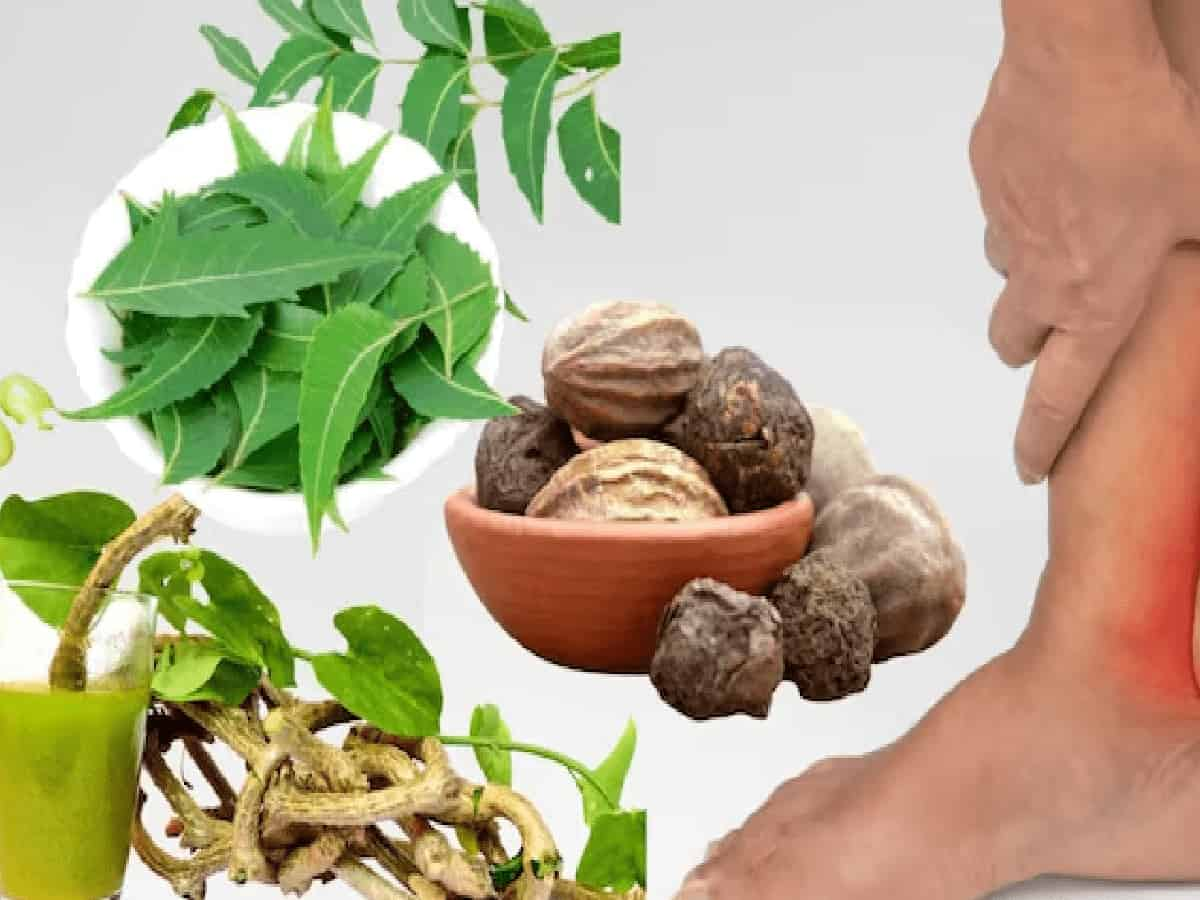
5 Herbs for Uric Acid & Joint Pain: What Research Actually Shows
Joint stiffness, sudden throbbing swelling, and morning soreness have turned elevated uric acid and arthritis into everyday health concerns for millions of households. In normal human metabolism, the body breaks down purines—compounds naturally present in human cells and certain foods and beverages—into uric acid, most of which dissolves in the bloodstream, passes through the kidneys, and leaves the body in urine. When the body produces excess uric acid or the kidneys clear it too slowly (hyperuricemia), sharp monosodium urate crystals can accumulate in and around joints, triggering painful inflammation known as gouty arthritis, while broader wear-and-tear or inflammatory joint conditions also contribute to chronic pain and cartilage stress. While conventional medications play a central role in acute flare management and urate control, many people look toward traditional Ayurvedic botanicals and dietary herbs to complement daily care. For health-conscious readers across northern India—including families in Unnao and neighboring Uttar Pradesh cities such as Lucknow, Kanpur, Prayagraj, and Varanasi, where seasonal shifts, dietary habits, and joint discomfort frequently prompt searches for natural remedies—understanding both traditional use and the real scope of scientific evidence helps separate genuine promise from exaggeration.
How Excess Uric Acid Triggers Joint Pain and Why Evidence Nuance Matters
When urate crystals deposit inside joint spaces, immune cells respond by releasing inflammatory mediators that cause redness, warmth, swelling, and sharp pain—most famously in the big toe, ankles, knees, or wrists. In clinical and laboratory research, scientists evaluate candidate herbs for two main actions: inhibiting xanthine oxidase (an enzyme involved in uric acid production) or supporting urinary excretion, alongside anti-inflammatory and antioxidant activity that calms swollen joint tissue. At the same time, evidence-based medicine draws an important distinction between promising cell or animal experiments and large human clinical trials: many botanicals show encouraging anti-inflammatory or urate-lowering signals in preclinical studies, yet human data remain limited or preliminary, and herbal preparations can still interact with prescription drugs or cause digestive upset.
5 Herbs and Botanicals Linked to Uric Acid and Joint Relief
Traditional Ayurveda and nutritional research frequently highlight five botanicals when discussing joint comfort and uric acid balance:
| Herb / Botanical | Traditional Ayurvedic & Nutritional Role | What Scientific Research Indicates |
| 1. Triphala (Amalaki, Bibhitaki, Haritaki) | Classic three-fruit formulation used for digestion, bowel regularity, and balancing doshas in joint and metabolic disorders. | Preclinical cell and animal studies on monosodium urate-induced arthritis report anti-inflammatory and antioxidant effects, though large human gout trials remain limited. |
| 2. Neem (Azadirachta indica) | Bitter leaf and oil used traditionally in poultices/pastes for swollen joints and blood purification claims. | Laboratory and animal studies demonstrate anti-inflammatory activity, but direct clinical proof that neem lowers human blood uric acid or cures gout is lacking. |
| 3. Giloy / Guduchi (Tinospora cordifolia) | Widely used in Ayurveda to support immunity, inflammatory balance, and metabolic wellness. | Animal and pharmacological reviews suggest anti-inflammatory and analgesic properties, yet robust human clinical trials confirming urate-lowering efficacy are still needed. |
| 4. Punarnava (Boerhavia diffusa) | Traditional herb valued in Ayurvedic practice for fluid balance, kidney support, and joint swelling relief. | Widely cited in traditional and preclinical literature for diuretic and anti-inflammatory properties, requiring careful oversight if kidney function is already impaired. |
| 5. Tart Cherry / Dark Berries | Dietary fruit/concentrate frequently paired with herbal regimens to support joint comfort and uric acid management. | Observational and pilot clinical studies associate cherry intake or tart cherry concentrate with lower uric acid levels and reduced gout flare frequency, though dietary intake still has limits. |
Safe Daily Habits Alongside Herbal Remedies
Even when people explore botanical teas, powders, or topical applications, sustainable joint and uric acid management depends heavily on everyday fundamentals. Staying well-hydrated helps the kidneys flush uric acid efficiently, while moderating high-purine triggers (such as excess organ meats, certain seafood, sugary/fructose-sweetened drinks, and alcohol), maintaining a healthy weight, and doing low-impact movement or gentle physiotherapy protect joint health over time. Because herbal extracts are biologically active—and "natural" does not automatically mean free of side effects or drug interactions—checking with a qualified healthcare professional before starting or combining herbal supplements remains a smart safeguard, especially for individuals taking blood thinners, diabetes or blood-pressure drugs, or urate-lowering therapy.




