







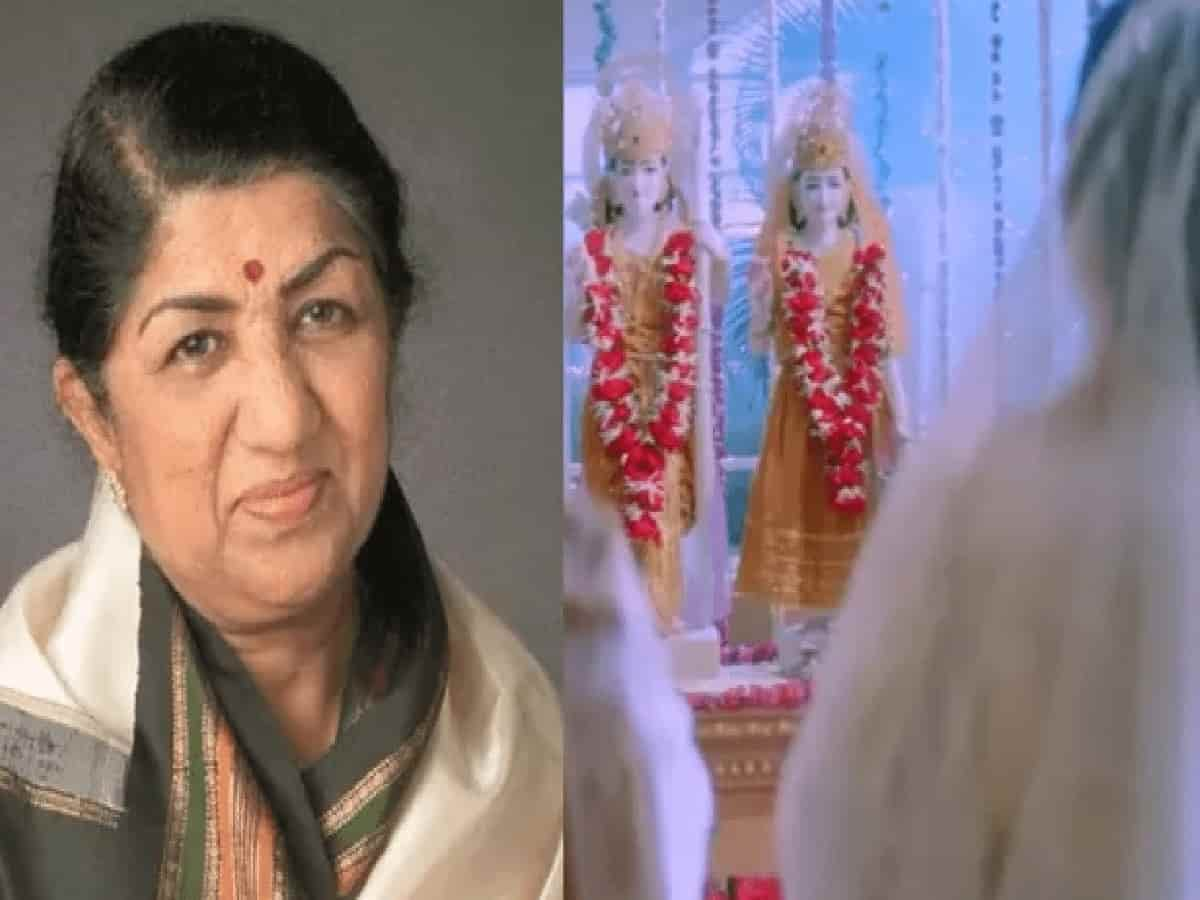
Bollywood's Iconic Diwali Puja Scene: The Magic of Lata's Voice
In the rich history of Hindi cinema, certain sequences transcend the confines of the silver screen to become woven into the collective cultural consciousness of generations. Twenty-five years ago, director Karan Johar delivered a magnum opus that redefined how Indian families, grand rituals, and festive homecomings were visualised in popular media. While Kabhi Khushi Kabhie Gham... (2001) is remembered for its ensemble star cast and lavish sets, a single five-minute sequence set during Diwali puja stands out as one of the most emotional scenes ever committed to celluloid. Centered on the unspoken bond between a mother and her son, the scene captures the moment Nandini Raichand (portrayed by Jaya Bachchan) instinctively senses the arrival of her elder son Rahul (Shah Rukh Khan). Even after two and a half decades, as homes across India light earthen lamps and prepare puja thalis, this iconic sequence—elevated by the soulful vocal alaap of playback legend Lata Mangeshkar—remains the gold standard of Bollywood festive storytelling.
The Emotional Core: A Mother’s Intuition That Defied Logic
The dramatic impact of the Diwali sequence in Kabhi Khushi Kabhie Gham lies in its portrayal of maternal intuition, commonly referred to as maa ki mamta. Set within the sprawling Raichand mansion, the family is gathered around a grand altar to perform the sacred Lakshmi Pujan. Surrounded by singing relatives, glowing diyas, and traditional floral decor, Nandini holds the ceremonial aarti thali, leading the devotional rituals. However, amidst the chanting and celebration, her heart is distracted by a single void: the absence of her adopted elder son, who is studying overseas.
Without any phone call, car horn, or announcement, Nandini suddenly stops mid-ritual. Her breath catches, her eyes widen, and a tremor passes through her hands as she holds the brass lamp. Before anyone in the household realizes what is happening, she steps away from the sanctum and walks toward the grand front entrance. Miles away on the estate’s private grounds, a helicopter touches down. In one of the most recognizable character introductions in contemporary cinema, Shah Rukh Khan disembarks, runs across the lawn, and bounds up the marble stairs. As the double doors open, Nandini is already standing there with the thali in hand, waiting to welcome him. The scene captured a sentiment familiar to Indian households: that no matter the physical distance, a mother’s heart always knows when her child is near.
The Voice of an Era: How Lata Mangeshkar’s Alaap Defined the Moment
While the visual framing was grand, the true emotional weight of the sequence came from its musical arrangement. The title track of Kabhi Khushi Kabhie Gham, which serves as the backdrop to this puja, was sung by Bharat Ratna recipient Lata Mangeshkar. Recorded in the autumn of her legendary career, Mangeshkar infused the track with spiritual devotion and maternal affection.
The climactic moment when Rahul enters the mansion is accompanied not by loud orchestration, but by Lata Mangeshkar’s resonant vocal alaap soaring over the melody. That single vocal phrase bridged the gap between grand cinema melodrama and genuine emotional release. Industry analysts and film music historians have often pointed out that while modern tracks rely on synth loops and rapid tempo shifts, Jatin-Lalit’s traditional composition and Sameer Anjaan’s poignant lyrics gave the track an enduring spiritual resonance. The music transformed a high-society Diwali party into a profound meditation on belonging, filial duty, and the sacred nature of home.
Grand Aesthetics: How Karan Johar Set the Template for Festive Bollywood
Beyond its emotional resonance, the Diwali puja sequence in Kabhi Khushi Kabhie Gham set a visual benchmark that influenced Indian pop culture, television serials, and high-end festive celebrations for years to come. Prior to the film's 2001 release, festive depictions in Hindi cinema were often modest and theatrical. Karan Johar, along with production designer Sharmishta Roy and costume designers Manish Malhotra and Shabina Khan, approached Diwali with cinematic grandeur.
The screen was filled with coordinated color palettes:
-
The Elegance of Traditional Attire: Jaya Bachchan was draped in an understated ivory saree with fine embroidery, contrasting with Amitabh Bachchan’s formal sherwani, establishing an aristocratic yet traditional look.
-
Graceful Festive Cameo: Rani Mukerji, cast as family friend Pooja, added charm to the scene, dancing gracefully with traditional diyas while clad in festive ethnic wear.
-
Lighting and Architecture: Massive chandeliers, hundreds of flickering earthen oil lamps, marigold garlands, and polished brass artifacts gave the mansion an authentic festive warmth.
This visual style inspired wedding decorators, festive event planners, and everyday households, sparking trends in festive attire and interior decorations during the early 2000s.
Melodrama Done Right: Why the Sequence Endures Across Generations
In an era where film critiques often emphasize understated realism, the unapologetic melodrama of Kabhi Khushi Kabhie Gham continues to resonate with contemporary audiences. Critics originally noted the sheer implausibility of a mother hearing a helicopter land miles away over the din of bells and brass cymbals. Yet, as viewers frequently remark on social media every Diwali, cinema is not always about literal reality; it is about conveying emotional truth.
The scene worked because it tapped into the core emotional ethos of Diwali. In Indian tradition, Diwali is fundamentally a celebration of homecoming—marking the return of Lord Rama to Ayodhya after fourteen years of exile. By aligning Rahul’s return home with the lighting of Diwali lamps, the narrative mirrored that ancient archetype of return and reunion. For the Indian diaspora living thousands of miles away in London, North America, or the Gulf, the sequence became an emotional touchstone, encapsulating the deep longing to return to their roots and touch their mother’s feet during the festival of lights.
A Timeless Cultural Legacy After Twenty-Five Years
A quarter of a century after its theatrical debut, the Diwali puja sequence of Kabhi Khushi Kabhie Gham remains an integral part of festive celebrations. Television networks continue to air the movie during the Diwali weekend, while video snippets of Jaya Bachchan walking toward the door with her puja thali circulate across digital platforms every festive season.
The sequence stands as a testament to an era of collaborative filmmaking where a director's visual scale, veteran actors' expressive performances, timeless songwriting, and Lata Mangeshkar’s voice came together to create cinematic history. As families across the globe gather to celebrate Diwali, the image of a mother stepping out to welcome her child with a glowing lamp remains one of Indian cinema's most moving tributes to home and family.




