







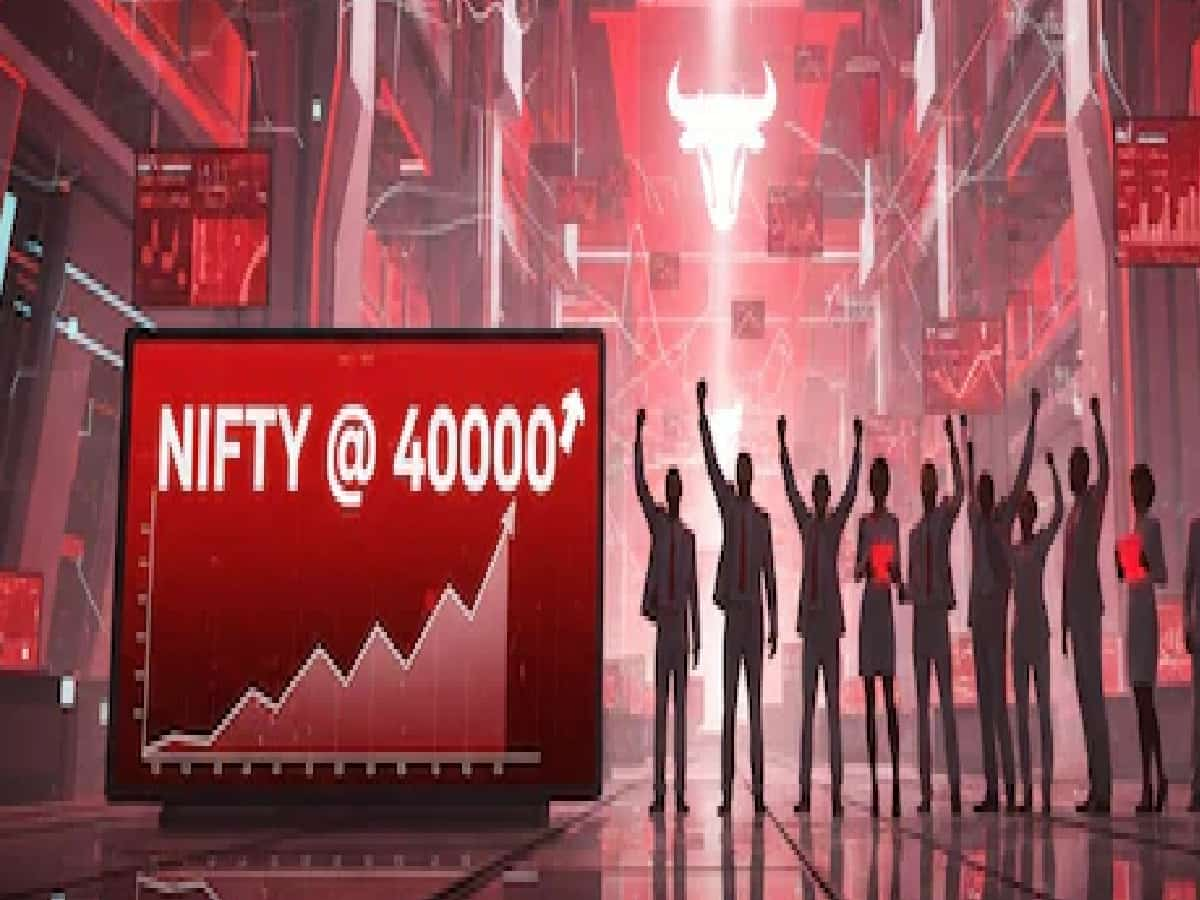
Nifty Target 40,000: CLSA Flags Rare Bull Signal for 34% Gain
Dalal Street is evaluating a significant long-term technical projection as institutional brokerage CLSA outlined an expansive multi-year roadmap for Indian benchmark equities. Speaking at the CITIC CLSA India Forum in an interview with CNBC-TV18, Laurence Balanco, Global Technical Strategist at CLSA, revealed that the Nifty 50 is setting up for an advance that could initially challenge the 26,300 mark in the near term before unlocking an extended upside trajectory toward 31,000 to 40,000 over the long cycle. The cornerstone of this outlook rests on a rare monthly technical indicator: should the Nifty successfully register a monthly close above the 25,500 threshold at the end of November 2026, it would trigger a formal long-term buy signal for the first time since August 2020. Historically, this technical trigger has appeared only 12 times over the past 33 years, delivering an average 12-month forward return of more than 34 percent. With banking majors and enterprise software names emerging as the primary engines of this structural advance, the analysis highlights how domestic equity markets could decouple from global macroeconomic friction.
The 26,300 Breakout Gateway: Path to the 40,000 Horizon
In his technical assessment of the Indian market structure, Balanco emphasized that the path toward blue-sky targets must be approached through precise sequential hurdles. Before the market can contemplate a sustained move into the 31,000 to 40,000 band, the benchmark Nifty 50 must confront and decisively clear the immediate overhead resistance situated at 26,300. In technical analysis, crossing a multi-month ceiling constitutes a confirmed breakout, converting historical supply zones into solid demand support and drawing fresh institutional momentum capital into large-cap counters.
The broader trading consolidation observed across Indian equities throughout recent quarters is functioning as an accumulation base for the next major leg of the secular bull market. Rather than signaling cyclical exhaustion, prolonged periods of range-bound price action allow valuation multiples to digest past gains while institutional portfolios systematically rotate into high-conviction sectors. While reaching 40,000 remains an extended multi-year objective rather than a short-term forecast, technical chartists note that establishing a structural base above 26,300 will alter the risk-reward geometry for institutional asset allocators globally.
The 25,500 Rare Monthly Trigger: Deciphering the 34% Historical Pattern
The catalyst that has captured the attention of quantitative traders and institutional desks is a rare momentum signal that hinges on where the index closes on the final trading session of November. According to Balanco’s historical backtesting, a monthly settlement above the 25,500 mark would validate a structural continuation pattern that has not emerged since the pandemic-era liquidity rebound in August 2020.
Studying price action data dating back to 1993, CLSA's quantitative models identify that this specific configuration has materialized only 12 times in more than three decades. In those prior occurrences, the Nifty 50 generated an average 12-month forward capital appreciation exceeding 34 percent, with 11 out of 12 instances delivering positive equity returns. While historical precedent provides statistical probability rather than an absolute guarantee, the emergence of this technical setup suggests that the broader secular uptrend in Indian equities remains intact despite intermittent bouts of short-term volatility.
Bank Nifty at 70,000: ICICI Bank Leads as HDFC Bank Consolidates
A structural advance of this magnitude requires decisive leadership from financial services, which command the largest sectoral weighting in domestic indices. Balanco identified the banking sector as the primary operational engine of the anticipated rally, noting that the Bank Nifty index is actively attempting a technical breakout from the sideways trading range it has occupied since February. A decisive clearance of this consolidation band opens up a 20 percent upside runway for the banking benchmark, pointing toward a measured target of 70,000.
Within the private banking universe, the technical setup reveals notable divergence. Balanco singled out ICICI Bank as the undisputed sector leader, possessing a strong chart structure with measured upside targets positioned between ₹1,900 and ₹2,000. In contrast, heavy-weight peer HDFC Bank continues to fluctuate within a well-defined horizontal trading corridor, reflecting institutional consolidation. Chartists observe that once HDFC Bank resolves its base and joins ICICI Bank’s upward trajectory, the combined weight of both lenders will provide the necessary torque to propel the Bank Nifty toward the 70,000 milestone.
Tech Rebound vs. Sector Rotations: IT Targets 40,000 as Metals and FMCG Lag
Beyond financials, the technology pack is positioned to provide critical structural support to frontline indices. The NSE IT Index has spent the past five months constructing a classical inverse head-and-shoulders base, an established technical reversal pattern that typically precedes an expansive upward trend. Based on the depth and duration of this accumulation formation, Balanco projects a technical upside target of 40,000 for the NSE IT index, suggesting that software exporters could enjoy a renewed wave of buying as enterprise spending sentiment stabilizes.
Conversely, CLSA’s technical models urge caution regarding industrial commodities and consumer defensives. Following a sharp run in the first half of the calendar year, the materials and metals sectors are exhibiting deteriorating relative strength indicators and negative momentum divergence. Simultaneously, the fast-moving consumer goods (FMCG) segment has consistently underperformed the benchmark Nifty for nearly three years, struggling with muted volume growth and raw material inflation. Balanco recommends an underweight portfolio posture toward metals and FMCG, advising capital rotation into outperforming themes. In addition, specialized capital market plays are showing renewed strength, with the Multi Commodity Exchange (MCX) leading the rebound and the BSE index demonstrating technical readiness to retest its previous historical peaks.
Global Decoupling: Navigating Wall Street Fatigue and Asian Pressures
CLSA’s constructive stance on India is framed against a backdrop of technical deterioration across several developed and emerging market bourses. In the United States, technology equities are flashing cautionary momentum divergences, with the tech-heavy Nasdaq chart entering a corrective channel that points toward a potential downside target near 23,800. For the broader S&P 500, the index is projected to oscillate within a defined trading band bounded by key support at 7,000 and overhead resistance at 7,600, as defensive rotations limit upside potential.
Across Asia, broader manufacturing exporters are encountering heightened technical strain. Taiwan’s Taiex index has slipped beneath both its 200-day moving average and its critical July lows without establishing a visible structural base, while South Korea’s KOSPI remains weighed down by global memory chip cyclicality. In this environment of international fatigue, Indian equities stand out due to their heavy domestic consumption orientation, steady institutional SIP flows, and structural macro stability, allowing Dalal Street to decouple from external volatility.
Macro Alignment: Brent Crude, Gold at $4,000, and Rupee Fortunes
The technical projections for equities are supported by favorable alignments across international commodities and foreign exchange. In the energy complex, international benchmark Brent crude is testing the lower boundary of its multi-month trading range. Balanco notes that a confirmed breakdown below $97 per barrel would accelerate a slide toward $90, an outcome that would signal de-escalating tensions in the Middle East, ease India's import bill, and support broader risk assets.
In precious metals, gold is carving out an accumulation base near the $4,000-per-ounce mark, with chart projections pointing toward a rally exceeding $4,500 once consolidation completes. Silver, which recently breached the $55 level, requires further technical confirmation before initiating fresh long commitments. In currency markets, the US Dollar Index remains capped beneath its pivotal 2022 high of 107, preserving a secular downtrend that continues to support emerging market capital flows. For the Indian Rupee, recent softening in the USD/INR currency pair suggests underlying domestic currency resilience, providing foreign institutional allocators with the currency stability required to fund large-scale equity deployments as India charts its path toward new market highs.




