Nifty Falls While Sensex Rises: Why Divergent Market Movements Sparked Panic and What NSE Clarified
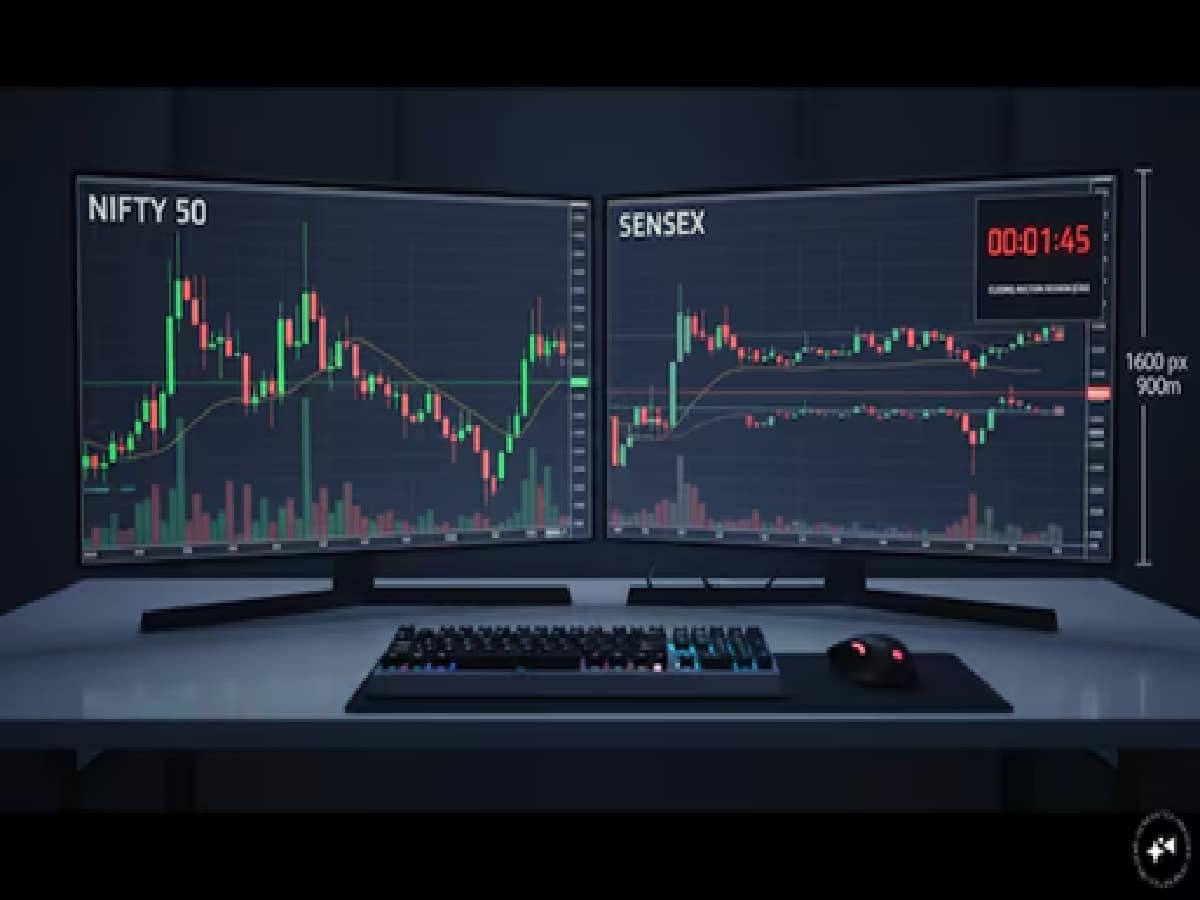
Investors watching the stock market ticker on Tuesday morning were greeted by a rare and unsettling divergence between India's premier benchmark indices. While the Nifty 50 tumbled sharply by nearly 315 points to trade around 24,460, the BSE Sensex bucked the trend to trade higher by 166 points at 78,805.18. The unusual decoupling of indices that typically move in tandem left market participants baffled, raising immediate concerns over potential technical glitches, calculation errors, or systemic anomalies. However, the National Stock Exchange (NSE) stepped in with a detailed clarification, revealing that the divergence was directly linked to the newly introduced Closing Auction Session (CAS) framework.
Understanding the Closing Auction Session (CAS) and Index Divergence
To comprehend why the Nifty and Sensex moved in opposite directions, investors must understand the mechanics of the newly implemented Closing Auction Session (CAS). Previously, closing prices were determined using the Volume Weighted Average Price (VWAP) calculated across the final 30 minutes of trading. Under the new CAS system, buy and sell orders are pooled into a separate order book before market close to determine a single Equilibrium Price where the maximum number of trades can be matched. Because the Nifty 50 and BSE Sensex consist of different constituent companies carrying varying weightages, distinct pricing behavior in specific stocks during the auction session created a temporary mismatch in index calculations, causing the Nifty to appear significantly lower while the Sensex held ground.
Operational Shifts Between 3:15 PM and 3:30 PM
The transition period between 3:15 PM and 3:30 PM operates differently under CAS compared to normal continuous trading. During this window, orders are submitted, modified, or canceled without continuous second-by-second matching, meaning index graphs may appear static or experience sudden shifts based strictly on executed equilibrium prices. The NSE reported encouraging initial participation on the system's launch day, noting that 515 trading members placed orders across 56,773 unique PANs, outperforming previous pre-open participation metrics. While the exchange emphasized that no technical glitch occurred and all orders followed established regulatory guidelines, the shift requires market participants to adapt to a new closing price discovery mechanism.
Crucial Warnings and Guidance for Options Traders
While long-term investors were advised not to panic over brief closing discrepancies, derivatives and options traders have been strongly urged to exercise extreme caution, particularly during expiry days. Market experts, including CNBC Awaaz Managing Editor Anuj Singhal, highlighted that final minutes between 3:25 PM and 3:30 PM are no longer entirely within a trader's control under the new auction rules. Since equity derivatives trading continues until 3:40 PM while cash market closing prices are determined via CAS, minor spot price adjustments—even by just two points—can drastically swing option premiums when an index is hovering near a critical strike price. Traders caught on the wrong side of an expiring contract may face severe difficulties squaring off positions at expected prices, making disciplined risk management essential as the market adapts to the new framework.