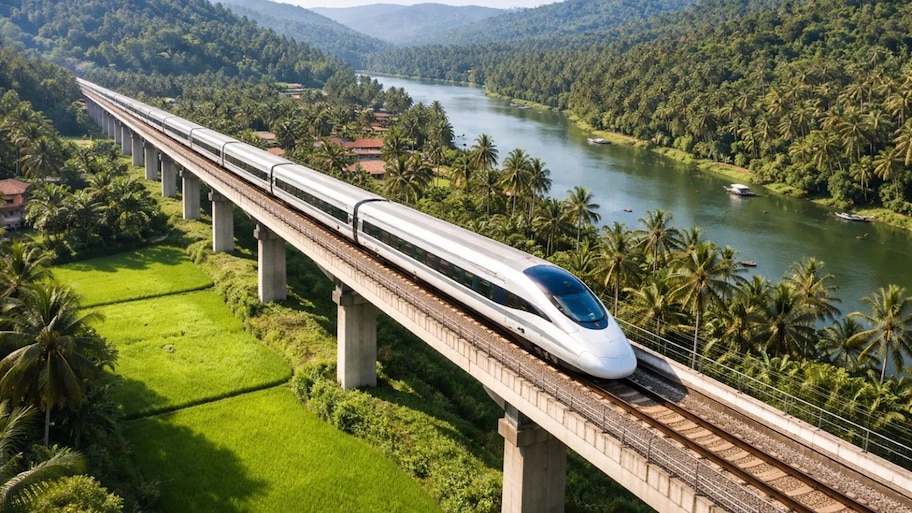
India to Build Its Own 350 km/h Bullet Train: ‘Made in India’ Superfast Train to Rival Japan’s E10 Series
For decades, India’s massive railway network has been renowned as one of the largest commuter systems in the world, primarily focusing on passenger connectivity and freight transport. However, a monumental paradigm shift is currently underway as the nation transitions from merely operating imported technology to designing, engineering, and manufacturing world-class high-speed trains on domestic soil. Driven by ambitious national infrastructure goals and indigenous engineering prowess, Indian railway authorities have officially embarked on a groundbreaking mission to build advanced bullet trains capable of scorching past tracks at a staggering speed of 350 kilometers per hour. This visionary leap positions India not just as a consumer of cutting-edge transit solutions, but as an emerging global exporter and formidable competitor in the elite high-speed rail manufacturing arena, challenging traditional giants and reshaping the future of mass transit.
Rivaling Japan’s Iconic E10 Series with Indigenous Engineering
When discussing high-speed rail excellence, Japan has historically set the gold standard with its legendary Shinkansen bullet train models, particularly the advanced E10 series known for its aerodynamic precision and safety. India’s upcoming indigenous bullet train project has set its sights directly on matching and even surpassing these global benchmarks, incorporating state-of-the-art aerodynamic designs, lightweight aluminum-alloy body structures, and advanced braking systems. Engineers and railway scientists across domestic research facilities are meticulously testing propulsion dynamics, track stability, and energy efficiency to ensure the 'Made in India' superfast train delivers whisper-quiet, ultra-smooth rides at 350 km/h. By blending advanced technological collaborations with domestic manufacturing capabilities, Indian engineers are creating a proprietary high-speed template that rivals Japan’s finest engineering feats while maintaining cost-effective production advantages.
Transforming Economic Corridors and Boosting Local Infrastructure
The development and deployment of indigenous 350 km/h bullet trains are set to act as powerful catalysts for rapid economic growth, regional integration, and industrial modernization across the country. Connecting major commercial hubs, industrial corridors, and metropolitan centers with ultra-fast transit reduces travel times from hours to minutes, fostering unprecedented business collaboration and tourism. Furthermore, the manufacturing ecosystem supporting this mega-project is generating thousands of high-tech engineering jobs, encouraging local MSMEs, and fostering deep-tech research partnerships in metallurgy, electronics, and railway signaling. As dedicated freight and high-speed passenger corridors expand rapidly across Indian landscapes, local communities and urban centers stand to gain immensely from world-class connectivity, modernized transit stations, and sustainable infrastructure development designed for the 21st century.
A Golden Era for the Future of Global Rail Transport
As manufacturing units ramp up production and prototype testing enters its final phases, the global railway community is watching India’s high-speed ambitions with immense admiration and respect. The realization of a completely 'Made in India' bullet train capable of clocking 350 km/h symbolizes the unstoppable rise of a self-reliant nation ready to conquer the most complex technological frontiers. This historic achievement will not only redefine domestic mobility for millions of citizens but also open doors for exporting Indian-built high-speed trains to developing nations seeking affordable, top-tier rail infrastructure. The roaring momentum of India’s railway revolution proves that with visionary leadership, relentless engineering dedication, and unwavering national resolve, no technological summit is too high to scale.