Dow Jumps 470 Points as AI Rally Lifts Wall Street Despite Surging 5.17% Treasury Yields
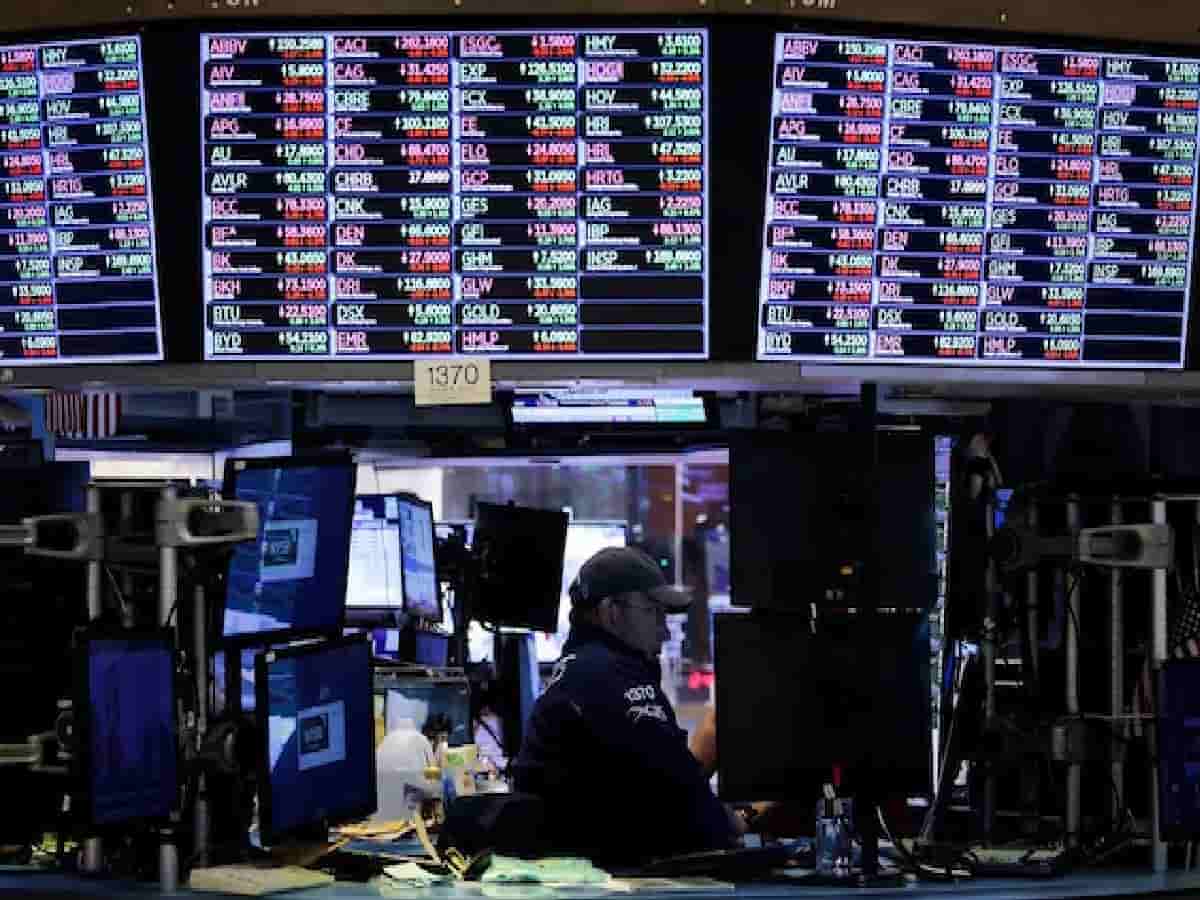
Wall Street concluded the trading week on a decisive high as an aggressive resurgence in artificial intelligence and mega-cap semiconductor equities sparked a robust broad-market rally. The blue-chip Dow Jones Industrial Average surged 478.64 points, or 0.93 percent, to settle at 51,828.62, while the benchmark S&P 500 index climbed 0.51 percent to finish at 7,743.41. The tech-heavy Nasdaq Composite gained 0.5 percent to touch 27,068.72, capping off a remarkable weekly advance of nearly 2 percent that saw the tech gauge print fresh record highs. Market optimism was propelled by aggressive institutional accumulation across technology heavyweights, accompanied by modest cooling in international crude benchmarks that provided temporary inflation relief, even as persistent geopolitical friction in West Asia and spiking sovereign borrowing rates kept institutional traders on edge.
Big Tech Leads Charge: Microsoft, Dell, and Anthropic Cloud Deal Power Gains
The trading session was largely dominated by heavy demand for artificial intelligence pioneers and hardware infrastructure providers. Microsoft shares climbed 3.7 percent after the enterprise tech giant rolled out enhanced enterprise AI functionalities across its flagship Copilot platform. Hardware and edge-computing majors followed suit, with Dell jumping nearly 5 percent and Qualcomm rallying approximately 4 percent on robust enterprise deployment prospects. Cloud delivery networks also witnessed significant institutional interest, as Akamai Technologies gained 3 percent following the announcement of an expansive, multi-year cloud compute partnership valued at $11.6 billion with leading frontier AI firm Anthropic. Led by these hardware and enterprise software gains, the Information Technology sector spearheaded broader market performance with a 0.91 percent jump, while Industrials advanced 0.6 percent, lifting seven out of eleven primary S&P 500 sectors into positive territory.
Crude Oil Pullback Offers Brief Respite Amid Strait of Hormuz Speculation
Easing commodity prices provided much-needed headroom for equities following speculative reports of diplomatic off-ramps in West Asia and potential pathways toward reopening maritime navigation along the critical Strait of Hormuz. West Texas Intermediate (WTI) crude slid 2.33 percent to $92.41 per barrel, while global benchmark Brent crude retreated 2.14 percent to close at $104.32 per barrel. Although Brent continues to trade uncomfortably above the psychological triple-digit threshold of $100 per barrel—posing persistent cost pressures for energy-intensive logistics and manufacturing industries—the session’s pullback helped dampen near-term inflation anxiety, encouraging equity traders to re-enter risk assets despite the fragile diplomatic landscape across the Persian Gulf.
Bond Market Anxiety: Treasury Yields at Multi-Year Peaks Cloud Fed Rate Path
Contrasting with the equity rally, the US fixed-income market remained under sustained selling pressure, with benchmark debt yields hovering near multi-year zeniths. The yield on the benchmark 10-year US Treasury note traded near 5.17 percent, maintaining elevation following a series of multi-year highs touched earlier in the week, while the long-duration 30-year bond yield remained pinned at 5.46 percent. Surging debt yields directly increase capital financing costs for corporate balance sheets while putting mathematical pressure on equity multiples. Simultaneously, interest rate futures monitored via the CME FedWatch tool revealed shifting expectations, pricing in a 66 percent probability of an additional 25-basis-point interest rate increase by the Federal Reserve at its upcoming October meeting, up sharply from 50 percent at the start of the week. While LSEG analytics revealed the forward price-to-earnings ratio of the S&P 500 contracted to slightly under 19 times—its lowest valuation benchmark since 2023—surging yields and persistent energy risks will test whether AI-driven earnings momentum can sustain Wall Street's upward trajectory.