






Coca-Cola Bottler Files IPO: Thums Up Beats Flagship Brand
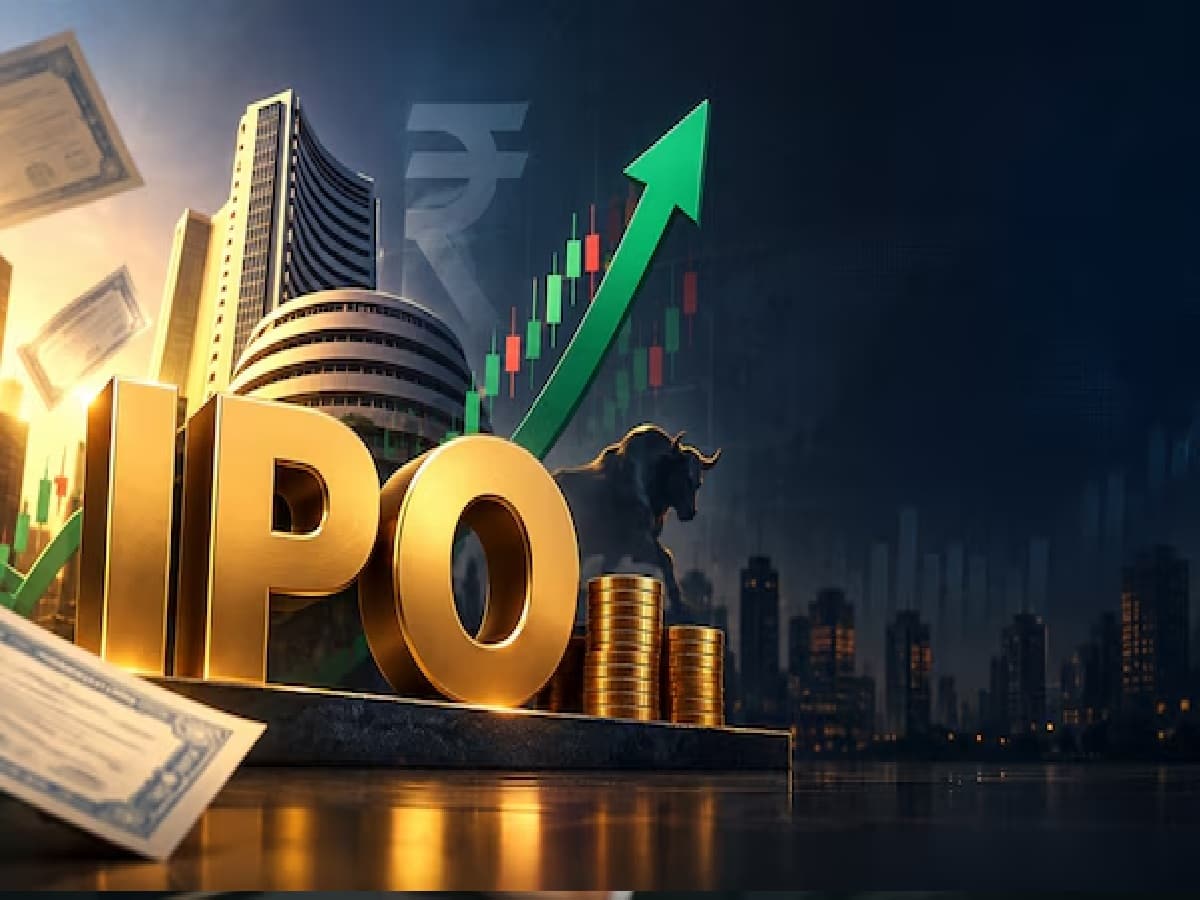
Hindustan Coca-Cola Holdings has filed its DRHP with SEBI for a mega OFS IPO, revealing that homegrown brand Thums Up outsells Coca-Cola across key Indian states.
India's fast-moving consumer goods landscape witnessed a monumental milestone on Monday, November 9, 2026, as Hindustan Coca-Cola Holdings (HCCH), the holding parent of Hindustan Coca-Cola Beverages (HCCB), formally submitted its Draft Red Herring Prospectus (DRHP) to the market regulator, the Securities and Exchange Board of India (SEBI). As the flagship company-owned bottling partner responsible for manufacturing, packaging, and distributing the beverage giant’s portfolio across southern, western, and central India, HCCB's planned public listing marks one of the most anticipated consumer debuts on Dalal Street. While the impending initial public offering signals Atlanta’s ongoing strategy to refranchise capital-intensive bottling assets, the regulatory filing revealed an extraordinary domestic brand dynamic: homegrown cola brand Thums Up has officially surpassed the global namesake Coca-Cola brand in gross sales value across the company’s operating territories, proving the enduring commercial dominance of India's indigenous taste profile.
The Mega Offer for Sale: Coca-Cola Prepares to Dilute Stake to 45%
The proposed public issue is structured entirely as an Offer for Sale (OFS), comprising a divestment of up to 997.5 million equity shares of face value ₹10 each by promoter entity Hindustan Coca-Cola Overseas Holdings. Because the transaction is a pure secondary market sale, the issuing company will not receive any fresh capital proceeds, with the entirety of the liquidity flowing directly to the selling promoter. While the price band, issue timeline, and lot size will be determined after regulatory scrutiny by SEBI, a heavyweight syndicate of domestic and international investment banks—including Kotak Mahindra Capital, Citigroup, JP Morgan, Morgan Stanley, Axis Capital, Goldman Sachs, and IIFL Capital—has been appointed to manage the book-running process.
The listing forms the second phase of a calibrated equity realignment initiated in late 2024. Currently, The Coca-Cola Company retains a 60 percent controlling stake through its overseas holding arm, while the remaining 40 percent is held by Jubilant Beverages, an investment affiliate of the Bhartia family’s Jubilant Bhartia Group. Under a landmark share purchase agreement executed on December 11, 2024, Jubilant acquired 265.99 crore shares for ₹11,704 crore, establishing a benchmark equity valuation of approximately ₹29,260 crore for the bottling behemoth. Should the public issue see complete subscription, Coca-Cola’s equity holding in HCCH will be diluted to roughly 45 percent, aligning with the multinational’s stated corporate blueprint to asset-light its international balance sheet while unlocking local capital participation.
The Desi Champion: How Thums Up Outpaced Brand Coke
Among the most compelling revelations disclosed within the regulatory prospectus is the commercial ranking of Coca-Cola’s beverage portfolio. In the ten core operating states managed by HCCB, Thums Up reigns supreme as the number one brand across all carbonated soft drinks and packaged drinking water in terms of gross sales value, outperforming even the flagship global Coca-Cola trademark. Cultivated over decades with a distinct effervescent bite, Thums Up has transcended legacy perceptions, standing alongside lemon-lime stablemate Sprite as one of India's rare FMCG power brands, with both labels each clocking annual gross sales exceeding ₹10,000 crore in the twelve-month period ending June 2026.
The portfolio dominance outlined in the filing illustrates an expansive distribution moat. In the fruit juice and still beverage segment, Maaza maintains undisputed leadership, while Kinley stands as the foremost brand in packaged drinking water. Across its ten operating states, Coca-Cola’s brand stable commands an aggregate value market share of 37.2 percent—more than triple that of its nearest industry competitor—with eight of the top twelve non-alcoholic ready-to-drink (NARTD) brands belonging to the company. On Kantar’s proprietary Brand Power metric, Sprite leads its closest rival by 3.5 times, while Thums Up outpaces its nearest competitor by 1.8 times. The filing also noted that India served as the single largest contributor to The Coca-Cola Company’s worldwide volume growth between 2021 and 2025, firmly cementing the subcontinent among its top five markets globally.
Bottling Infrastructure Across 10 States and 4 Union Territories
HCCB operates as the premier manufacturing and supply chain backbone for Coca-Cola in India, accounting for approximately 38.53 percent of the parent company's national concentrate sales. The bottler's operational footprint spans all or parts of Kerala, Karnataka, Tamil Nadu, Goa, Odisha, Andhra Pradesh, Telangana, Maharashtra, Madhya Pradesh, and Gujarat, alongside four Union Territories. This geographic cluster encompasses southern port corridors, major peninsular metropolitan hubs, and dense central consuming districts.
To service this massive geographical territory, HCCB distributes 41 beverage varieties through a sprawling route-to-market network comprising 1.7 million retail touchpoints and 2,273 independent distributors. The manufacturing infrastructure features 14 company-owned processing plants and 8 co-packing facilities, boasting an aggregate installed capacity of 1,291 million unit cases per year. Demonstrating heavy capital commitment, the bottler has deployed ₹8,755 crore toward property, plant, and equipment since FY24, including the commissioning of state-of-the-art automated greenfield factories in Siddipet, Telangana, and Lote, Maharashtra.
Weather Volatility and the April-June 2026 Financial Rebound
The prospectus provides candid insights into the beverage industry's vulnerability to erratic seasonal weather. In the financial year ending March 31, 2026, an unseasonably brief summer followed by an extended, torrential monsoon dampener suppressed outdoor consumer footfalls. Consequently, HCCB’s annual sales volume contracted by 6.41 percent to 690.9 million unit cases, while operational revenue fell 9.43 percent year-on-year to ₹11,549 crore. Operating EBITDA margins, excluding other income and exceptional line items, contracted from 12.86 percent in FY25 to 11.72 percent in FY26.
However, operational momentum rebounded sharply with the onset of peak summer temperatures in the first quarter of the subsequent fiscal cycle. Between April and June 2026, sales volume surged 15.11 percent year-on-year to 249.2 million unit cases, driving operational revenue up 16.86 percent to ₹4,310 crore. Operating EBITDA reached ₹742 crore, expanding operating margins to 17.2 percent compared to 14.48 percent in the previous year. Because the April-June quarter typically generates 30 to 32 percent of HCCB's annual volume, summer climatic conditions remain the primary financial swing factor. The filing also clarified that between FY24 and FY26, HCCB strategically rationalized its footprint, transferring bottling operations in Rajasthan, Bihar, Jharkhand, the Northeast, parts of West Bengal, and North Gujarat to regional franchisee bottlers; within its continuing territories, underlying revenue gained 20.46 percent during the April-June 2026 corridor.
Solving the Diet Coke Shortage: Supply Chain and Aluminum Constraints
The DRHP also demystifies the widespread shortage of Diet Coke and canned beverages that frustrated urban consumers across Mumbai, Bengaluru, and other metropolitan hubs in April 2026. The company clarified that the retail stockouts were not caused by beverage production bottlenecks, but by an acute domestic supply deficit of aluminum cans combined with sudden spikes in urban demand. Because HCCB procures can bodies on direct spot terms without long-term supply arrangements, sudden raw material shortages among can manufacturers directly disrupted retail shelves.
To mitigate future component shortages, the company is diversifying vendor partnerships while simultaneously expanding its packaging mix. This supply chain recalibration is paired with an aggressive portfolio pivot toward low-calorie beverages. During the April-June 2026 quarter, an unprecedented 75.91 percent of HCCB’s volume was derived from beverages featuring zero sugar, reduced sugar, or alternative sweeteners, led by Coca-Cola Zero Sugar, Diet Coke, Sprite Zero Sugar, Thums Up XForce, and RimZim. Over the last five years, the company has introduced or revitalized eight distinct product lines, including Predator Energy and Limca GlucoCharge, while actively testing regional flavor adaptations such as jeera, aam panna, shikanji, and kokum to capture localized ethnic consumption.
Critical Investor Risks: Water Security, Royalties, and Campa's Challenge
The regulatory filing outlines key operating risks that potential investors must evaluate before committing capital. Foremost is HCCB's fundamental structural dependence on The Coca-Cola Company. The bottler operates under renewable franchise agreements where beverage concentrate must be purchased exclusively from Coca-Cola at prices unilaterally determined as a fixed percentage of bottling revenue, limiting margin autonomy. Furthermore, the business exhibits geographical concentration, with five territories contributing 75.63 percent of total revenue in FY26, leaving earnings sensitive to local economic or regulatory shifts.
Environmental and water security also represent significant operational hurdles. Water is the primary raw material in beverage manufacturing, with HCCB consuming 1.57 liters of water for every single liter of finished product. Acute water scarcity led to a 15-day complete operational shutdown at the Lote facility in Maharashtra during FY27, while the Bidadi plant in Karnataka experienced a 12-day water suspension in FY24. The company countered that it replenished 214 percent of the water consumed across its operations in FY26 and has permanently ceased groundwater extraction across seven water-stressed facilities. Lastly, competitive headwinds are intensifying sharply: Reliance Consumer Products’ aggressive price discounting with its revived Campa brand, alongside localized B-brands and fast-growing entrants across the energy, hydration, ready-to-drink tea, and cold coffee spaces, is reshaping shelf dynamics.
Expanding Horizons: A ₹1.18 Lakh Crore Market Awaits Dalal Street
The broader macroeconomic environment offers substantial runway for long-term category expansion. While traditional kirana stores and neighborhood eateries continue to generate 81 percent of HCCB’s aggregate retail volume, digital quick-commerce platforms like Blinkit, Zepto, and Instamart have expanded their share of the packaged beverages market from less than 0.5 percent in FY20 to 2.92 percent in FY26, with forecasts pointing toward 8.35 percent by FY31.
According to third-party industry assessments incorporated within the DRHP, the packaged beverage market across HCCB's licensed territories stood at ₹63,730 crore in FY26 and is projected to expand at a compound annual growth rate to reach ₹1,18,320 crore by FY31. As SEBI initiates its formal technical review of the draft papers, the upcoming IPO of Hindustan Coca-Cola Holdings is poised to offer public market investors a rare direct stake in India’s evolving consumer consumption story, backed by iconic global scale and unmatched homegrown market leadership.