







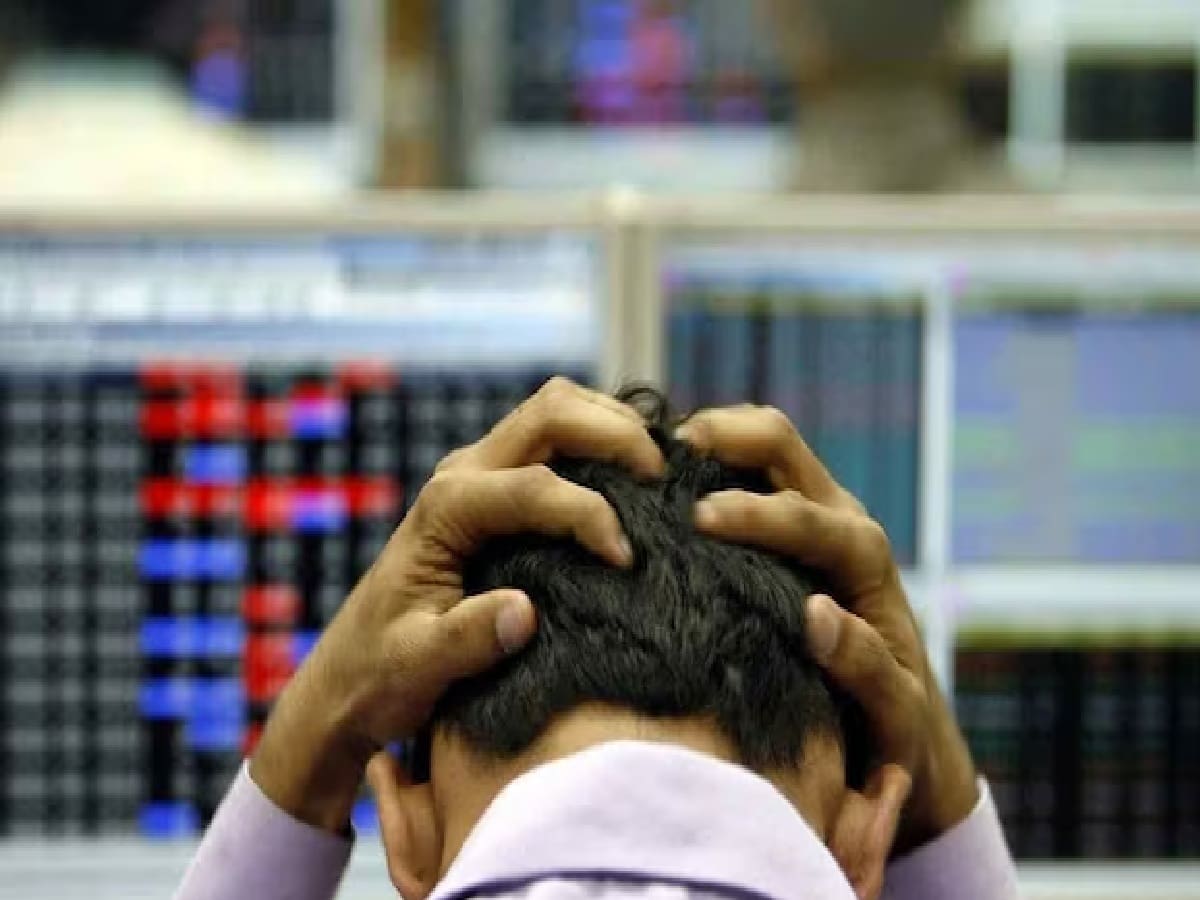
Chinese AI Stock Crash: Z.AI Plunges 85% After 2,000% Rally
Shares of prominent Chinese artificial intelligence model developer Z.AI Co.—widely known as Zhipu—have tumbled more than 85 percent from their June 2026 peak, completing one of the sharpest post-listing reversals in global technology markets after skyrocketing nearly 2,000 percent in less than six months following their Hong Kong stock market debut in January. Extending Monday's 13.9 percent slump, Zhipu shares fell another 6.8 percent in Tuesday trading on November 17, 2026, after the United States Department of Commerce imposed sweeping new semiconductor export controls aimed at preventing foreign data centers from granting Chinese companies remote access to advanced American AI chips. Together with smaller Hong Kong-listed peer MiniMax Group Inc., Z.AI has lost nearly one-third of its market value since Wednesday's close—a sell-off accelerated by global AI market turbulence following last week's Nvidia–Megaspeed espionage controversy and the abrupt resignation of Nvidia CEO Jensen Huang. While Zhipu shares remain roughly 200 percent above their January IPO price despite the steep drawdown, MiniMax's latest decline has completely erased all of its post-listing gains. Meanwhile, bearish sentiment toward pure-play Chinese AI model makers continues to intensify: according to data from S&P Global, short interest in Zhipu's free-float shares has climbed to an all-time record of 9.9 percent, even as diversified Chinese tech giants such as Tencent, Alibaba, and Baidu—alongside domestic Chinese semiconductor manufacturers—fared far better due to broader revenue streams and expectations of accelerated domestic chip adoption. For global technology investors, institutional fund managers, and market watchers across Hong Kong, Shanghai, Beijing, Singapore, Tokyo, London, New York, Mumbai, New Delhi, Bengaluru, and Lucknow, Zhipu's 85 percent collapse illustrates how Washington's compute restrictions and fierce domestic price wars are reshaping valuations across China's generative AI sector.
From 2,000% IPO Euphoria to an 85% Drawdown: Z.AI and MiniMax by the Numbers
When Z.AI and MiniMax debuted on the Hong Kong Stock Exchange in January 2026, investors priced pure-play foundation model developers as though high-end computing hardware would remain readily accessible. Over the subsequent five months, intense retail and institutional enthusiasm propelled Zhipu nearly 2,000 percent higher by June, while MiniMax surged roughly 650 percent by March. Since mid-year, however, tightening compute bottlenecks, brutal token price cuts, and looming pre-IPO lockup expiries have triggered a sustained unwinding:
| Market Metric / Company Indicator | Z.AI Co. (Zhipu) | MiniMax Group Inc. |
| Listing Timeline & Peak Rally | Listed January 2026; surged nearly 2,000% to June 2026 peak | Listed January 2026; surged ~650% to March 2026 peak |
| Drawdown From 2026 High | Crashed more than 85% from June peak | Wiped out 100% of post-IPO gains |
| Recent Session Moves (Nov 16–17) | Fell 13.9% Monday and 6.8% Tuesday; down ~33% since Wednesday | Dropped 11.2% Monday; lost nearly one-third of value since Wednesday |
| Net Return vs. January IPO Price | Still up nearly 200% from January listing level | 0% net gain (trading at or below IPO price) |
| Short Interest (S&P Global Data) | Climbed to a record 9.9% of free float | Elevated bearish positioning amid sector-wide sell-off |
How US Remote-Access Chip Rules and the Nvidia Row Hit Chinese Model Makers
The latest wave of selling followed Monday's interim final rule from the US Commerce Department's Bureau of Industry and Security (BIS), which requires foreign data centers providing large-scale AI computing capacity to Chinese-headquartered firms to obtain a US export license within 90 days, while imposing new licensing hurdles on AI chip exports to Singapore, Malaysia, Thailand, Indonesia, and Brazil.
Explaining the market impact, Billy Leung, investment strategist at Global X Management, warned that Washington's move closes off a vital offshore channel through which Chinese AI developers accessed Nvidia's advanced computing clusters. According to Leung, restricting remote cloud compute will inevitably drive up training costs and slow the pace of frontier AI model development in China—especially at a moment when rivals such as DeepSeek have already had to ration user capacity due to compute constraints and competition from both US labs and deep-pocketed Chinese conglomerates continues to intensify.
Record Short Selling and What Comes Next for China's AI Sector
Adding to valuation pressure, S&P Global data shows bearish traders have pushed short interest in Zhipu to a record 9.9 percent of free float, while market participants also brace for the January 2027 expiry of lockup periods on roughly 178 million pre-IPO Z.AI shares. Conversely, investors rotated into diversified internet platforms like Alibaba and Tencent as well as domestic Chinese chipmakers such as SMIC and Cambricon, betting that stricter US rules will force Chinese AI labs to rely more heavily on homegrown semiconductors.




