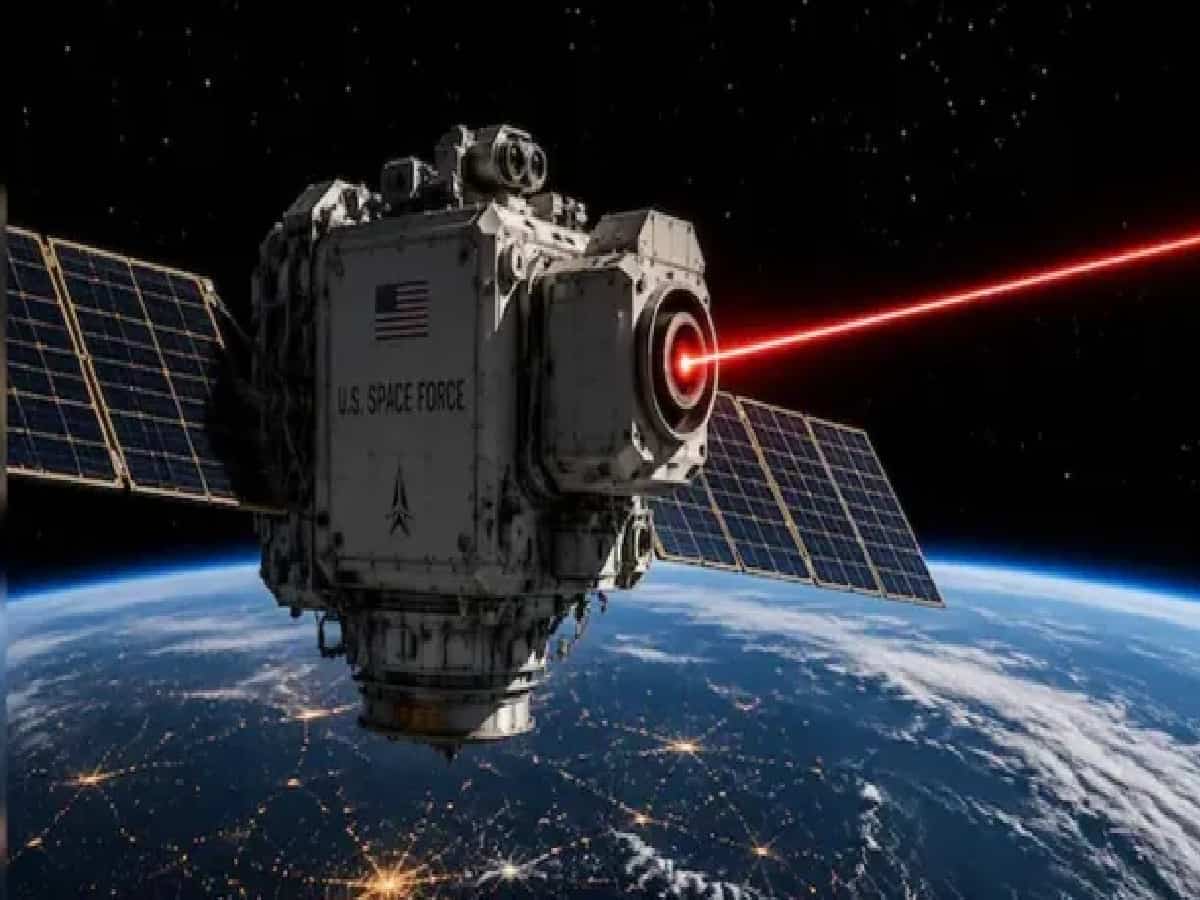
'We Have Weapons in Space': US Confirms Orbital Military Arsenal in Warning to Russia and China
In an unprecedented departure from decades of strategic ambiguity, the United States Space Force has officially declassified and acknowledged the active operational deployment of orbital weapons in outer space. The formal admission marks the first time Washington has openly declared the fielding of armed space control systems above Earth's atmosphere, delivering an unmistakable deterrent message to peer adversaries Beijing and Moscow. Speaking before international defense delegations and aerospace strategists at the Air, Space and Cyber Conference convened at National Harbor, Maryland, US Air Force Secretary Troy Meineck emphasized that orbital offensive and defensive capabilities have evolved from theoretical options into vital necessities to shield American and allied forces against escalating rival space architecture.
Declassifying Orbital Capabilities: Kinetic and Non-Kinetic Space Control
While Pentagon leadership maintained tight operational secrecy regarding the exact technological specifications and energy classifications of the orbiting payloads, Secretary Meineck confirmed that these systems are calibrated to enforce multi-domain space superiority. In an accompanying release, an official US Space Force spokesperson outlined that the United States maintains integrated space control weapons in low and geostationary orbits specifically tasked with defending joint military forces against offensive extraterrestrial maneuvers. The Department of Defense characterized space control as a spectrum of mission assets combining kinetic physical interceptors and non-kinetic directed-energy or electronic warfare measures. These combined mechanisms are engineered to disrupt, blind, neutralize, or destroy hostile adversary assets, operating in both preemptive offensive actions and protective defensive maneuvers to secure critical navigation, reconnaissance, and early-warning satellite constellations.
Evolution Beyond the 1967 Outer Space Treaty and the Genesis of Modern Star Wars
The militarization of orbital space traces back to the dawn of the Cold War following the Soviet launch of Sputnik in 1957, which triggered intense rivalry between Washington and Moscow over antisatellite countermeasures. Recognizing the apocalyptic dangers of an uninhibited orbital arms race, the international community brokered the landmark Outer Space Treaty of 1967, which strictly banned the stationing of nuclear payloads and weapons of mass destruction in orbit or on celestial bodies. However, the treaty left significant legal ambiguities regarding conventional, electronic, and kinetic counter-space technologies. In subsequent decades, major aerospace powers—including the United States, Russia, China, and India—have aggressively developed advanced direct-ascent missiles, co-orbital maneuvering satellites, radio-frequency jammers, and ground-based high-energy lasers to neutralize adversarial command-and-control nodes without violating nuclear prohibitions.
Countering the Twin Sino-Russian Threat in the New High Ground
The United States’ public admission reflects growing tactical anxiety over aggressive aerospace modernization underway in China and Russia. Military intelligence assessments evaluate that the People's Liberation Army (PLA) has institutionalized counter-space warfare into its fundamental doctrine, fielding specialized grappling satellites, blinders, and cyber weapons designed to sever American communication links during potential Indo-Pacific conflicts. Concurrently, Moscow views the orbital domain as an active warfighting domain, pursuing destructive testing and asymmetric orbital jamming to counter Western satellite connectivity. By explicitly acknowledging its own orbital strike and defensive assets, the United States has confirmed that outer space is no longer merely a conduit for intelligence gathering, but an active, contested battlefield shaping the balance of modern global warfare.