







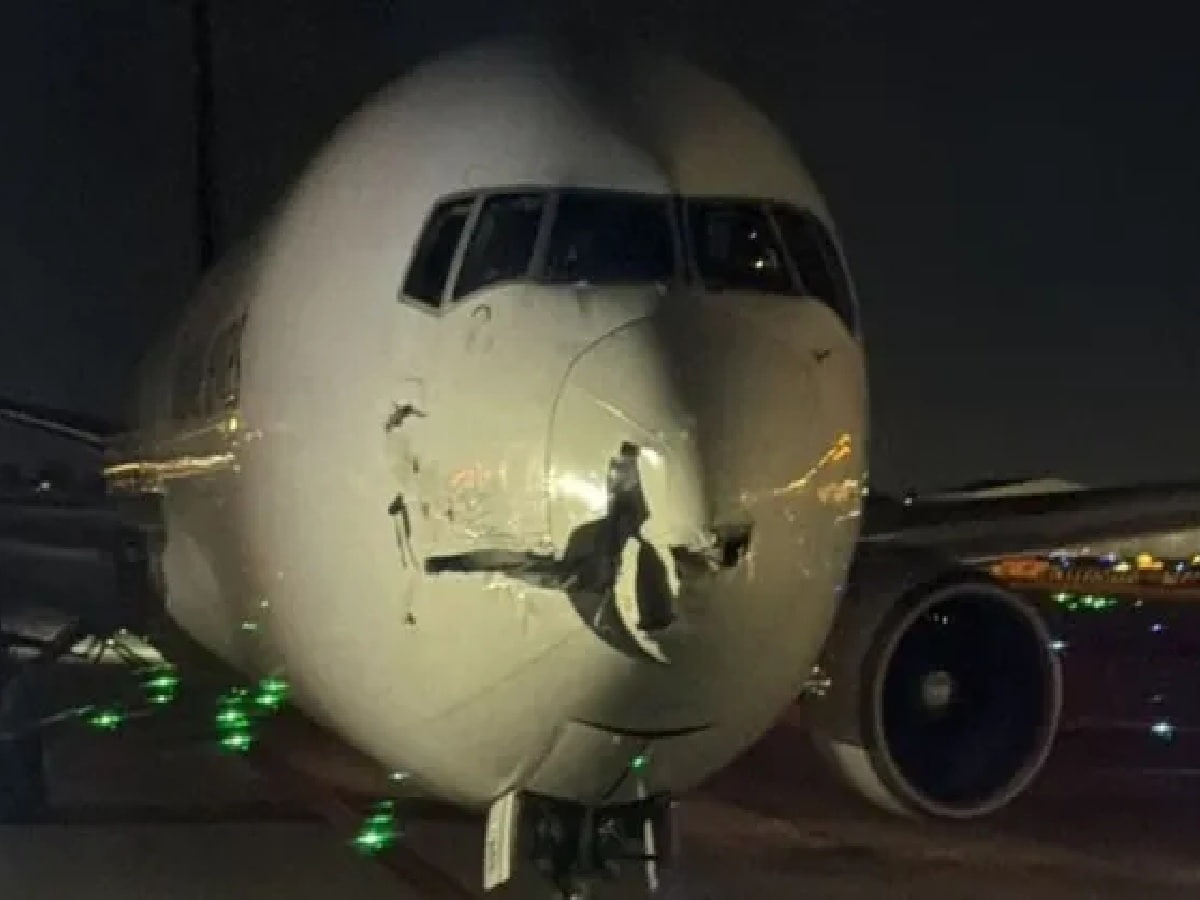
Two Planes Collide at Miami Airport Taxiway; 2 Suffer Minor Injuries
A ground-level collision between a UPS cargo aircraft and a Copa Airlines passenger jet rattled Miami International Airport (MIA) in Florida on Saturday night, November 14, 2026, leaving two people with minor injuries and causing visible structural damage to the aircraft just one day after a major nationwide air traffic control outage disrupted flights across the United States. According to Miami International Airport Communications Director Greg Chin and Miami-Dade Fire Rescue, the incident occurred at approximately 9:15 PM local time (ET) at the intersection of two taxiways when UPS Flight 358—a Boeing 767 preparing for departure to Bogotá, Colombia—came into contact with Copa Airlines Flight 427, an arriving Boeing 737 carrying 166 passengers and six crew members from Panama City, Panama. Preliminary findings from the Federal Aviation Administration (FAA) and recorded Air Traffic Control (ATC) audio indicate that controllers had instructed the UPS crew to give way to the arriving Copa jet, but the freighter taxied too far forward before clipping the passenger plane. For international travelers, aviation analysts, and readers across New Delhi, Lucknow, Mumbai, Bengaluru, Hyderabad, Chennai, Kolkata, Miami, Panama City, and Bogotá, the incident highlights ongoing ground-safety scrutiny at busy international hubs as US airlines work through lingering schedule backlogs.
What Happened on the Taxiway at Miami International Airport
The collision unfolded at 9:15 PM ET while both aircraft were moving on the ground rather than taking off or landing. Copa Airlines Flight 427 had just landed from Panama City and was taxiing toward its terminal gate, while UPS Flight 358 was taxiing out for its scheduled cargo run to Bogotá.
In Air Traffic Control audio recorded during the incident, the Copa Airlines pilot alerted controllers that his aircraft had been struck—reporting that the jet appeared to be missing its left wingtip—while the UPS flight crew acknowledged that their aircraft had rolled too far forward and been clipped. Dramatic photos and videos filmed by passengers and ground personnel quickly circulated on social media, showing a visibly crushed nose section and damaged wingtip following the low-speed impact.
Injuries, Passenger Evacuation, and Airport Operational Impact
Emergency units from Miami-Dade Fire Rescue responded immediately to the taxiway intersection. While an initial airport update noted no serious casualties, Greg Chin subsequently confirmed that two individuals were treated at the scene by Miami-Dade Fire Rescue for minor injuries and did not require hospital transport. All 166 passengers and six crew members on board Copa Airlines Flight 427 safely disembarked following the collision, and UPS confirmed that its flight crew was unharmed.
| Incident Parameter | Verified Official Details (Nov 14–15, 2026) |
| Location & Time | Intersection of two taxiways, Miami International Airport (MIA) — ~9:15 PM ET, Nov 14, 2026 |
| Departing Aircraft | UPS Flight 358 (Boeing 767 freighter) — Bound from Miami to Bogotá, Colombia |
| Arriving Aircraft | Copa Airlines Flight 427 (Boeing 737) — Arriving from Panama City, Panama (166 passengers, 6 crew) |
| Injuries & Emergency Care | 2 people treated on-site by Miami-Dade Fire Rescue for minor injuries; zero hospitalizations |
| Preliminary ATC / FAA Finding | FAA stated ATC instructed UPS crew to give way to Copa flight; UPS crew acknowledged taxing too far forward |
| Airport Operations Status | Flights rerouted to alternate taxiways; overall MIA runway operations unaffected |
Airport officials rerouted other taxiing aircraft onto alternate taxiways around the blocked junction, ensuring that broader flight departures and arrivals at Miami International Airport remained unaffected.
FAA Investigation Launched Amid Lingering US Flight Disruptions
The Federal Aviation Administration (FAA) has opened a formal investigation into the taxiway collision, while UPS stated that it is cooperating fully with aviation authorities to determine exactly how the contact occurred. Notably, the ground collision took place just a day after an unusual four-hour nationwide FAA ground stop triggered by overloaded routers and switches in aging air traffic control infrastructure caused thousands of flight delays and cancellations across the United States. Although federal officials have found no direct link between Friday's ATC network outage and Saturday night's taxiway mishap, investigators are examining every operational detail as US airlines work to restore normal schedules.




