






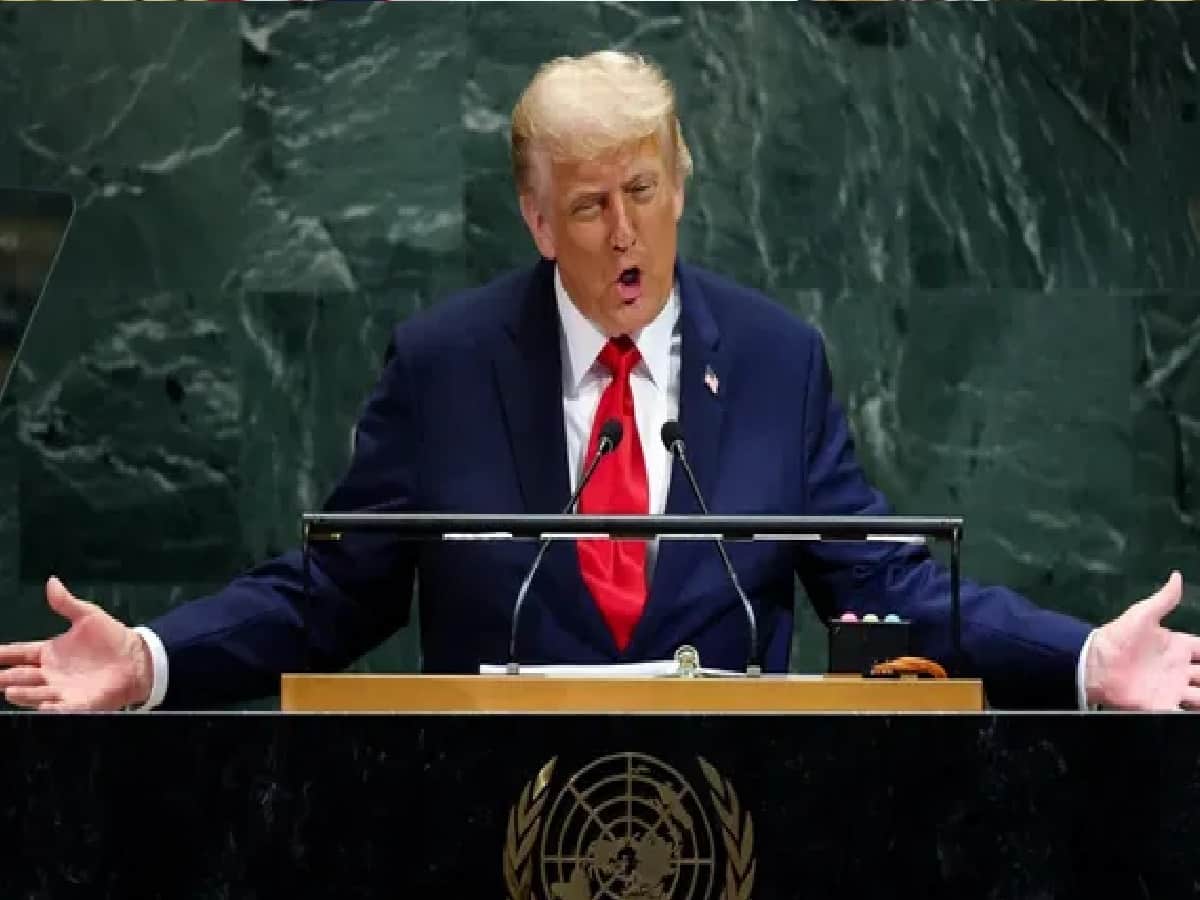
Trump's Dual Play at UNGA: Self-Proclaimed Peacemaker Boasts 8 Deals Before Issuing
NEW YORK — Standing before world leaders at the 81st United Nations General Assembly, United States President Donald Trump delivered an address defined by stark ideological whiplash. In a single appearance on the green-marbled rostrum in New York, the American commander-in-chief transitioned from portraying himself as history’s most effective peacemaker to issuing unsparing warnings of military obliteration directed at Tehran. The performance highlighted the unpredictable, high-stakes diplomatic doctrine steering Washington's foreign policy.
The Eight-War Peacemaker Doctrine
Trump opened his address by highlighting his diplomatic track record, asserting that his direct intervention, economic leverage, and targeted tariffs have successfully averted or settled eight protracted international conflicts. He cited ongoing stabilization efforts and historical confrontations spanning Cambodia and Thailand, Kosovo and Serbia, the Democratic Republic of Congo and Rwanda, Armenia and Azerbaijan, as well as hostilities in Gaza.
Central to his self-assessment was the assertion that personal chemistry, aggressive tariff enforcement, and absolute deterrence achieved resolutions where multilateral diplomatic channels had stalled for generations. Trump framed his strategic framework not as traditional statecraft, but as disruptive negotiation that forces adversarial parties to resolve border disputes under economic duress.
Reheating the India-Pakistan Ceasefire Claims
Turning toward South Asia, the US President reignited contention over regional diplomacy by once again taking credit for mediating hostilities between India and Pakistan. Quoting Pakistan's leadership, Trump alleged his personal diplomatic intervention saved upwards of thirty million lives across the subcontinent.
The assertion directly contradicts New Delhi’s long-held diplomatic position. Indian defense and foreign affairs authorities have repeatedly clarified that bilateral understandings, including the border ceasefire reaffirmed during Operation Sindoor, were finalized strictly via bilateral engagements between the Directors General of Military Operations (DGMOs) of both nations, entirely independent of third-party mediation.
Shifting from Global Arbiter to Iran Ultimatum
The tone inside the General Assembly hall shifted rapidly when Trump pivoted from conflict resolution to regional containment in the Middle East. Warning that Tehran would face devastating consequences if it continued pursuing weapons-grade atomic capabilities, Trump delivered an ultimatum directly to the leadership of the Islamic Republic: sign a binding, verifiable agreement or confront absolute destruction.
The rhetoric escalated further when Trump asked whether Iran should be sent straight to ruin without opportunity for recovery, accusing the Iranian leadership of attempting to stall diplomatic proceedings until upcoming US midterm elections. The fiery remarks exposed the razor-thin margin separating Washington's offers of diplomatic negotiation from direct kinetic intervention.
Reimagining Global Institutions Beyond the United Nations
Trump used the platform to level sharp broadsides at the United Nations itself, directing criticism toward the International Criminal Court (ICC), UNESCO mandates, and international climate agreements. He championed his newly proposed Board of Peace established earlier in the year, hinting that modern, action-oriented councils could eventually replace cumbersome legacy bodies within the international security apparatus.
Observers noted the geopolitical paradox of that ambition, pointing out that military maneuvers alongside Israel targeting Iranian strategic points unfolded shortly after the peace initiative was announced. The juxtaposition underscores the prevailing ethos of Trump’s foreign policy playbook: offering comprehensive peace pacts on American terms, backed at every turn by the imminent threat of overwhelming force.