







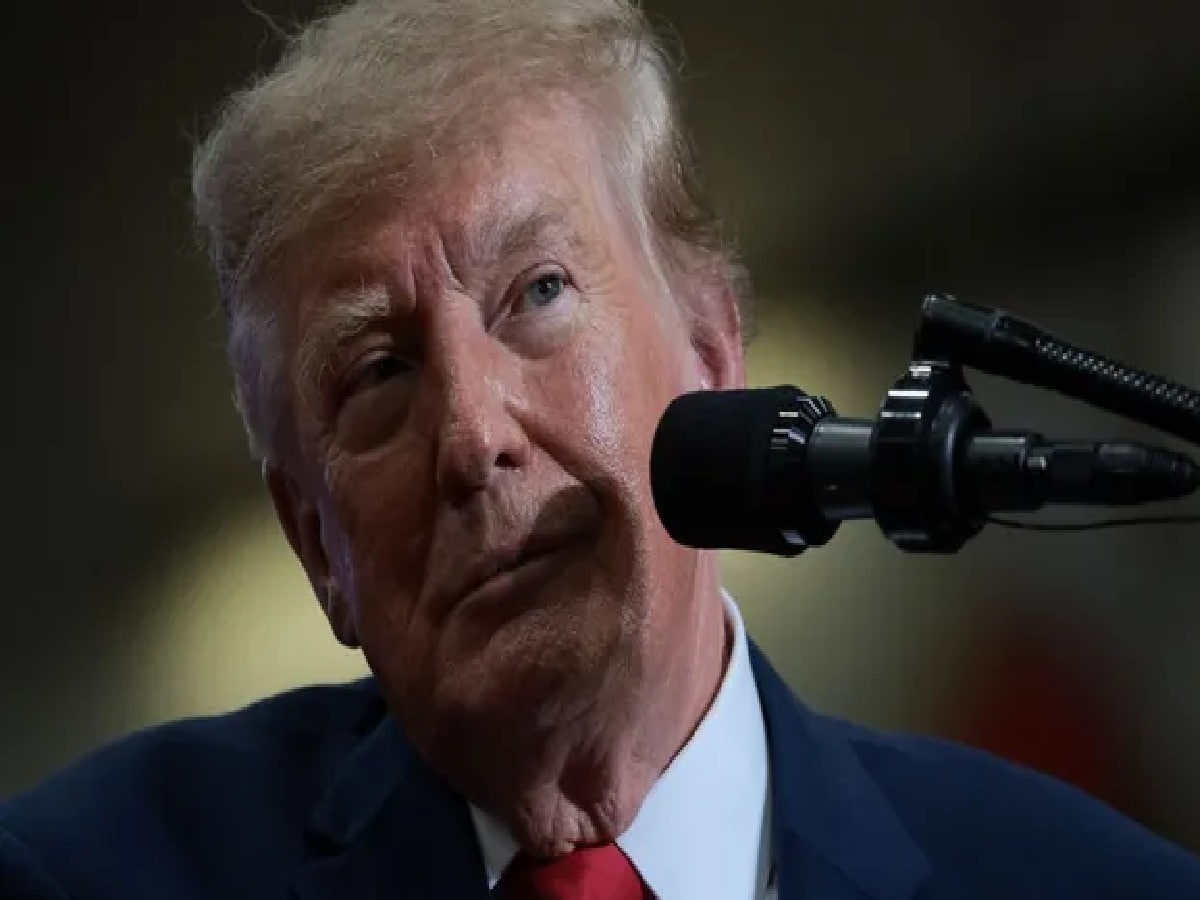
Trump Warns of Strikes on Iran After New Year if Talks Stall
Tensions between Washington and Tehran escalated sharply on Monday, November 23, 2026, after US President Donald Trump warned that the United States could carry out new military strikes against Iran after the New Year if diplomatic negotiations break down, accusing Iranian negotiators of stalling and hardening their posture since the November 3 US midterm elections. Speaking in a Fox News interview aired over the weekend and widely reported across Indian and international desks on Monday morning, Trump dismissed Tehran's negotiating style as "professional tap dancing," asserting that Iranian officials talk endlessly while delaying substantive progress. Backing the US naval blockade on Iranian ports amid the wider standoff around the Strait of Hormuz, Trump warned that any Iranian vessel attempting to breach the blockade would face overwhelming American force—adding provocatively that he hoped they would try so they would "end up at the bottom of the ocean like the rest of their navy," while acknowledging the risk of ongoing tit-for-tat strikes if diplomacy fails. In contrast, Iranian Foreign Minister Abbas Araghchi, cited by semi-official outlets and Al Jazeera, stated that resolving the Strait of Hormuz standoff would be straightforward if Washington accepted equitable terms grounded in international law, acknowledged past mistakes, and honored prior commitments—while also urging an emergency Organisation of Islamic Cooperation (OIC) session over Gaza. Compounding regional volatility, Iran's Islamic Revolutionary Guard Corps (IRGC) claimed drone and missile strikes against US Patriot air-defense radar sites at Al-Rifa and Awali in Bahrain in retaliation for alleged drone airspace intrusions and an earlier radar strike on Hengam Island—claims not confirmed by Washington—even as renewed anti-government demonstrations broke out across parts of Iran, prompting Trump to encourage protesters to keep pressing their demands. For energy markets, shipping lanes, and readers across Unnao, Lucknow, Kanpur, and New Delhi, the clash underscores heightened geopolitical and supply-chain uncertainty heading into 2027.
US–Iran Standoff (Nov 2026): Trump's Warning, Hormuz Terms & Bahrain Claims
To bring together the verified statements from President Donald Trump, Iranian Foreign Minister Abbas Araghchi, and the IRGC's claims alongside ongoing domestic unrest in Iran, the tables below summarize the key flashpoints:
Key Positions & Claims in the US–Iran Escalation (Nov 22–23, 2026)
| Flashpoint / Issue | Key Statement / Claim Reported | Context & Verification Status |
| Post–New Year Strike Warning | Donald Trump warned of potential further US military action against Iran after the New Year if negotiations fail, accusing Tehran of dragging out talks and becoming tougher post-midterms. | Framed as a conditional warning tied to diplomatic outcomes and ongoing regional hostilities. |
| Strait of Hormuz & Naval Blockade | Trump backed the US naval blockade of Iranian ports and warned against attempts to break it; Abbas Araghchi said the waterway could reopen if the US meets fair conditions, admits mistakes, and fulfills promises. | Reflects a core deadlock between US pressure/blockade enforcement and Iranian preconditions. |
| Bahrain Radar Strike Claim | IRGC Aerospace Force (via IRIB / Al Jazeera) claimed missile/drone strikes on US Patriot radar sites at Al-Rifa and Awali in Bahrain, citing drone flights and Hengam Island. | Not confirmed by the US in available reports; highlights elevated Gulf air-defense alert levels. |
| Domestic Protests in Iran & Gaza Call | Renewed anti-government protests reported in Iranian cities, with Trump urging demonstrators to continue; Araghchi called for an emergency OIC meeting on Gaza. | Shows internal and regional pressures intersecting with the bilateral standoff. |
Why the Strait of Hormuz & Gulf Tensions Matter Globally and in India
| Impact Channel | Why Observers Track Developments Closely | Relevance to India & Regional Economy |
| Maritime Chokepoint & Energy Flows | The Strait of Hormuz and surrounding Gulf waters carry vital global oil and LNG shipments; blockades or strikes raise freight and insurance risks. | India relies heavily on imported crude oil and energy supplies routed through West Asia. |
| Diplomatic vs. Military Trajectory | Negotiating windows, sanctions/blockade enforcement, and retaliatory exchanges shape whether tensions stabilize or widen into 2027. | New Delhi closely monitors West Asian stability, Indian nationals in the region, and trade routes. |
How Negotiations, Blockade Pressure and Rhetoric Intersect
In his remarks, Donald Trump argued that Tehran has become more combative since the US midterm elections and cast doubt on the value of ongoing talks unless tangible movement occurs, threatening renewed strikes after the New Year if negotiations fail. Abbas Araghchi, conversely, placed responsibility on Washington to acknowledge past mistakes, keep prior commitments, and negotiate on terms Iran views as fair under international law to ease the Strait of Hormuz crisis.
What to Watch as the New Year Approaches
With Trump leaving open the prospect of post–New Year strikes if talks falter, IRGC claims around Bahrain remaining unconfirmed by Washington, and protests flaring anew inside Iran, observers across Unnao, Lucknow, Kanpur, and New Delhi are watching whether backchannel diplomacy averts further escalation or deepens maritime and market strain.




