







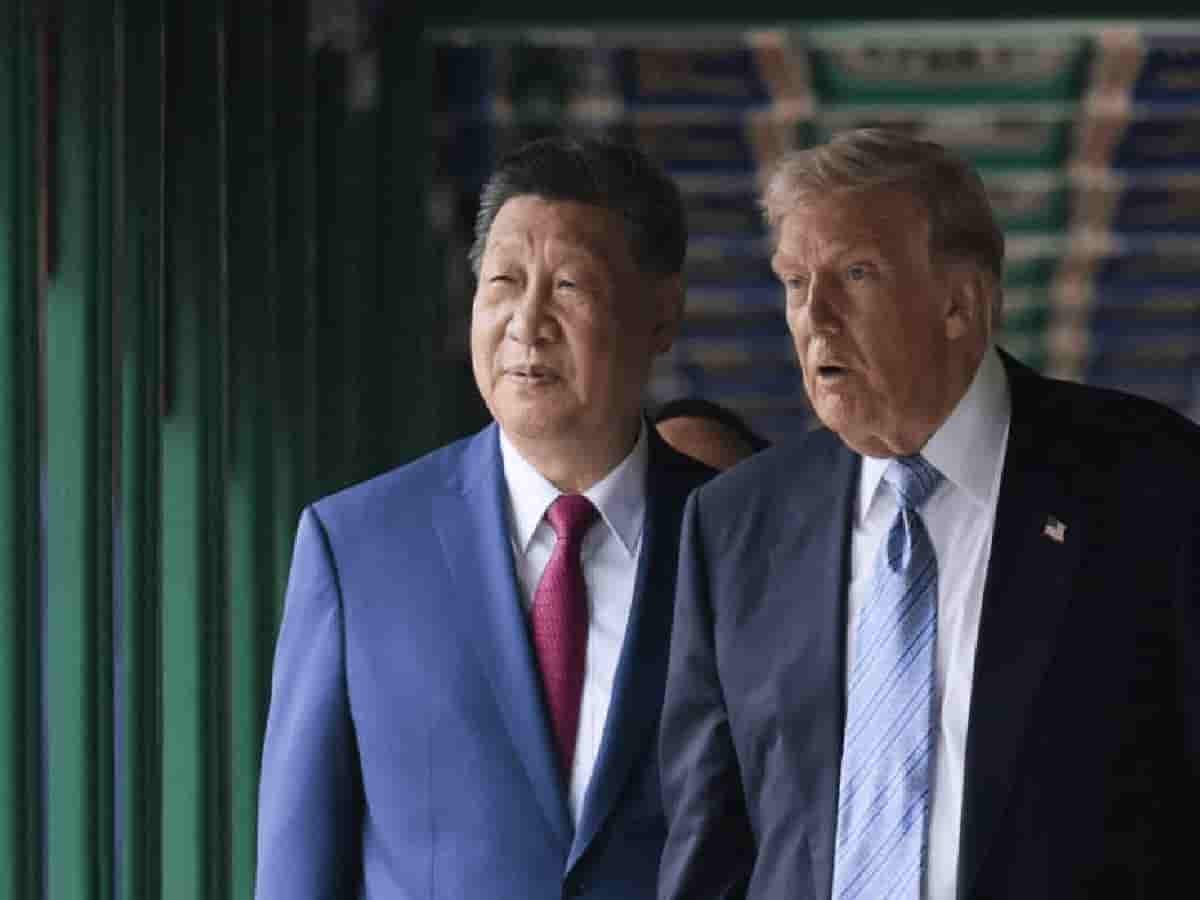
Trump to Host Chinese President Xi Jinping at White House, Signalling Policy U‑turn
Donald Trump, the former US president, is set to welcome Chinese President Xi Jinping at the White House later this week, a move that marks a stark reversal from his earlier hard‑line stance on Beijing.
From Trade War to Diplomatic Overture
During his 2016 campaign and the first years of his administration, Trump repeatedly warned that China was stealing American jobs, closing factories and undermining the middle class. His government imposed higher tariffs on Chinese goods, threatened further duties and tightened restrictions on Chinese technology firms.
The Planned White House Reception
Xi is expected to arrive in Washington on Thursday and will be received with a state dinner, a protocol usually reserved for the United States’ closest allies. The agenda is likely to include discussions on trade, technology, rare‑earth minerals, the so‑called “rare earth” sector and artificial intelligence.
Issues Likely to Dominate the Talks
Both leaders are expected to talk about the future of bilateral trade, the supply chain for critical minerals used in electronics and electric vehicles, and the rapid progress of AI research in both countries. The conversation may also touch on the broader strategic competition that has characterised US‑China relations in recent years.
Why Trump’s Tone Has Softened
According to senior adviser Michael Kovrig of the International Crisis Group, the initial tariff and export‑control strategy did not achieve the desired results. The measures failed to compel Beijing to alter its economic policies, and China’s control over rare‑earth supplies gave it leverage in negotiations.
Trade and Technology Realities
Trump still believes the United States holds an advantage in the trade dispute, but he now recognises that pressure alone cannot resolve complex supply‑chain issues. China is rapidly expanding its capacity in electric‑vehicle batteries, advanced semiconductors and other high‑tech sectors, and its products are reaching markets worldwide.
China’s Growing Influence in Rare‑Earths and AI
The Chinese government’s dominance in the processing of rare‑earth elements means that any disruption could affect industries across the globe. In addition, Beijing is investing heavily in artificial intelligence, electric mobility and other strategic technologies, prompting Washington to seek alternative sources and accelerate its own AI programmes.
Strained Relations with Traditional Allies
Trump’s confrontational approach has also created friction with long‑standing US partners in Europe and Canada, where disputes over NATO policy and trade have surfaced. Kovrig notes that this has given Beijing an opportunity to strengthen ties with other Western capitals, as some leaders seek to stabilise relations with Xi in the face of US‑China tensions.
What the Visit Could Mean for India
For Indian observers, the shift signals that Washington may be willing to engage Beijing more constructively, which could have implications for regional security and trade. India’s own strategic calculations regarding the Indo‑Pacific and supply‑chain diversification will likely be influenced by any outcomes of the US‑China dialogue.
Looking Ahead
The White House meeting will test whether diplomatic engagement can replace the tariff‑driven approach that defined the previous years. While the exact results remain uncertain, the event underscores a pragmatic turn in US policy towards China, driven by the realisation that cooperation may be necessary to manage shared challenges.