







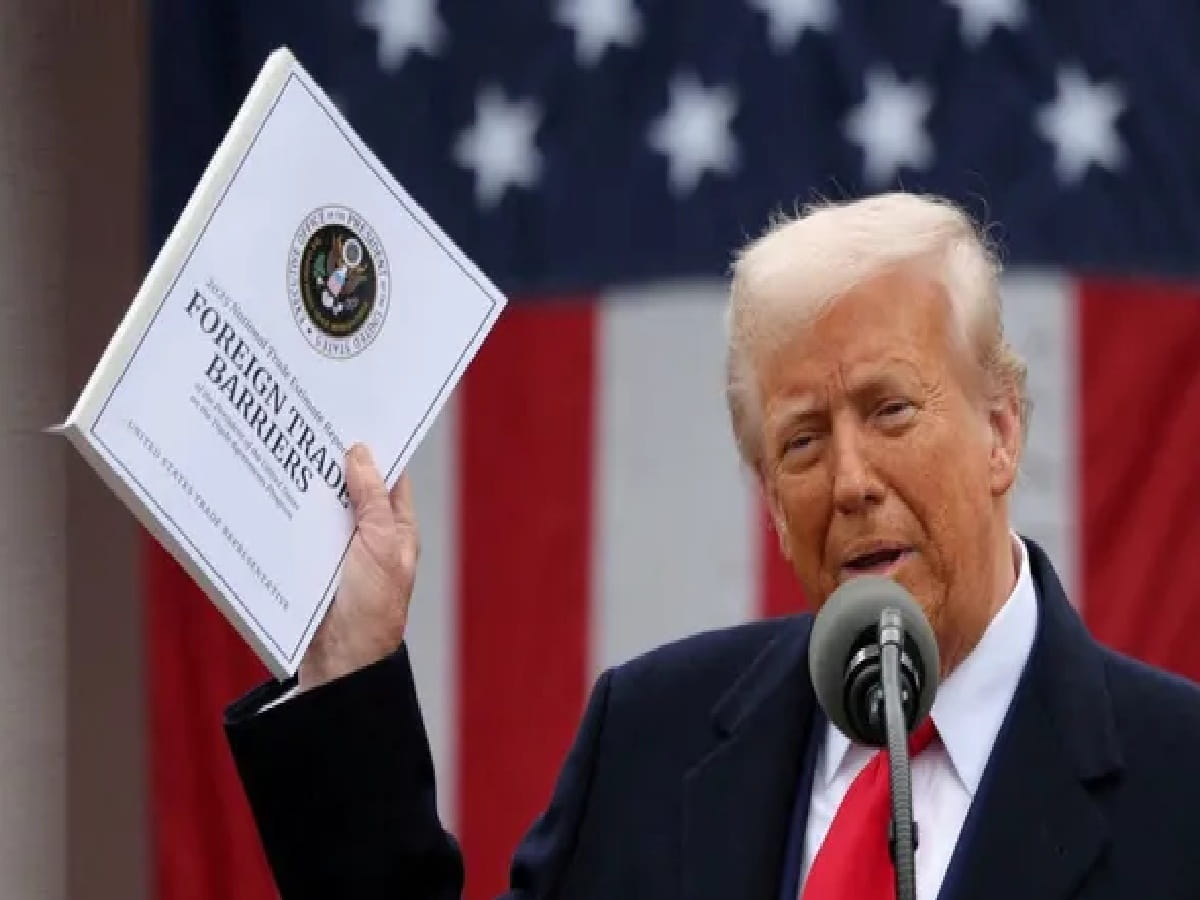
Trump Tariff Move on 14 Nations: India Faces 17% With Deal, 25% Without
President Donald Trump's administration has unveiled a sweeping new Section 301 tariff framework targeting 14 major global economies, setting up a high-stakes diplomatic and commercial countdown for Indian exporters over the next three months. Highlighted across trade, market, and diplomatic desks on Thursday, November 26, 2026, the proposal issued by United States Trade Representative (USTR) Jamieson Greer on Wednesday places India under a two-tier tariff structure: Indian shipments could face an additional duty of up to 25 percent if talks stall, or a reduced 17 percent tariff rate if New Delhi and Washington finalize an Agreement on Reciprocal Trade—building on the bilateral trade framework initially outlined in February 2026—before the measures potentially take effect in February 2027. Crucially for key export clusters across Mumbai, Hyderabad, Ahmedabad, Bengaluru, Chennai, and New Delhi, the USTR notice carves out explicit exemptions for Indian pharmaceuticals and mobile phones (smartphones) alongside certain agricultural goods, shielding roughly 35 to 40 percent of India's merchandise exports to its largest trading partner. Moreover, while most developing Asian economies—including Bangladesh, Cambodia, Indonesia, Malaysia, and Thailand—face a proposed 18 percent trade-deal rate and Vietnam and China sit in a 20 percent deal bracket (with baseline threats climbing to 35 to 40 percent), India's conditional 17 percent ceiling gives Indian exporters a calculated 1 to 3 percentage-point competitive edge over regional rivals. Even so, India's Ministry of Commerce and Industry has firmly rejected Washington's allegation that Indian industrial policies—including Production-Linked Incentive (PLI) schemes and Atmanirbhar Bharat initiatives across steel, solar modules, petrochemicals, textiles, health goods, and ICT—create structural excess capacity, asserting that any bilateral trade differences must be resolved within ongoing India-US Bilateral Trade Agreement (BTA) negotiations ahead of USTR's January 5, 2027 written-comment deadline and January 25, 2027 public hearings.
US Section 301 Tariffs on 14 Economies: India's 17% vs 25% Rate Explained
To bring together how India's 17 percent deal-linked tariff rate compares against the other 13 economies covered by USTR Jamieson Greer's notice, which Indian export sectors are exempted versus flagged under the Section 301 probe, and New Delhi's official response ahead of the January 25, 2027 hearings, the tables below organize all verified trade details:
Dual-Tier Tariff Comparison Across Key Economies (USTR Notice, Nov 2026)
| Economy / Trading Partner | Proposed Rate Without Trade Deal | Proposed Rate With Reciprocal Trade Deal | Competitive Position & Key Notes |
| India | Up to 25% (net of existing Section 301 tariffs) | 17% (upon concluding reciprocal trade agreement) | 1% lower than major ASEAN/South Asian peers (18%) and 3% lower than Vietnam/China (20%); pharma & smartphones exempt. |
| Bangladesh, Cambodia, Indonesia, Malaysia & Thailand | Higher baseline Section 301 rates | 18% (with bilateral trade agreement) | India retains a 1 percentage-point tariff advantage over these competing manufacturing hubs if both finalize pacts. |
| Vietnam | Up to 35% | 20% (once trade agreement finalized) | Faces steep baseline exposure over manufacturing surplus scrutiny. |
| China | Up to 40% (annex-based schedule) | 20% (deal-linked reference tier) | Subject to separate annex duties net of existing US Section 301 tariffs. |
| European Union, Japan, South Korea, Taiwan & Switzerland | 15% (existing trade frameworks) | 15% (with high-tech/semiconductor exemptions for Taiwan & South Korea) | Lower ceiling reflects pre-existing trade arrangements with Washington. |
| Singapore | 20% | 10% (with bilateral trade pact) | Lowest conditional rate among the 14 economies covered. |
Indian Sectors Flagged vs. Exempted in the USTR Investigation
| Category | Sectors Included | Impact on Indian Exporters |
| Exempted From New Section 301 Levy | Pharmaceuticals, mobile phones/smartphones, and select agricultural products (accounting for roughly 35–40% of Indian exports to the US). | Protects India's fastest-growing electronics assembly hubs in Tamil Nadu, Karnataka, and Uttar Pradesh as well as generic drug exporters in Hyderabad and Ahmedabad. |
| Flagged in Section 301 Overcapacity Report | Steel, solar modules, petrochemicals, textiles/garments, health-related goods, construction materials, automotive products, and ICT, citing PLI schemes and Atmanirbhar Bharat policies. | Labor-intensive clusters (textiles, engineering goods, auto components) face the sharpest incentive for an early 17% bilateral trade pact over the 25% fallback. |
New Delhi's Response & Timeline From January 2027 Hearings to February Rollout
Responding to the notification, India's Ministry of Commerce and Industry stated that it has taken note of the USTR announcement, is carefully examining the notice, and categorically rejects any claim of structural excess capacity in any Indian sector. Emphasizing that New Delhi participated constructively throughout the investigation launched in March 2026, officials reiterated that trade concerns belong inside the ongoing India-US Bilateral Trade Agreement (BTA) negotiations rather than unilateral tariff actions. With public comments open until January 5, 2027, formal USTR hearings starting January 25, 2027, and potential tariff enforcement slated for February 2027, exporters across Mumbai, New Delhi, Bengaluru, Chennai, Hyderabad, and Ahmedabad will closely track diplomatic progress over the next eight weeks to lock in the lower 17 percent ceiling—or further tariff relief—under a finalized bilateral pact.




