







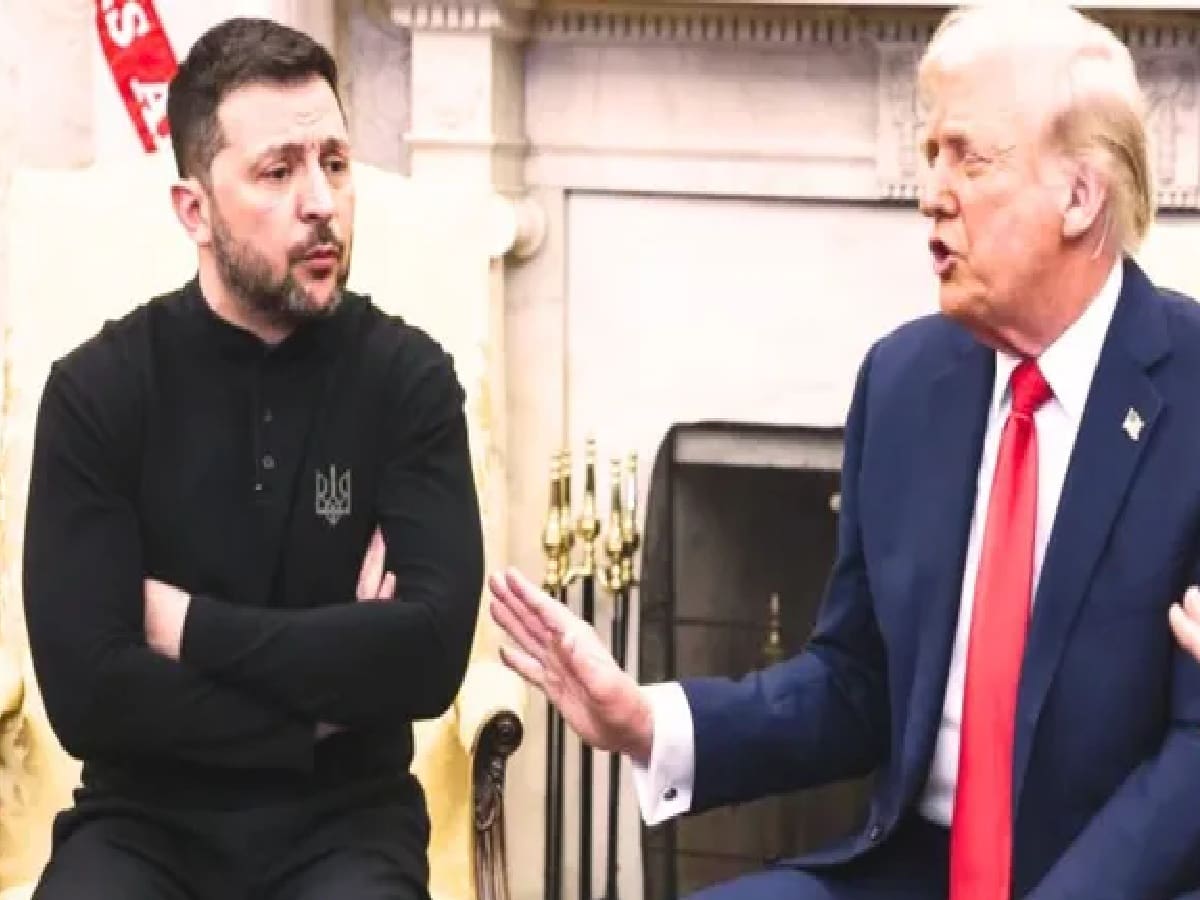
Trump Pressures Ukraine to End War, Questions US Aid Amid Fuel Spike
Facing surging domestic energy costs and deadlocked peace efforts, US President Donald Trump has placed the burden of ending the four-year war squarely on Ukraine, describing Russia as an advancing military machine and questioning continued American aid ahead of high-stakes midterm elections.
Signaling a sharp recalibration of American foreign policy, US President Donald Trump has placed the responsibility of ending the four-year-long war squarely on Ukraine, asserting that Moscow currently holds the strategic upper hand on the battlefield. Addressing journalists from the Oval Office, Trump acknowledged that Russian forces continue to expand their territorial footprint across key sectors while Ukrainian defensive lines struggle to maintain their ground. Describing the Russian Federation as a relentless military machine that continues to push forward regardless of resistance, the American president stated that Kyiv must summon the institutional will to bring the hostilities to a negotiated close. The declaration coincided with high-stakes diplomatic consultations in Oslo, Norway, where US Special Envoy Steve Witkoff held urgent closed-door discussions with Ukrainian President Volodymyr Zelensky in an effort to evaluate options to halt further Russian battlefield advances.
Stalled Diplomacy and Aid Scrutiny: How the Putin-Zelensky Feud Hardened the Impasse
Critiquing the massive scale of military and financial assistance funneled from Washington to Kyiv, President Trump questioned the strategic returns of sustained American aid packages, asserting that years of heavy economic commitments have yielded immense devastation, human casualties, and substantial financial drains for the West without yielding a breakthrough. Explaining why repeated diplomatic efforts have failed to secure a durable truce, Trump pointed directly to deep-seated personal antagonism between Russian President Vladimir Putin and Ukrainian counterpart Volodymyr Zelensky. Describing the hostility between the two leaders as an insurmountable psychological wall preventing constructive face-to-face dialogue, Trump argued that entrenched animosity has paralyzed standard diplomatic channels, complicating previous administration pledges to resolve the broader conflict swiftly and leaving Washington inclined to step back from open-ended commitments.
Fuel Spikes and Midterm Calculations: The Strategic Drivers Behind Washington’s Shift
The noticeable softening of Washington’s posture toward Moscow is closely tied to domestic economic emergencies and volatile global energy dynamics triggered by the ongoing conflict between the United States and Iran. With petroleum and diesel prices climbing sharply across the American heartland, the US administration has approved direct purchases of Russian diesel, creating a ripple effect that offers economic breathing room to third-party nations procuring Russian crude oil and natural gas supplies. Facing sustained inflationary pressure on consumer goods and public utilities just weeks before high-stakes US midterm elections, Trump's Republican Party confronts an increasingly tight electoral landscape where domestic pocketbook grievances have taken center stage. By easing enforcement pressure on Moscow’s energy revenues and shifting the mandate of conflict resolution entirely onto Ukrainian leadership, the White House is prioritizing domestic economic stabilization and energy cost containment over indefinite foreign military subsidization.




