







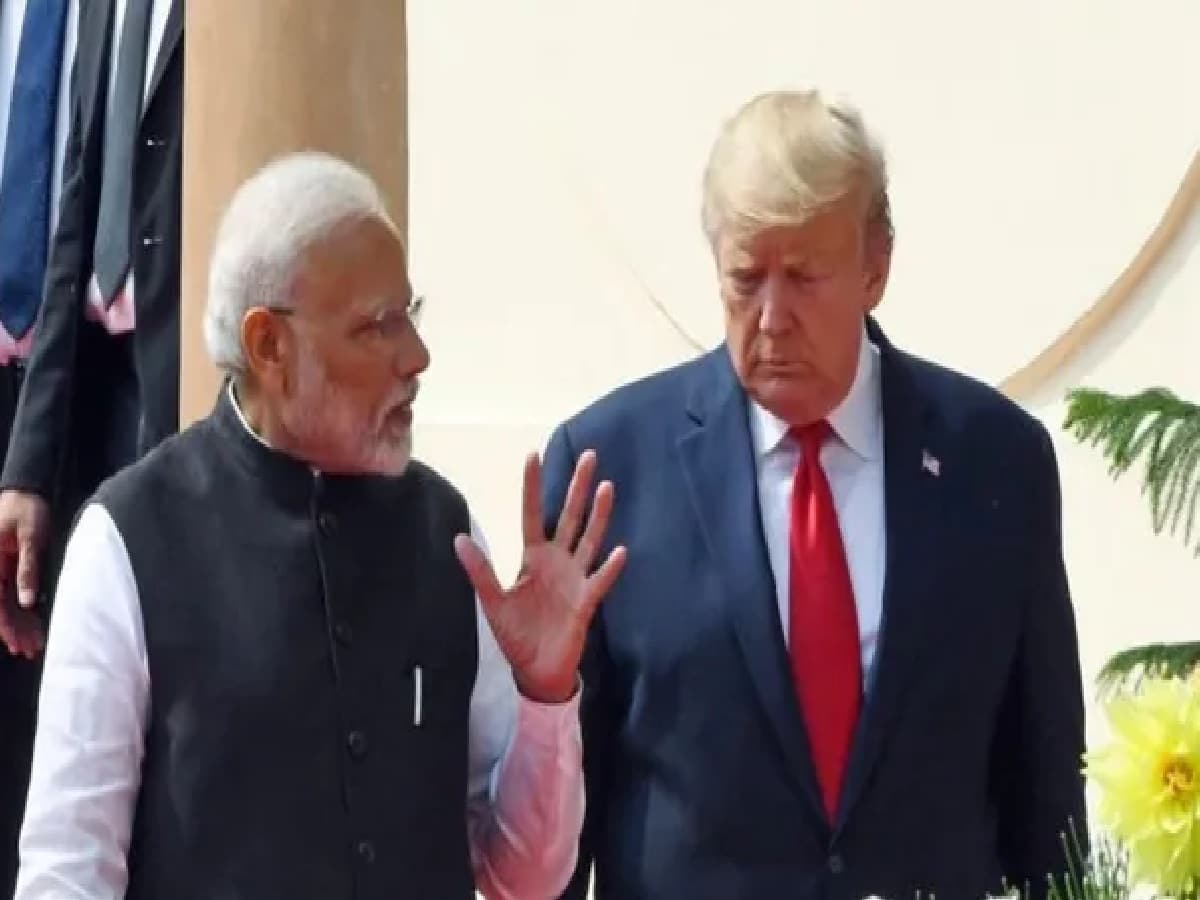
Trump Praises PM Modi's Crackdown on Illicit Opium Cultivation Amid US Drug Transit List Row
Former US President Donald Trump has publicly commended Prime Minister Narendra Modi and the Indian government for aggressively curbing illegal opium production and dismantling synthetic narcotics supply lines across the subcontinent. The positive endorsement was formally released in a policy statement by the US State Department, which cited Trump as extending strong support to New Delhi's ongoing enforcement measures while expressing optimism for sustained bilateral counter-narcotics collaboration under the established US-India Drug Policy Framework. Despite the vocal praise for Modi's anti-narcotics drive, the review confirmed that India continues to feature on Washington's statutory annual presidential determination list of major illicit drug transit and producing countries for fiscal year 2027 alongside over twenty other global nations.
Bilateral Praise Under the US-India Drug Policy Framework
In his formal remarks, Trump underscored the strategic value of operational intelligence sharing between American federal agencies and India's Narcotics Control Bureau (NCB). "I welcome Prime Minister Modi and the Indian government's efforts to combat illicit opium cultivation. I look forward to continued cooperation through the US-India Drug Policy Framework," the official communication noted. The joint security initiative focuses heavily on tracking precursor chemicals, interdicting maritime fentanyl shipments, and curbing the diversion of pharmaceutical-grade opiates. Washington reiterated that coordinated enforcement mechanisms between the two democracies remain vital to neutralizing international narco-trafficking cartels operating across Asian supply corridors.
Why India Remains on the US Major Drug Transit List for 2027
Alongside the diplomatic praise, the United States retained India on its designated roster of major illicit drug transit and producing nations for 2027, grouping it alongside countries such as Afghanistan, Pakistan, China, Mexico, Colombia, and Venezuela. Addressing potential diplomatic friction over the designation, US State Department officials clarified that inclusion on this presidential determination list does not reflect an adverse judgment on the host government's law enforcement integrity or political resolve. Instead, the classification is fundamentally driven by unavoidable geographical factors, including India’s proximity between the "Golden Crescent" (Iran-Afghanistan-Pakistan) to the west and the "Golden Triangle" (Myanmar-Laos-Thailand) to the east, combined with vast commercial cargo volumes and extensive maritime trade routes that global trafficking syndicates frequently seek to exploit.
Trump Touts Cartel Crackdowns and Border Enforcement Milestones
Highlighting domestic enforcement outcomes alongside international partnerships, Trump pointed to major milestones in neutralizing cross-border narco-terrorist organizations and transnational crime networks. He asserted that rigorous border enforcement and interdiction operations have led to historic reductions in contraband flows, claiming that illicit narcotic seizures along the US southern border have declined by more than 50 percent due to aggressive deterrence policies. The statement concluded by emphasizing that sustaining long-term suppression of synthetic opioids and illicit plant-based narcotics depends entirely on synchronized enforcement between key international partners, with New Delhi positioned as a critical anchor in South Asian regional interdiction.