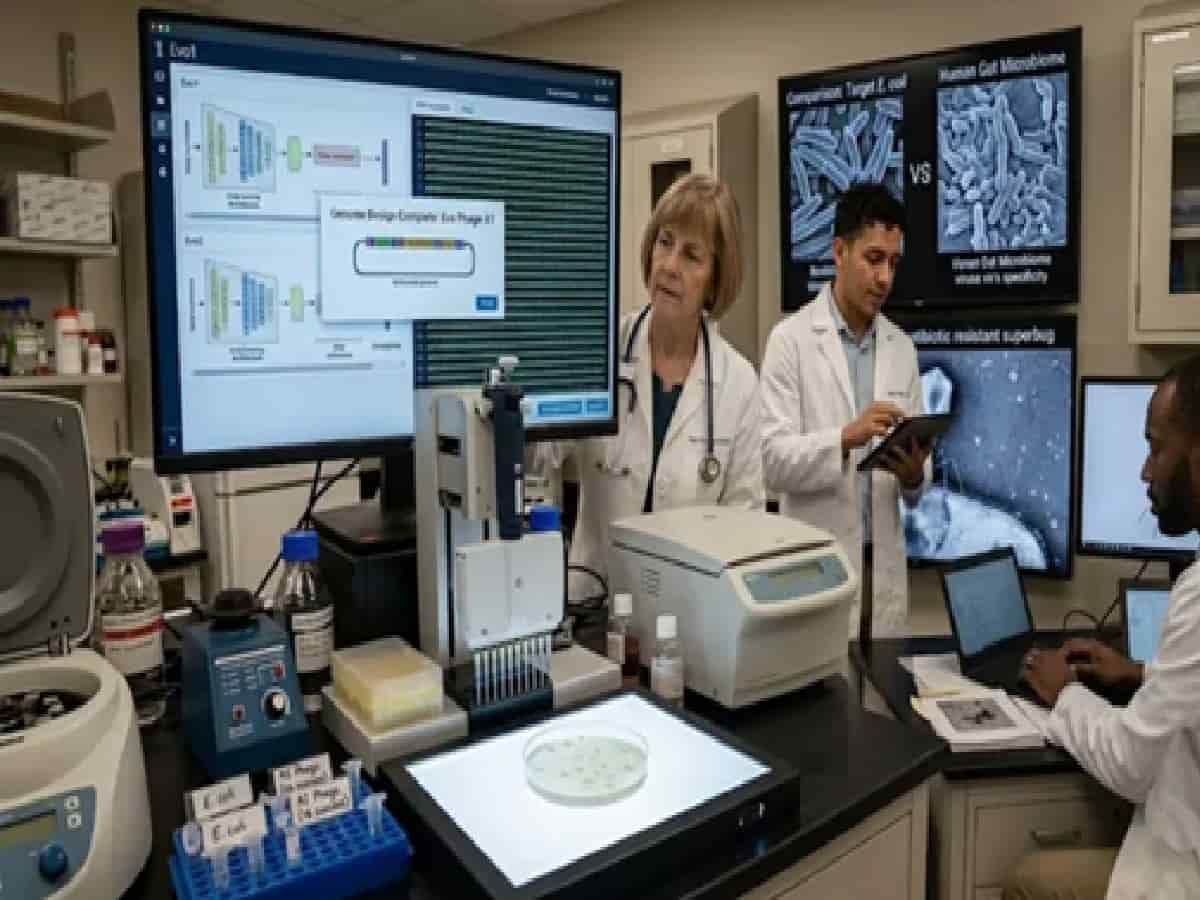
Stanford Scientists Use Generative AI to Self-Design New Viruses That Kill Bacteria in Historic Breakthrough
In a monumental yet deeply alarming scientific milestone, researchers at Stanford University have successfully utilized advanced generative artificial intelligence to design entirely new, functional viruses from scratch. For the first time in human history, an entire viral genome has been computationally engineered to replicate in a laboratory environment and actively eliminate targeted bacteria. While this breakthrough opens up revolutionary possibilities for synthetic biology and novel therapeutics, it has simultaneously triggered profound ethical and biosecurity concerns among the global scientific community regarding the potential dual-use risks of AI-generated pathogens.
How AI Models Evo1 and Evo2 Predict the "Language of Life"
The groundbreaking research was spearheaded by developing specialized generative AI models named Evo1 and Evo2. Operating on principles similar to text-based artificial intelligence like ChatGPT, these sophisticated models process biological data by predicting the fundamental language of life: DNA sequences. To train the systems, researchers fed them massive datasets comprising the genetic codes of diverse organisms, including viruses, bacteria, plants, and humans. The AI was subsequently fine-tuned to focus on bacteriophages—specialized viruses that selectively infect and destroy specific bacteria without posing any biological threat to human cells. From the computational outputs, the Stanford team selected 302 of the most promising AI-designed viral blueprints and physically synthesized them in a secure laboratory setting. Remarkably, 16 of these artificially engineered phages successfully replicated and eradicated E. coli bacteria. Describing the milestone, PhD student Samuel King shared that seeing clear spots form on the petri dish confirmed the phages were actively working, sparking immediate excitement and applause across the research lab.
A Double-Edged Sword: Medical Miracles Versus Biosecurity Risks
Leading scientific experts have hailed the development as a monumental turning point for modern medicine and biotechnology. According to Professor Brian He, mastering the computational design of biological agents could pave the way for breakthrough treatments against dangerous antibiotic-resistant superbugs, advanced gene therapies, and innovative pharmaceuticals. Echoing this sentiment, Spanish professor Marc Guell noted that humanity has officially entered an era where biology can be programmed directly on computers.
However, this unprecedented capability has instantly reignited fierce debates surrounding global safety. Prominent biosecurity specialists Dr. Thomas Inglesby and Dr. Moritz Hanke from Johns Hopkins University cautioned that the central question is no longer whether AI can create viruses, but rather how such powerful technology can be regulated to prevent catastrophic misuse. Stressing the gravity of the situation, experts emphasized that strict international safeguards must ensure no future attempts are made to design disease-causing pathogens that target human populations.
Proactive Precautions and Future Horizons in Synthetic Biology
Mindful of the catastrophic risks involved, the Stanford research team implemented strict safety protocols from the outset. They deliberately restricted the AI training data, ensuring the models were never exposed to viruses capable of infecting humans, limiting their scope strictly to benign bacteriophages within a highly secure containment facility. Furthermore, current technical boundaries limited the AI to creating phages with approximately 5,400 base pairs—a fraction of the human genome's massive 3-billion base pair length. Nevertheless, scientists worldwide agree that this achievement marks just the opening chapter of a new, highly complex era in synthetic biology.