







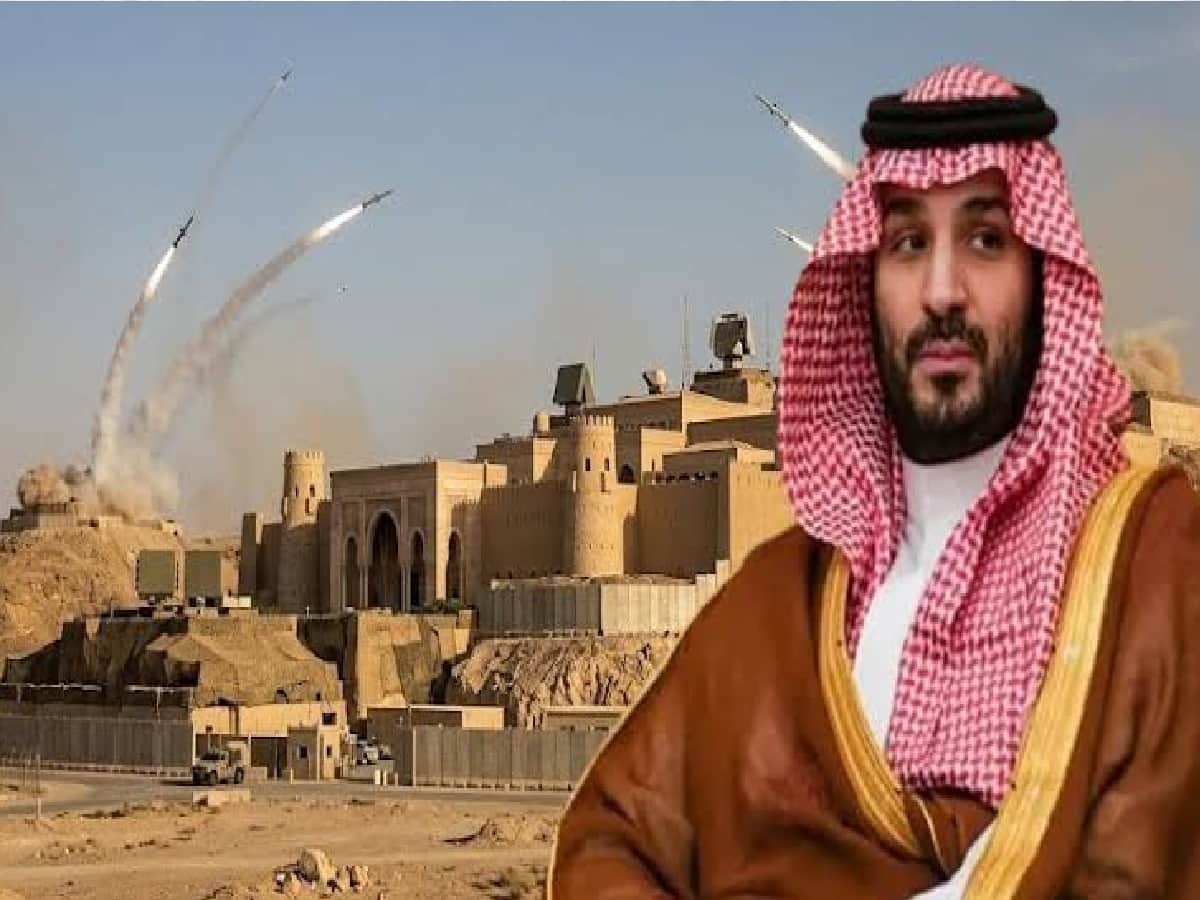
Saudi Air Defense Crisis: Crown Prince MBS Relocated to Bunkers
The geopolitical landscape across the Middle East has reached an unprecedented boiling point as Saudi Arabia’s military command grapples with severe structural strains across its national air defense umbrella, driven by an unrelenting barrage of long-range drones and cruise missiles launched by Yemen’s Houthi movement. A startling investigative revelation by The Wall Street Journal has sent shockwaves through regional defense and diplomatic establishments, revealing that the Kingdom's operational inventory of interceptor missiles has depleted to critically vulnerable thresholds. With Riyadh’s aerial shield pushed to its limit, the safety of Saudi Arabia's de facto ruler and Crown Prince, Mohammed bin Salman (MBS), has become the supreme national security priority. Intelligence assessments confirm that the Crown Prince has vacated conventional royal palaces and been relocated to an ultra-secure, state-of-the-art subterranean bunker complex engineered with deeply buried blast-proof reinforced steel and concrete, a handpicked elite protection squad, and completely autonomous life-support systems capable of sustaining command and governance operations for weeks without surface exposure.
Strategic Retrenchment: Air Defenses Pulled from Civilian Zones to Shield Oil and Royalty
The acute shortage of interceptor munitions has fundamentally upended Saudi Arabia’s strategic defense posture, forcing royal military planners to abandon the logistical ambition of securing every quadrant of the Kingdom’s vast geographic airspace. Faced with dwindling reserves, the Riyadh administration has systematically withdrawn Patriot missile batteries from outlying civilian regions and secondary population centers to consolidate its remaining protective firepower around just two irreplaceable assets: vital energy infrastructure and royal redoubts. Military strategists point out that leaving energy nodes vulnerable carries catastrophic consequences for global crude supplies and national fiscal health, while protecting the physical seat of power remains vital for regime continuity. This tactical consolidation serves as undeniable confirmation that the Saudi armed forces can no longer sustain a nationwide, perimeter-wide air defense net, leaving domestic zones increasingly exposed to aerial incursions while military brass prioritizes survival and essential energy security.
800-Km Airspace Breach and the Economic Dilemma of $4 Million Patriot Missiles
The Kingdom's emergency posture follows alarming breaches deep within sovereign airspace, underscored by recent incidents where Houthi cruise missiles penetrated more than 800 kilometers inside Saudi borders. While Royal Saudi Air Defense units successfully shot down one inbound projectile vectoring toward King Khalid International Airport in the capital, a second cruise missile evaded radar tracking loops and defense cordons entirely, striking its designated target inland. This vulnerability lays bare a crippling asymmetric expenditure trap at the heart of Riyadh’s reliance on US-manufactured Patriot missile platforms. While Houthi forces deploy mass-produced kamikaze drones and unguided rockets costing merely a few thousand dollars, Saudi forces must expend advanced MIM-104 Patriot interceptors priced between $3 million and $4 million (approximately ₹25 crore to ₹30 crore) per launch to neutralize each incoming target. Compounded by chronic manufacturing bottlenecks and delayed military resupply shipments from Washington, this staggering financial and inventory drain has rapidly exhausted the Kingdom’s arsenals, creating a high-stakes deterrence crisis that now sees its future monarch directing state affairs from deep beneath the earth.




