







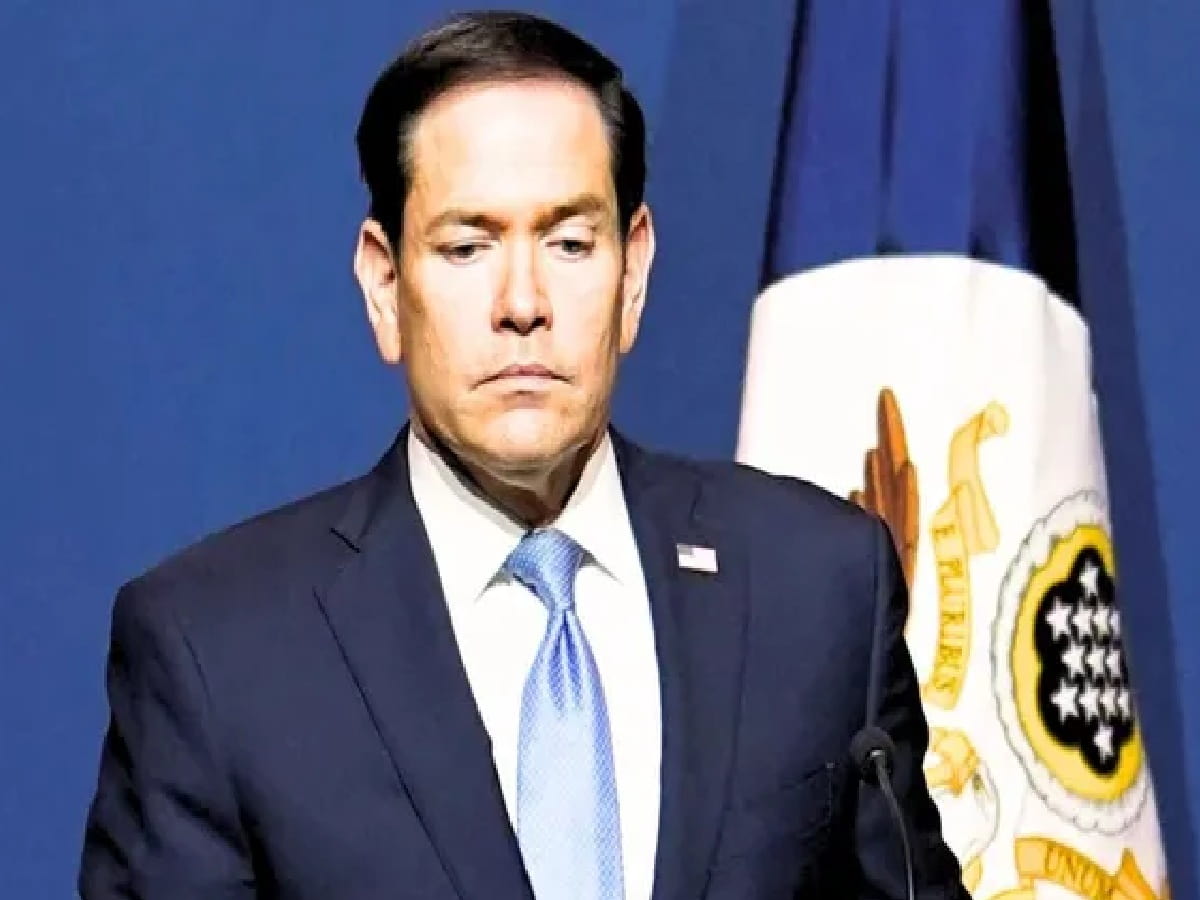
Marco Rubio Rewrote CIA Memo in Harsh Tone Before Jensen Huang Exit
The dramatic downfall of Nvidia co-founder and longtime CEO Jensen Huang—who stepped down on Thursday, November 12, 2026, amid an escalating national security firestorm—was set in motion by a starkly worded intelligence memo authored by US Secretary of State and National Security Adviser Marco Rubio, according to explosive new reporting in The Washington Post. People familiar with the classified document revealed that Rubio took an underlying Central Intelligence Agency (CIA) intelligence assessment regarding Jensen Huang's personal relationship with Chinese businesswoman Alice Huang—whom US counterintelligence officials suspect of having ties to Chinese intelligence—and recast the agency's findings in his own, far more forceful terms in a memo sent directly to President Donald Trump. When the contents of that memo leaked to the media, the resulting political and market backlash wiped hundreds of billions of dollars off Nvidia's valuation and forced the Silicon Valley titan to resign from the company he built into the centerpiece of the global artificial intelligence boom. For technology investors, AI researchers, semiconductor engineers, and global policy watchers across New Delhi, Bengaluru, Hyderabad, Mumbai, Pune, Chennai, Lucknow, Washington, and Silicon Valley, the revelations expose a fierce power struggle inside Washington over who shapes America's AI chip export policy toward China.
How Marco Rubio Recast the CIA Assessment in a Memo to President Trump
According to sources cited by The Washington Post, Rubio—widely regarded as one of Washington's most outspoken China hard-liners—oversaw the drafting of the classified warning memo to President Trump earlier this spring after reviewing CIA intelligence reports on Jensen Huang's relationship with Alice Huang. While CIA analysts were still evaluating whether intercepted communications definitively proved that Alice Huang knowingly passed sensitive information to Beijing, Rubio reframed the intelligence reporting into sharper, more assertive language highlighting the counterintelligence risk posed by the Nvidia chief's proximity to the White House.
Initially, President Trump did not act against Huang when the classified memo circulated in the spring, often defending the chip executive's business acumen. However, once the memo's findings leaked publicly—and subsequent reports detailed Huang's extramarital affair, his apology to his wife Lori Huang and family, and his alleged efforts to downplay the relationship to senior Nvidia executives—the corporate and political pressure became insurmountable, culminating in his resignation on November 12.
Why National Security Officials Clashed With Jensen Huang Over China Chip Sales
The behind-the-scenes friction between Jensen Huang and national security hawks in the Trump administration had been building for months over US export controls on advanced AI semiconductors. Huang had cultivated an unusually close relationship with President Trump, appearing alongside him at high-profile events and successfully lobbying the White House to permit Nvidia to sell certain AI chips to Chinese buyers under a revenue-sharing arrangement.
| Key Dimension of the Nvidia–Washington Controversy | Verified Details From US Media & Official Statements |
| Central Figures | Former Nvidia CEO Jensen Huang, US Secretary of State & NSA Marco Rubio, President Donald Trump, and businesswoman Alice Huang |
| Role of Marco Rubio's Memo | Rubio rewrote an underlying CIA intelligence report in more forceful language to warn Trump of counterintelligence risks |
| Core Policy Conflict | Huang lobbied to sell Nvidia AI chips to China to keep Chinese firms reliant on US tech; China hawks warned it would strengthen Beijing's military & AI power |
| Corporate & Market Fallout | Jensen Huang resigned on Nov 12, 2026; Nvidia launched an independent law-firm probe, the FBI opened an inquiry, and Nvidia's market value plunged sharply |
| Rubio's Public Response | Speaking at a G7 meeting in Paris, Rubio declined to discuss the memo directly, stating: "The United States will always act in the best interest of the United States" |
Huang repeatedly argued that keeping Chinese developers dependent on American chip architecture was wiser than forcing Beijing to accelerate homegrown alternatives. In contrast, Rubio, intelligence officials, and congressional China hawks viewed cutting-edge AI processors as vital strategic assets that could bolster China's military modernization. Two former administration officials told The Washington Post that several national security aides resented the extraordinary access Huang enjoyed with Trump and actively sought to eliminate his influence over White House technology policy.
FBI Probe, Shareholder Lawsuits, and Tighter US Chip Export Controls Ahead
In the wake of Huang's exit, the fallout continues to widen on both corporate and geopolitical fronts. Nvidia has retained a major US law firm to conduct an independent internal review, the Federal Bureau of Investigation (FBI) has initiated its own inquiry, and shareholder litigation has already been filed in California. Meanwhile, asked by reporters during a Group of Seven (G7) meeting in Paris whether the controversy altered US posture on AI talks with Beijing, Marco Rubio sidestepped questions about his memo while declaring: "The Chinese system is always going to act in the best interest of the Chinese system, and the United States will always act in the best interest of the United States. I work for the American people". With Huang out of the picture, Washington's China hard-liners are now moving swiftly to attach stricter semiconductor export curbs to year-end defense legislation




