







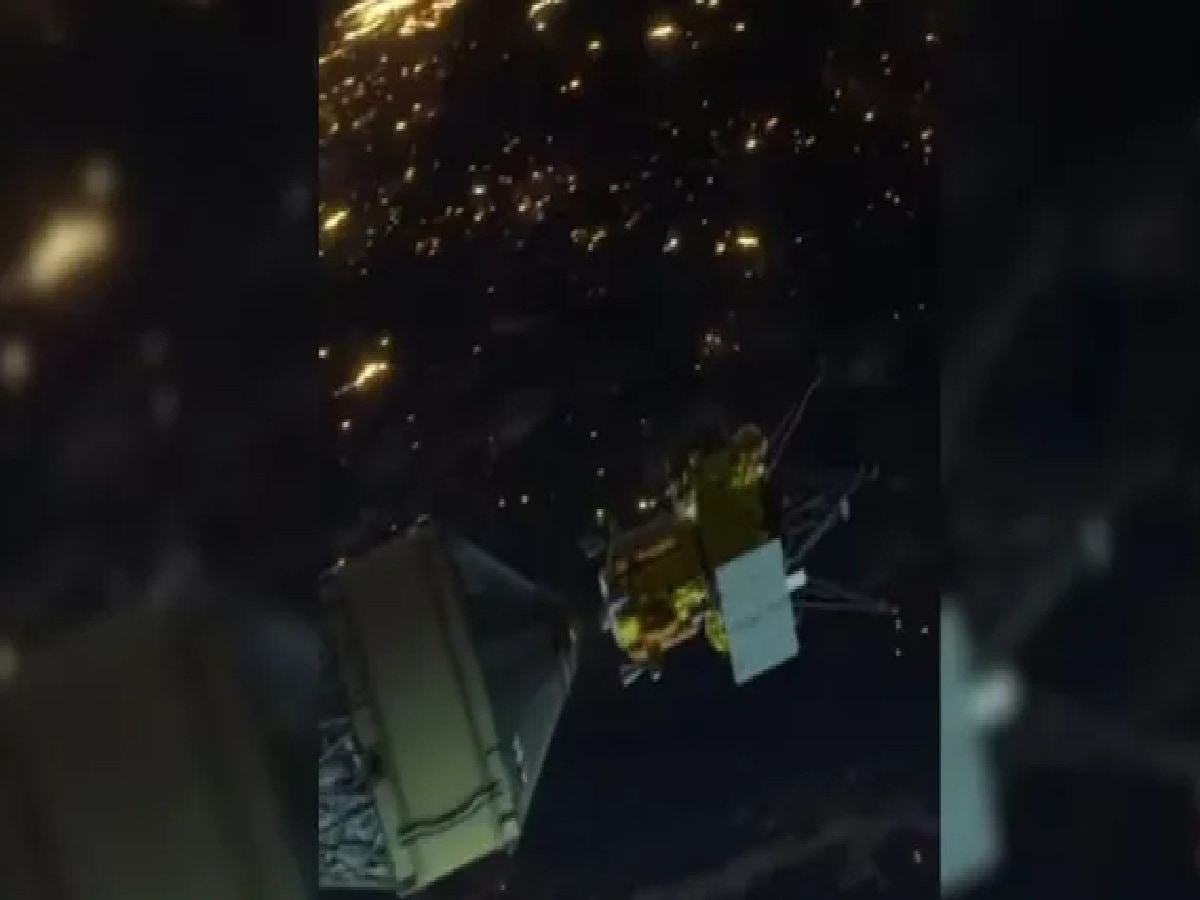
Japan Launches $578M Probe to Bring Phobos Soil to Earth by 2031
In an unprecedented leap for deep-space planetary science, the Japan Aerospace Exploration Agency (JAXA) successfully launched a landmark mission to Mars before dawn on Tuesday, October 20, 2026, setting out to explore the Red Planet's enigmatic moons and bring primordial extraterrestrial material back to Earth. Blasting off aboard an advanced launch vehicle from Japan’s primary spaceport at the Tanegashima Space Center, the ambitious Martian Moons Exploration (MMX) spacecraft commenced a five-year voyage supported by an elite coalition of five international space agencies. If the daring expedition proceeds as planned, pristine fragments of rock, regolith, and atmospheric dust scooped from the surface of Phobos—the larger and innermost of Mars’ two irregular satellites—will arrive on Earth by 2031, unlocking vital clues about the origins of the Martian system and the evolution of terrestrial planets across the solar system.
The $578-Million MMX Odyssey: Deploying the Idefix Rover on the Rugged Moon of Phobos
Weighing approximately five metric tons at liftoff, the $578 million MMX spacecraft is scheduled to complete its interplanetary cruise to Mars by late next summer, entering a synchronized orbit around the Red Planet before executing a delicate rendezvous with Phobos. A heavily cratered, potato-shaped celestial body measuring roughly 14 miles (22 kilometers) in diameter, Phobos presents unique gravitational challenges that the robotic mothership will navigate to deploy a specialized French-German micro-rover named Idefix, christened after the loyal canine companion from the iconic Asterix comic series. Once positioned on the alien surface, Idefix and the parent lander will execute multi-point autonomous surface operations, gathering soil samples from multiple depths to determine whether Mars' twin moons represent captured ancient asteroids or debris coalesced from a catastrophic cosmic impact early in planetary history.
A Historic First in Deep Space: How Japan’s Moon Retrieval Eclipses Past Mars Landings
While NASA has achieved nine successful rover and lander touchdowns on the Martian mainland over the last half-century and China completed its historic landing in 2021, no nation has ever attempted a landing on Phobos or Deimos, nor has any space agency successfully returned samples from the Martian neighborhood. Japan enters this complex mission with distinct operational expertise, having pioneered robotic asteroid sample returns through its celebrated Hayabusa missions to asteroids Itokawa and Ryugu. Emphasizing the profound global significance of the endeavor, NASA project astrophysicist Tom Statler underscored that the multinational partnership carries immense scientific anticipation, enthusiasm, and wonder for astronomers worldwide. By capturing and securing ancient Martian ejecta preserved undisturbed in the low-gravity vacuum of Phobos, the mission promises to supply global research laboratories with irreplaceable physical specimens that could revolutionize modern planetary astrophysics for decades to come.




