







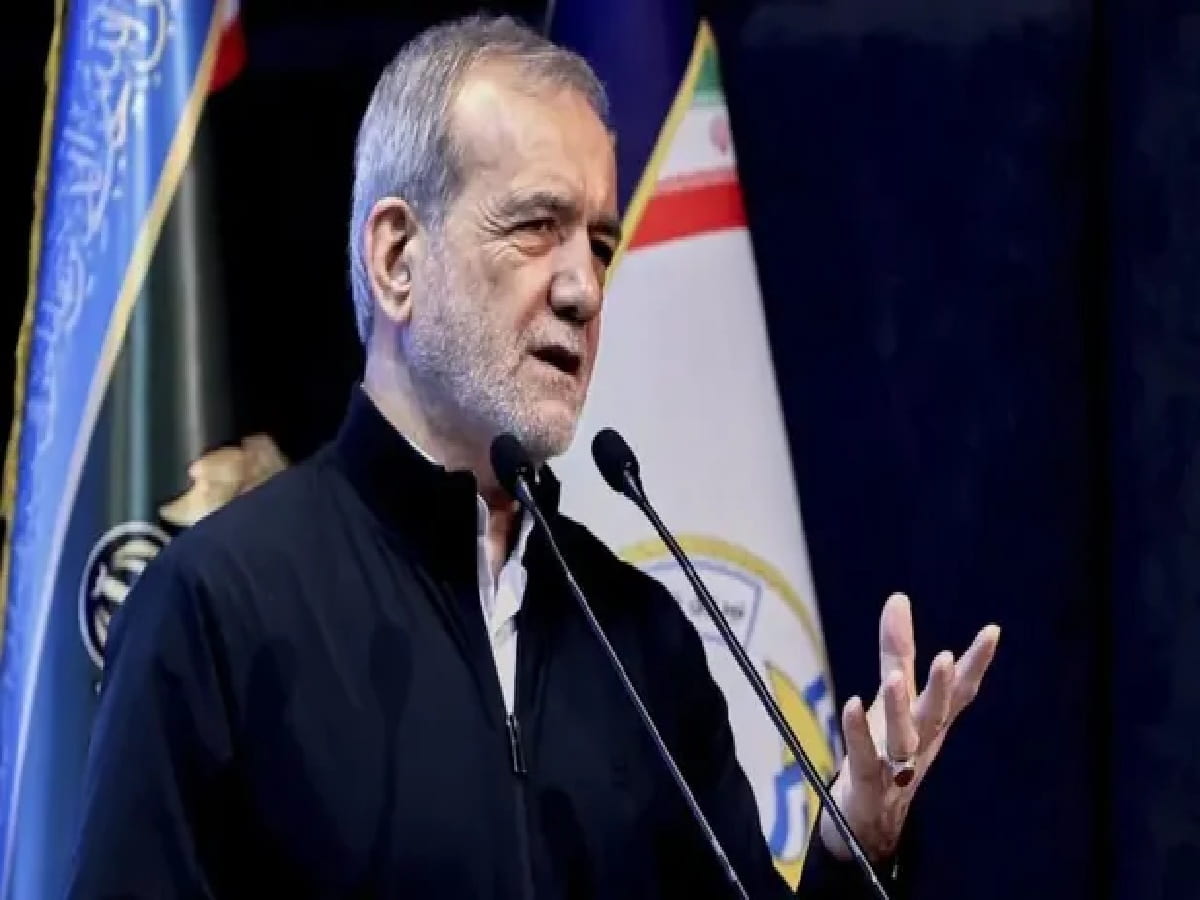
Iran Supreme Leader Empowers Pezeshkian for US Talks: Tehran Pitches 2-Day Plan
Iranian President Masoud Pezeshkian confirmed on Monday that Supreme Leader Mojtaba Khamenei has granted the civilian government specific executive authority to engage in indirect negotiations with the United States aimed at halting the protracted war across the Middle East. Speaking via state news agency IRNA, Pezeshkian stated that Tehran is actively pursuing diplomatic resolution through dialogue, with Iran’s Foreign Ministry confirming that structured messages are being continuously exchanged with Washington via intermediary channels. The authorization marks a major strategic shift in Tehran’s negotiating posture, signaling a high-level consensus within the Islamic Republic’s governing hierarchy to explore an off-ramp from escalating military confrontations that threaten global energy security and regional stability.
The Accelerated 2-Day Hormuz Reopening Framework and Tehran's Core Conditions
At the center of Tehran’s diplomatic push is an accelerated two-day operational blueprint to reopen the vital Strait of Hormuz and restart suspended nuclear negotiations with Washington, compressing an earlier stabilization proposal that was projected to take seven days. Iranian Foreign Ministry spokesperson Esmail Baghaei emphasized that this compressed timeline demonstrates Tehran’s constructive intent, though implementation remains strictly contingent on the United States meeting foundational Iranian security demands. Under the outlined framework, commercial vessels traversing the reopened international maritime corridor must navigate designated sea lanes charted between Iran and Oman while operating under Iranian maritime surveillance. In exchange, Tehran is demanding an immediate lifting of the US naval blockade on Iranian commercial ports, the removal of punitive economic sanctions choking Iranian petroleum exports, and the implementation of a comprehensive regional ceasefire that explicitly includes Lebanon.
Trump's Dual Posture, Escalating Yemen Crisis, and Beijing's Expanding Mediation
The diplomatic overture unfolds amid sharp crosscurrents in Washington, where US President Donald Trump has oscillated between public endorsements of diplomatic solutions and warnings of overwhelming kinetic strikes against Iranian targets. The urgency for de-escalation is underscored by a humanitarian catastrophe in Yemen, where the International Organization for Migration (IOM) reported that renewed fighting between Iran-aligned Houthi forces and the Saudi-backed coalition has displaced over 300,000 civilians, shattering a fragile four-year ceasefire. Concurrently, regional diplomacy is gaining momentum through China’s active mediation, following landmark talks in Beijing between President Xi Jinping and Oman's Sultan Haitham bin Tariq al-Said. Chinese Foreign Ministry spokesperson Mao Ning confirmed that Beijing is dispatching a special envoy across Iran, Oman, and Saudi Arabia in mid-November to reinforce regional de-escalation, backing Xi's assertion that the Persian Gulf must not be reduced to a battleground for major power confrontation.




