







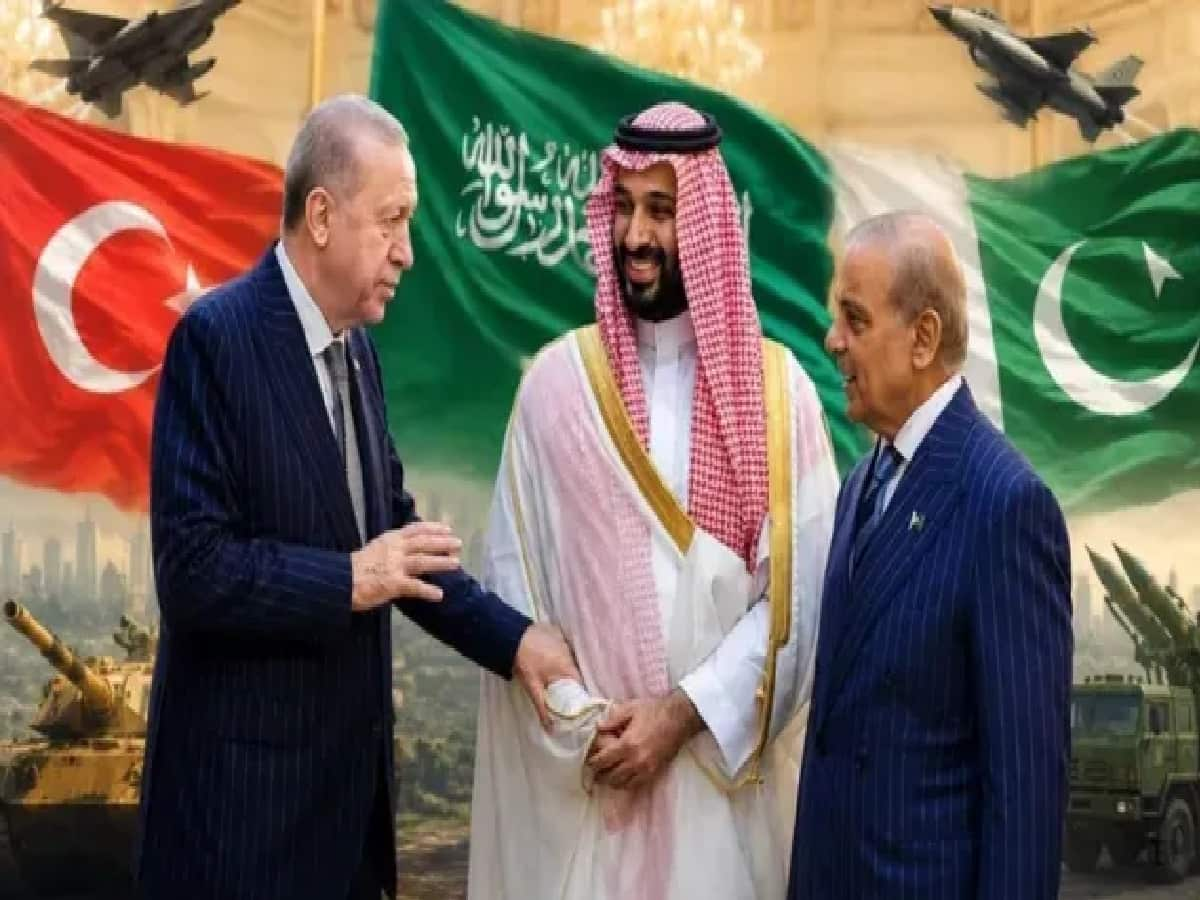
Inside Trilateral Makkah Defense Pact Between Pakistan, Saudi and Turkey
The full procedural draft of the landmark 16-article Makkah Joint Defense Agreement between Pakistan, Saudi Arabia, and Turkey has formally detailed the rigid legal parameters governing collective security, operational commitments, and withdrawal procedures among the three regional powers. According to the stipulations codified under Article 16 of the pact, all three member nations are legally bound to remain committed to the strategic alliance for an uninterrupted minimum duration of ten years once the treaty enters into force. Crucially, the tenure’s official countdown does not commence from the date of initial signature, but will officially take effect from the date each country’s final instrument of ratification is formally lodged with the coalition's permanent secretariat. Any member state contemplating an exit following the completion of the mandatory ten-year timeframe must submit a formal, written withdrawal notification at least three months in advance, establishing an institutional barrier against sudden diplomatic realignments.
Collective Defense Framework: Article 2 Mandate and Tailored Crisis Responses
At the operational core of the multilateral coalition lies a collective defense mechanism anchored in Article 2, which specifies that an armed assault carried out against any one member nation by a third country or allied coalition will be interpreted as an aggression requiring mutual mobilization. Under this clause, non-targeted member states are obligated to deploy immediate protective measures using all available defense mechanisms to neutralize hostile advances. However, rather than imposing an inflexible, uniform military response to every tactical emergency, the pact incorporates operational discretion that allows participating governments to calibrate their involvement based on the specific ground needs of the attacked partner and the availability of their own national military assets. This functional autonomy guarantees that while solidarity remains mandatory, the scale, deployment doctrine, and nature of intervention are determined through real-time strategic assessments during regional conflicts.
Parliament Approval in Ankara and Divergent Frontline Roles Amid Houthi Escalation
The trilateral treaty—originally inked in Mecca on August 7 by Turkish President Recep Tayyip Erdogan, Saudi Crown Prince Mohammed bin Salman, and Pakistani Prime Minister Shehbaz Sharif—has now been tabled before the Turkish Grand National Assembly for legislative ratification. This legislative push coincides with an immediate trial by fire for the alliance, driven by persistent drone and ballistic missile strikes directed at Saudi infrastructure by Yemen’s Houthi movement. In emergency talks convened in Riyadh to accelerate crisis deployments, the three partners outlined complementary, yet differentiated, frontline contributions. Pakistani military spokesperson Lieutenant General Ahmed Sharif Chaudhry affirmed that Islamabad is providing comprehensive defense assistance to safeguard Saudi territorial integrity, describing the protection of Islam’s holiest shrines in Mecca and Medina as an absolute, non-negotiable priority for Pakistan's armed forces. Conversely, Turkish Foreign Minister Hakan Fidan drew a clear operational boundary, clarifying that Ankara’s commitment centers strictly on advanced military equipment, defense manufacturing, intelligence sharing, and precision weapons systems, ruling out any offensive cross-border troop deployments in order to preserve the treaty's mandate as a defensive shield.




