India Dismantles Pakistan at UN, Enforcing Three Red Lines and Indus Water Treaty Freeze
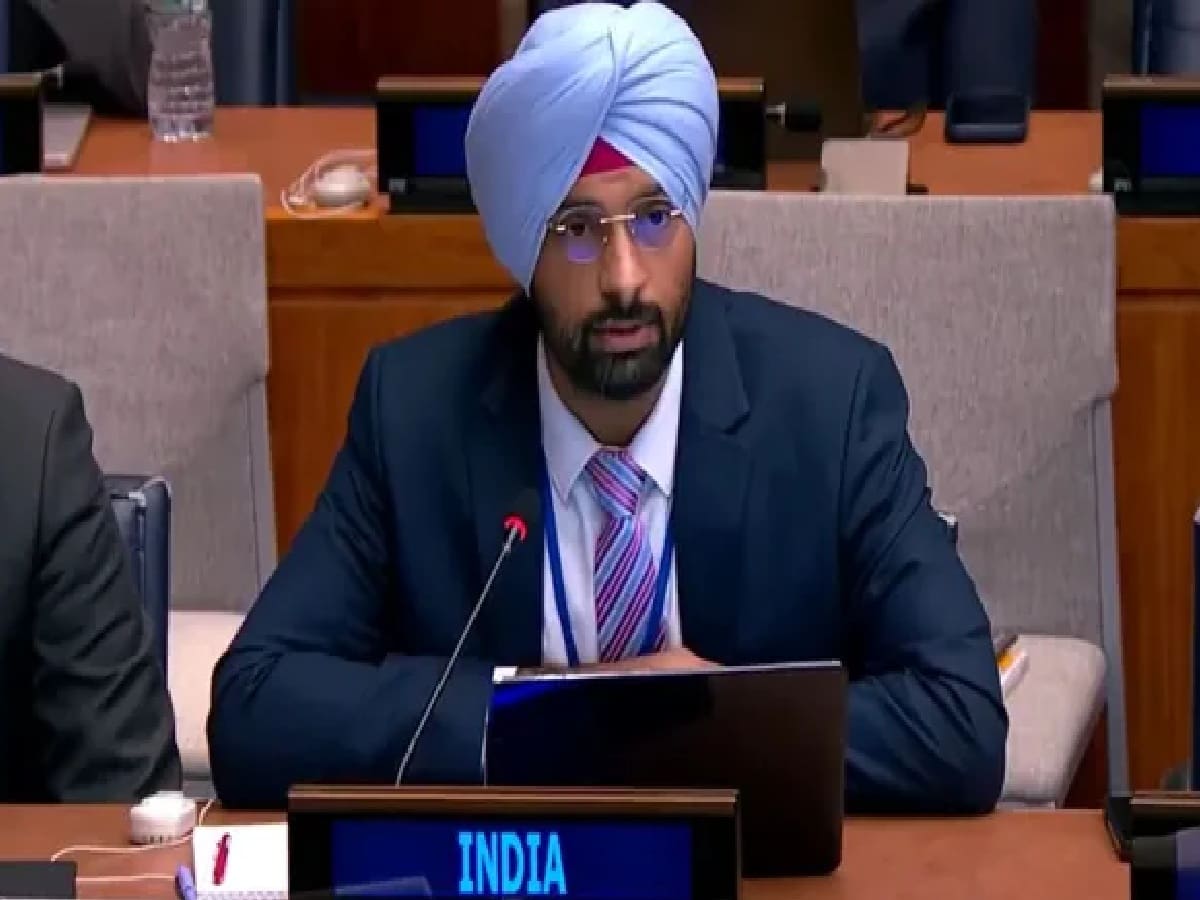
Delivering a blistering rebuke at the United Nations General Assembly's First Committee in Geneva, India rejected Pakistan's recurring nuclear saber-rattling, declaring that atomic arsenals cannot be leveraged as everyday diplomatic bargaining chips. Exercising India's Right of Reply, Senior Adviser Anmol Sher Singh Bedi asserted that New Delhi will never succumb to coercion or nuclear intimidation, underscoring that India’s strategic capabilities remain strictly defensive and anchored to its sovereign security parameters. Rebuffing Islamabad's attempts to rake up the Jammu and Kashmir dispute on multilateral platforms, the Indian delegation reiterated that the entire territory of Jammu and Kashmir remains an inalienable, sovereign part of India, calling for the immediate vacation of Indian territories currently under illegal Pakistani occupation and reminding the chamber that genuine regional peace is impossible without holding irresponsible actors to account.
Exposing Islamabad's Deception Playbook and India's Three Non-Negotiable Red Lines
Dismantling Pakistan’s traditional cross-border tactics, India laid bare a calculated cycle of engineered crises that follows a predictable pattern: unprovoked terror provocations, official denials of state culpability, and desperate international appeals for mutual restraint the moment Indian defense forces deliver a punitive counter-strike. Emphasizing that state sponsorship of proxy non-state actors does not grant diplomatic immunity from retaliation, India affirmed its absolute right to sovereign self-defense under international law. Outlining its foundational security doctrine, New Delhi articulated three non-negotiable red lines: any cross-border terror strike will invite a decisive, kinetic counter-response; India will never yield to atomic intimidation; and no distinction will be drawn between operational terror operatives and the sovereign entities that finance, harbor, and direct them.
Retaliation via Operation Sindoor and the Indus Water Treaty Standoff
Addressing historical retaliatory benchmarks, India cited Operation Sindoor—launched as a calibrated, non-provocative act of self-defense following the heinous killing of 26 innocent civilians in the Pahalgam terror attack. Highlighting the legal architecture of the Indus Water Treaty, the Indian delegation made it clear that the historic transboundary water accord rests entirely on the foundational pillars of mutual goodwill and mutual trust. Consequently, India confirmed that the treaty will remain firmly suspended until Pakistan decisively, verifiably, and permanently dismantles its state-sponsored cross-border terrorism infrastructure, noting that uninterrupted water cooperation cannot coexist with persistent cross-border bloodshed.
Global Proliferation Alarm and the Perilous Legacy of the A.Q. Khan Network
India closed its intervention with an urgent international security advisory regarding the catastrophic risks of illicit nuclear proliferation, directly citing the notorious clandestine network founded by Pakistani metallurgist A.Q. Khan, which historically compromised global safety by funneling black-market nuclear blueprints and sensitive enrichment tech across rogue regimes. India called on all responsible global stakeholders to enforce the highest levels of export controls and vigilance over advanced armaments and dual-use nuclear technology transfers, warning that preventing proliferation leakages is an imperative not just for South Asian stability, but for the collective security of the civilized world.