







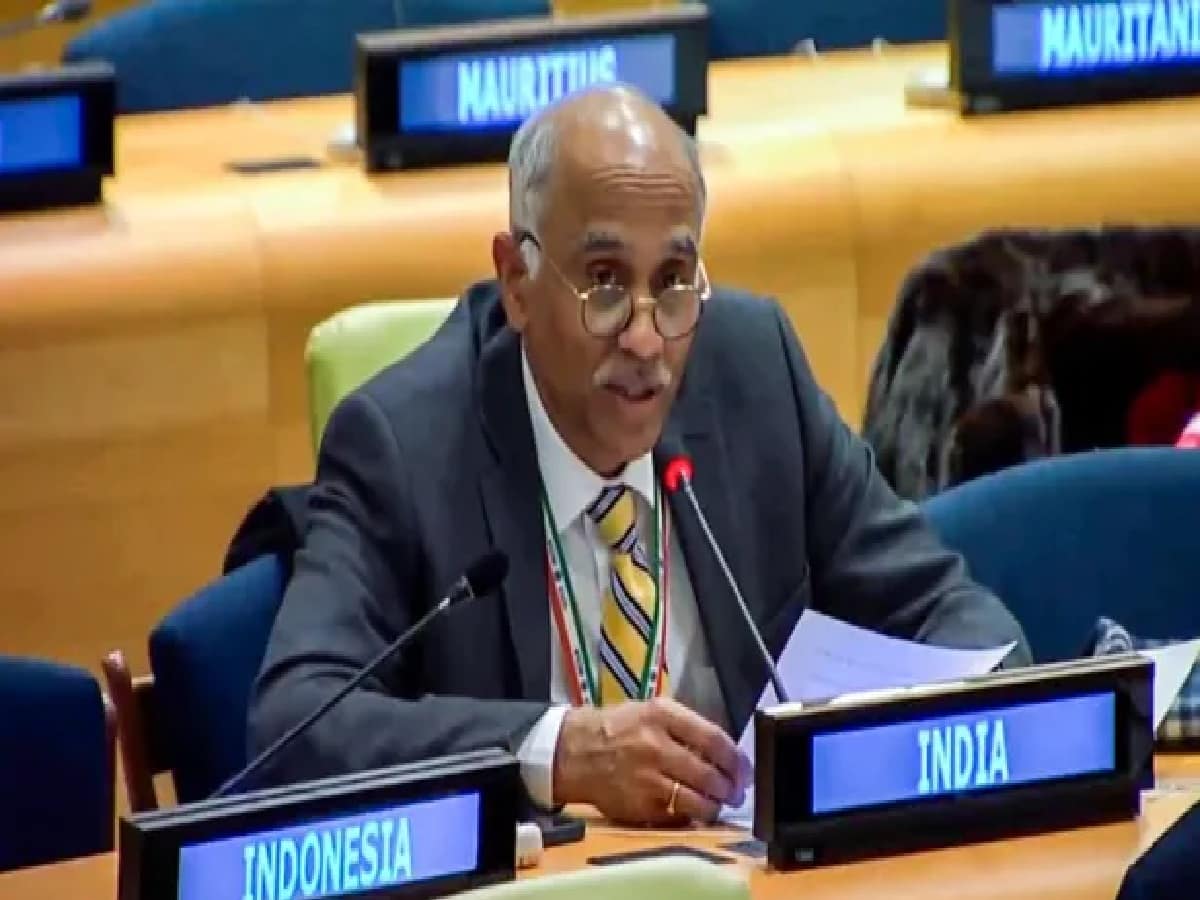
India Demands Immediate UNSC Overhaul, Slams 80-Year-Old War Monopoly
In a hard-hitting address at the United Nations General Assembly in New York, India made a resounding call for urgent and comprehensive reforms to the United Nations Security Council (UNSC), warning that the council's rigid, 80-year-old post-war architecture is increasingly paralyzed and failing to resolve the modern world's most catastrophic conflicts. Delivering India’s intervention on equitable representation and expansion of the Security Council, Ambassador Parvathaneni Harish, India’s Permanent Representative to the UN, declared that the geopolitical authority gained from battlefield victories eight decades ago cannot substitute for institutional legitimacy in the 21st century. Firmly asserting that global governance cannot remain tethered to the outcome of 1945, Harish used a striking metaphor to dismantle arguments favoring the existing framework, stating that while history teaches what to avoid, it cannot prescribe solutions for contemporary crises, and the international community cannot navigate toward the future by remaining fixated on the rearview mirror.
Historical Injustice, Wartime Sacrifices, and the Underrepresented 60%
Ambassador Harish underscored the deep historical contradictions embedded within the United Nations, noting that an international body constructed exclusively "of victors, by victors, and for victors" systematically ignored the voices and sacrifices of the colonized victims who bore the brunt of those conflicts. Reminding the assembly of India’s monumental contribution to the Allied cause, the envoy highlighted that roughly 2.5 million Indian soldiers took up arms during World War II, with nearly 90,000 laying down their lives, while millions of civilians perished in catastrophes like the wartime Bengal famine driven by colonial policies. Harish pointed to the glaring geographic deficit at the high table, where the Asia-Pacific region houses more than 60 percent of humanity yet possesses only a single permanent seat with veto power, while continents like Africa and Latin America remain entirely unrepresented in the permanent category, reiterating that reform is not an exercise in reviving historical grievances, but a necessary investment in building an inclusive institution the entire world can trust.
Expanding Permanent Benches: Rejecting Cosmetic Fixes and Two-Tier Compromises
Taking aim at the glacial pace of the Intergovernmental Negotiations (IGN) on Security Council reform, the Indian representative criticized ongoing deliberations as little more than procedural exercises engineered to preserve the existing status quo. Emphasizing that finding minimum common ground cannot serve as an alibi for minor cosmetic adjustments to elected non-permanent seats, Harish reiterated India’s firm stance that genuine revitalization mandates an expansion across both permanent and non-permanent tiers to correct foundational power imbalances. Addressing contentious discussions surrounding the veto mechanism, India cautioned member states against settling for half-measures that create a diluted, "two-tier" permanent membership structure, warning that denying equal veto powers to incoming permanent members would merely codify institutional discrimination and entrench inequality within the apex global decision-making body.




