







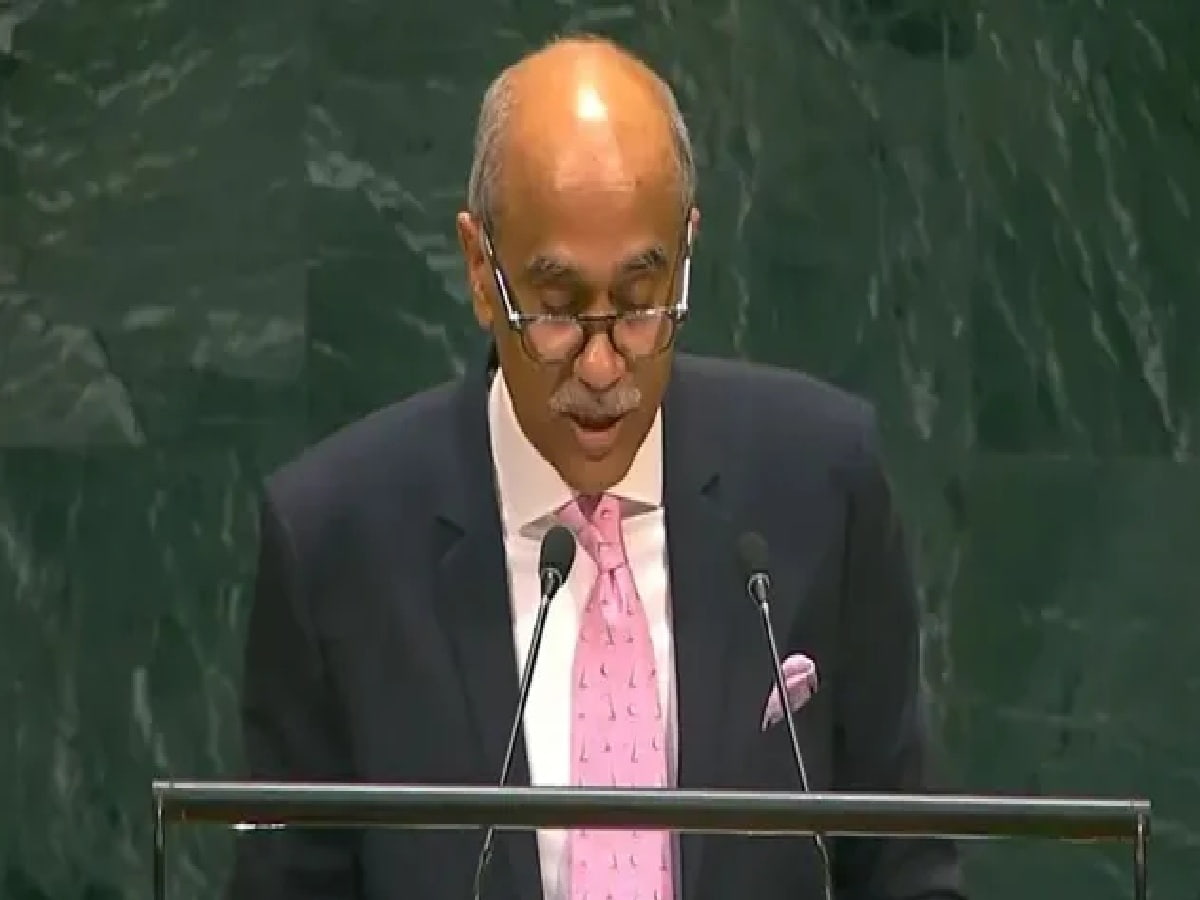
India Demands Comprehensive UNSC Overhaul and Exposes 'Hidden Veto'
Reiterating its longstanding push for equitable multilateral governance, India delivered a firm and unequivocal statement before the United Nations, asserting that the veto power wielded by the five permanent members (P5) of the UN Security Council must never be reduced to an instrument for serving narrow political ends. Presenting India’s foundational stance during high-level deliberations on global security architecture on Tuesday, October 27, 2026, India's Permanent Representative to the United Nations, Parvathaneni Harish, underscored that the veto represents an onerous international responsibility rather than a personal entitlement. Reminding the world body that the veto was envisioned to safeguard collective security, Ambassador Harish emphasized that the mechanism demands the utmost self-restraint and must be applied strictly in alignment with the overarching principles of global stability, conflict resolution, and the rule of international law.
331 Historical Vetoes and the Cloaked Reality of the 'Hidden Veto'
Deconstructing the historical patterns of Security Council deliberations, the Indian envoy pointed out that disproportionate and partisan veto usage by a select few powers has steadily eroded the institutional credibility of the Security Council. Detailing historical records, Harish highlighted that the veto has been exercised 331 times across nearly 200 distinct draft resolutions throughout UN history. Emphasizing the lopsided nature of its contemporary application, he noted that over the past three and a half decades, two of the five permanent members have completely refrained from casting a veto, whereas the vast majority of actual vetoes and coercive veto threats have originated from the remaining three permanent members. Although procedural mechanisms were instituted in 2022 to enforce greater accountability by mandating General Assembly debates following each veto, India stated that subsequent veto usage proves these superficial measures remain fundamentally inadequate. Calling attention to covert obstructionism inside the Council, Ambassador Harish exposed the pervasive operation of the "hidden veto" or de facto undeclared veto, wherein unwritten consensus conventions in drafting presidential statements, issuing formal press releases, and sanctioning global terror entities allow a single member to indefinitely freeze critical decisions without providing transparent justifications.
Text-Based Negotiations and African Parity: Rejecting Second-Tier Permanent Seats
Insisting that isolating the veto question will fail to rectify the structural crisis paralyzing the world body, India demanded the immediate commencement of text-based negotiations operating under an official working draft and bound by a definitive timetable. The Indian envoy asserted that comprehensive reform must advance simultaneously across all five interlinked pillars established by the UN General Assembly: categories of membership, equitable regional representation, the size of an enlarged Council, its working methods, and the veto question. Strongly backing the Common African Position encapsulated in the Ezulwini Consensus, India asserted that genuine justice within an expanded Security Council requires that all permanent members—both long-standing and incoming—enjoy absolute equality in rights, duties, and institutional privileges. Ambassador Harish categorically rejected proposals to create second-tier or diluted permanent seats stripped of veto authority, warning that establishing second-class permanent tiers would merely codify historical imbalances and exacerbate systemic discrimination within the premier global decision-making body.




