







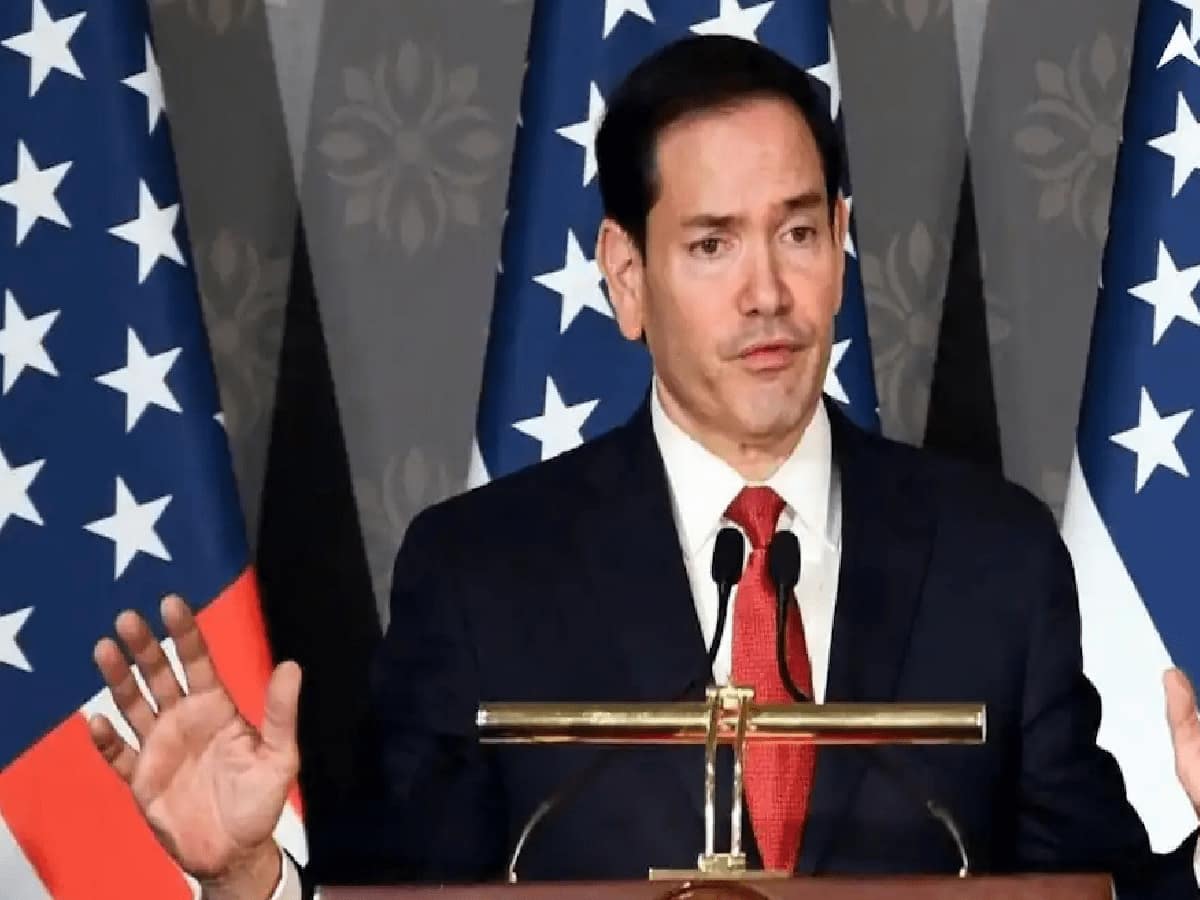
'India Cannot Change Overnight': Rubio Defends 60-Day Graham Act Sanctions Pause
Clarifying the diplomatic and economic rationale behind the White House's sudden retreat on punitive trade measures, US Secretary of State Marco Rubio confirmed that the Trump administration has instituted a strategic 60-day pause on sanctions enforcement under the newly passed Lindsey Graham Act. Speaking on Saturday prior to embarking on official diplomatic visits to Uzbekistan and India, Rubio stated that the moratorium was crucial to insulate international partners like New Delhi from immediate economic whiplash while assessing the compounding strain on global energy supply chains. Defending the waiver mechanism embedded within the legislation, Rubio underscored that imposing immediate 100 percent secondary tariffs on key Russian crude buyers would risk severe disruptions in global fuel markets, particularly as Washington coordinates domestic fuel stabilization efforts ahead of the crucial November 3 US midterm elections.
Chokepoints and Strikes: Why Global Energy Strain Forced a 60-Day Moratorium
The State Department’s decision to temporarily halt sanctions enforcement follows acute physical and logistical bottlenecks across international energy arteries:
-
Strait of Hormuz and Iran War Pressures: Rubio noted that prolonged military escalations with Iran and retaliatory tensions around the Strait of Hormuz have injected severe uncertainty into daily crude flows, tightening maritime insurance and shipping availability.
-
Houthi Attacks on Saudi Infrastructure: Repeated military strikes and drone assaults launched by Houthi forces targeting Saudi Arabian oil installations have placed excess pressure on Gulf output, heightening volatility across international spot markets.
-
Refinery Strikes in Eastern Europe: The ongoing war between Russia and Ukraine has witnessed direct strikes on critical downstream refineries, pipelines, and export terminals, shrinking the world's accessible refined product stockpiles.
-
Weighing the Cumulative Risk: Explaining the 60-day breather, Rubio remarked: "I think one of the reasons we included the exemption when this bill was passed was because it would take some time to study this issue. It's not just Iran or the Strait of Hormuz, but also the Houthi attacks on Saudi Arabia and the ongoing Ukraine-Russia war, where energy infrastructure is being targeted. You have to take all of these factors into account and weigh them."
The India Dilemma: Balancing 100% Tariff Powers Against Strategic Realities
Rubio addressed the sensitive question of secondary sanctions and potential 100 percent import penalties hanging over key allied nations:
-
Statutory Levers Under the Graham Act: Under the statutory framework of the Lindsey Graham Act, the US President holds sweeping authority to levy punitive tariffs of up to 100 percent against the top five sovereign buyers of Russian petroleum products, directly putting major economies like India and China in the crosshairs.
-
Acknowledging India's Voluntary Diversification: Defending New Delhi's transitional trade posture, Rubio explained: "Countries like India have voluntarily diversified their energy portfolio, but they are still buying a lot of energy from Russia, because it is difficult to make a complete change overnight."
-
Finding the Right Calibration: The Secretary of State maintained that the two-month operational pause provides Washington, New Delhi, and allied capitals the necessary runway to study supply flows, prevent sudden inflationary shocks in retail fuels, and agree on a calibrated roadmap rather than destabilizing bilateral ties.
The Russian Fuel Agreement: Securing 50 Million Tons of Diesel Ahead of Midterms
The foreign policy shift comes alongside domestic political and economic maneuvers designed to stabilize American consumer prices:
-
Tackling Domestic Inflation Before November 3: With the critical US midterm elections set for November 3, 2026, the Trump administration has prioritized lowering domestic pump prices for gasoline and diesel to ease cost-of-living anxieties across the American electorate.
-
The Bilateral Diesel Supply Accord: In a pragmatic commercial breakthrough last week, the administration formalized a supply arrangement with Moscow enabling the delivery of roughly 50 million tons of Russian-origin diesel to the United States and the broader international market over the coming months.
-
Pragmatism Over Ideology: Rubio's defense outlines an administration prioritizing short-term energy security and macroeconomic containment over blanket economic isolation, signaling that diplomatic engagements in New Delhi will center on energy security without the immediate threat of unilateral tariff sanctions.




