







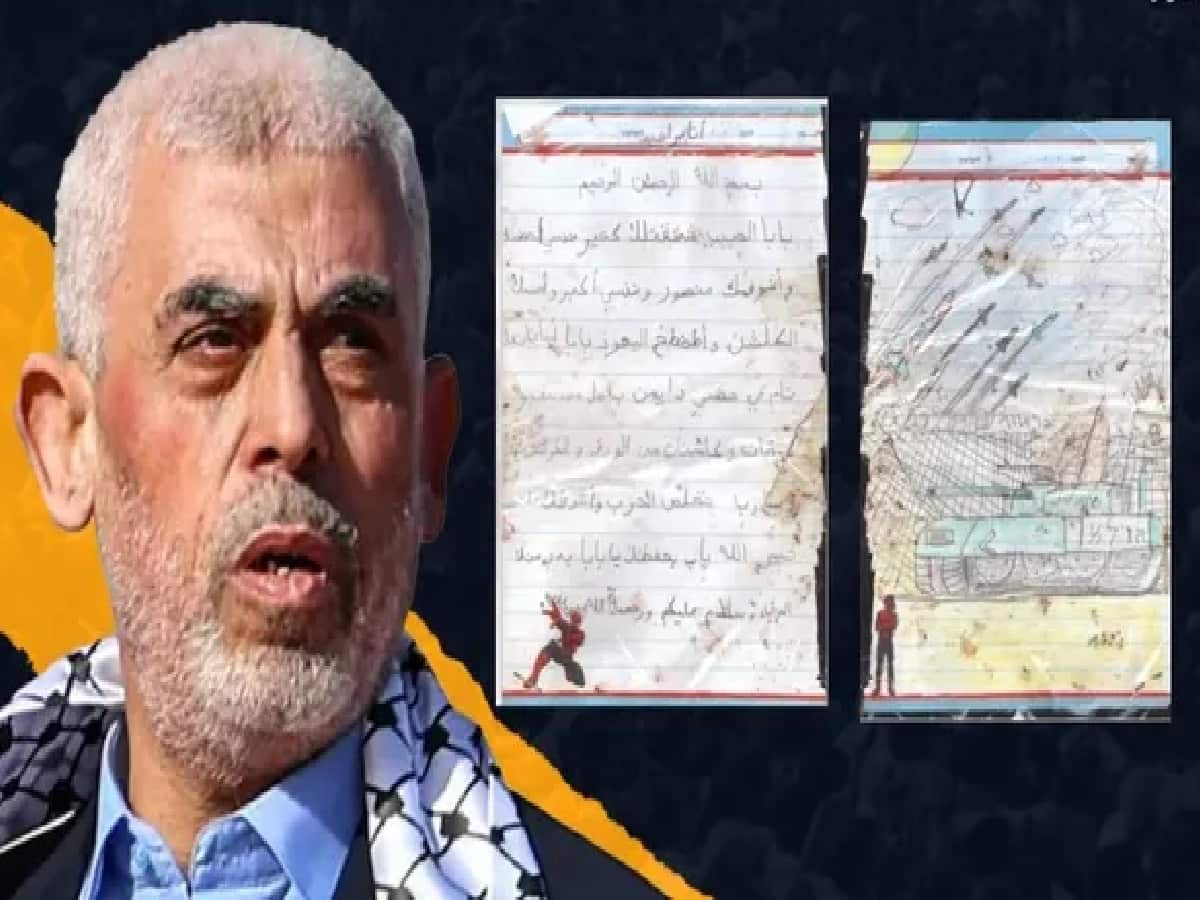
IDF Releases Alleged Letter and Drawings by Yahya Sinwar’s 10-Year-Old Son Recovered in Gaza
Military authorities in Tel Aviv have made public documents and hand-drawn illustrations allegedly recovered from the Gaza Strip, identifying them as personal correspondence penned by Ibrahim, the 10-year-old son of late Hamas political bureau chief Yahya Sinwar. According to statements released by the Israel Defense Forces (IDF), the artifacts were initially retrieved by ground troops operating in the enclave during 2024 and have now been officially declassified and shared publicly to mark two years since Yahya Sinwar's elimination. The handwritten manuscript, addressed directly from the young boy to his father during the opening phase of the conflict, captures a complex mixture of emotional distress over paternal separation alongside stark expressions of hostility and weaponized play.
Handwritten Notes and Sketches: Inside the Recovered Gaza Dossier
In the recovered text, the child recounts his day-to-day reality amid the upheaval of war, describing how he spent hours fashioning model pistols, tanks, and rifles out of discarded paper and cardboard, while writing about wanting to handle an AK-47 assault rifle in conflict against Israeli forces. Accompanying the written pages were several colored sketches allegedly drawn by the boy, portraying military hardware stationed along the Gaza-Israel border, armored tanks, and salvos of rockets being launched toward Israeli territory. Interwoven with the combat references were deeply personal sentiments directed at his father, with the child expressing a heartfelt desire for the fighting to end, asking for his father's prayers, and writing of his wish to be reunited, embraced, and safe together again.
Competing Narratives on Wartime Trauma and Child Indoctrination
Presenting the recovered records as part of a public briefing, the Israeli military characterized the materials as documented proof of the pervasive ideological indoctrination influencing youth growing up under Hamas authority in the coastal strip. Military spokespersons stated that the presence of combat imagery and militant language in a young child's personal writings highlights how protracted regional conflict and extremist environments penetrate the early developmental psyche. The disclosure has renewed widespread debate over the severe psychological impact of sustained warfare on minors in conflict zones, pointing to how displacement, proximity to armed violence, and entrenched political rhetoric shape the formative experiences of children across the region.




