Himalayan Glacier Crisis: Pollution And Black Carbon Layers Threaten Massive Disasters Across The Region
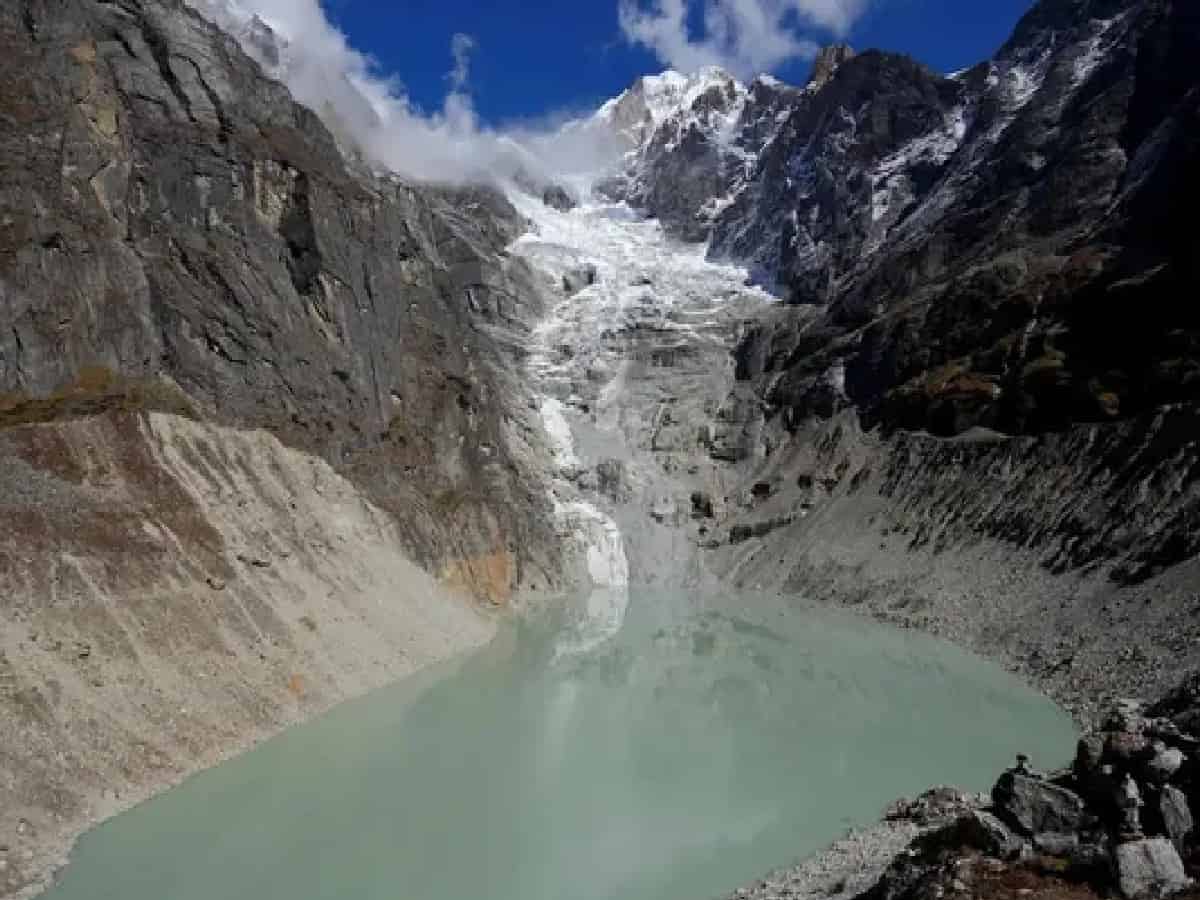
The majestic Himalayan mountain ranges, once renowned for their pristine white snowpacks and massive, unblemished ice reserves, are now facing an unprecedented ecological threat. Environmental scientists and geophysics experts have raised serious red flags, revealing that airborne pollutants, industrial emissions from coal-fired power plants, and vehicular exhaust are blanketing glaciers with a dark, heat-absorbing layer of soot and black carbon. According to recent findings highlighted by major international publications like The New York Times, this accumulation of pollution is fundamentally altering the albedo effect of the mountains, driving alarming rates of glacial retreat and raising the specter of catastrophic flash floods across the region.
Clean alpine snow naturally reflects up to 90 percent of incoming solar radiation, keeping high-altitude environments stable. However, when microscopic particulate matter and black carbon settle on the snowpack, its reflectivity plummets. Instead of bouncing sunlight back into the atmosphere, the darkened surface absorbs significantly more heat. Marco Tedesco, a professor of geophysics at Columbia University's Lamont-Doherty Earth Observatory, noted that this phenomenon is placing immense strain on already thinning glaciers, creating a dangerous feedback loop of accelerated melting and structural destabilization.
The Physics Of Destruction: From Meltwater Tunnels To Catastrophic Collapses
The threat posed by air pollution extends far beyond surface melting; it actively compromises the internal integrity of massive ice formations. Research conducted by the Chinese Academy of Sciences estimated that South Asian black carbon emissions alone accounted for up to one-third of total glacier mass loss in the Himalayas over a dedicated study period. As surface ice melts rapidly under trapped solar heat, cascading meltwater begins to carve deep tunnels and fissures directly into the glacier's core. This internal plumbing destabilizes the entire ice mass, dramatically increasing the risk of sudden, catastrophic collapses and glacial lake outburst floods (GLOFs).
Abeera Sengupta, a researcher at the University of Otago in New Zealand, emphasized that without immediate, aggressive policy measures to curb regional and global air pollution, the structural damage to Himalayan ecosystems will escalate exponentially. Proving the direct correlation between atmospheric clarity and glacier preservation, a 2023 study by the Indian Institute of Tropical Meteorology utilized the 2020 COVID-19 lockdowns as a real-world natural experiment. The researchers discovered that temporary drops in industrial pollution successfully brightened the regional snowpack, curbing seasonal snowmelt by up to 40 percent and offering a clear blueprint for what proactive environmental controls can achieve.
'Himalayan Tsunami': Nepal Faces Unprecedented Devastation As Climate Realities Hit Home
The growing vulnerability of the Himalayas has transitioned from theoretical modeling to immediate humanitarian crisis, most recently underscored by catastrophic flooding along the Bhotekoshi river basin. Briefing international diplomats in Kathmandu, Nepal's Foreign Minister Shishir Khanal described the disaster as a "Himalayan tsunami," stressing that the nation has not witnessed destruction of this magnitude in recent history. While expressing profound gratitude for the rapid rescue and relief operations provided by neighboring countries and the global community, Khanal reiterated the urgent need for international accountability. Pointing out that major global economies bear a historic responsibility for soaring greenhouse gas emissions, Nepal continues to rally worldwide support to protect vulnerable mountain nations from the compounding threats of industrial pollution and climate change.