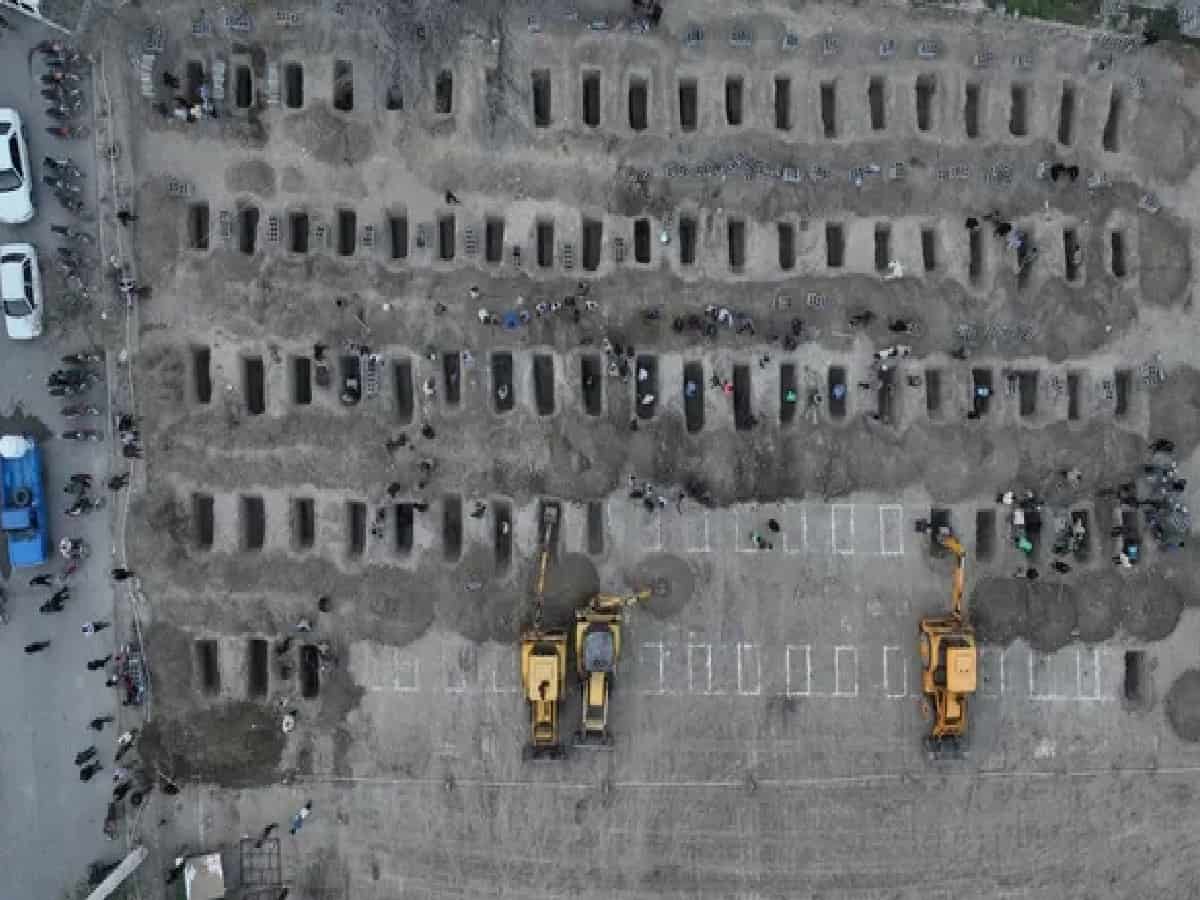
Flawed AI Kill Chain Kills 123 Iranian Children: Inside the US Military's Minab School Strike
A horrific civilian tragedy during a joint US-Israeli air campaign against Iran has exposed dangerous flaws in algorithm-driven warfare. Two Tomahawk cruise missiles struck the campus of Shajarah Tayyebeh Elementary School in the southern Iranian city of Minab, killing more than 150 people, including at least 123 children. While the site was formerly an Islamic Revolutionary Guard Corps (IRGC) naval compound, investigations by Bloomberg and international observers reveal that the devastating attack was the direct result of obsolete targeting data, severed intelligence pipelines, gutted oversight teams, and over-reliance on artificial intelligence in the military's automated "kill chain." The United Nations has formally categorized the catastrophe as a potential war crime, marking it as the deadliest child-casualty targeting failure by the US military in the 21st century.
Outdated Satellite Data and Siloed Military Intelligence
The school was added to an accelerated target list of more than 1,000 Iranian sites slated for destruction during the opening 24 hours of the conflict. US Central Command (CENTCOM) planners flagged the Minab location based on historical records designating it as an active IRGC facility. However, clear commercial and military satellite imagery dating back nearly a decade demonstrated that the parcel had been partitioned and converted into a fully functional educational institution. Perimeter walls separating the school from adjacent military plots were finished by 2017, and high-resolution overhead captures from 2018 clearly displayed bright playground markings, a football field, an assembly courtyard, and children's activity areas. Although intelligence analysts documented these structural modifications in 2019, the data was archived in an isolated system that never integrated into the primary joint targeting repository. Targeting officers consequently authorized the strike using seven-year-old overhead imagery that omitted the school entirely.
Maven Smart System and the Pitfalls of Automated Targeting
The accelerated targeting procedure relied heavily on the Maven Smart System, an artificial intelligence platform developed with Palantir Technologies. Maven synthesizes more than 150 operational data feeds to help commanders process reconnaissance, allocate munitions, and designate strike targets within minutes rather than the hours traditionally required by manual review teams. Operating under intense pressure to strike pre-emptively, military operators assumed the AI would automatically identify contradictions, flag outdated intelligence, and filter out non-combatant infrastructure. Instead, the algorithm processed the uncorrected, legacy IRGC designation, generating an automated recommendation to strike without cross-referencing updated civilian geography. In the aftermath of the disaster, software modifications were hastily introduced to re-examine legacy intelligence, catch conflicting records, and flag discrepancies bypassed during rapid operational reviews.
Gutted Civilian Harm Oversight and Accountability Vacuum
The tragedy in Minab was compounded by sweeping administrative cutbacks that dismantled institutional checks against non-combatant casualties. Defense Secretary Pete Hegseth reduced staffing within the Pentagon's Civilian Harm Mitigation and Response (CHMR) teams by nearly 90 percent, leaving fewer than 20 personnel across the department. Within CENTCOM, the dedicated civilian harm review desk was downsized from ten specialists to a solitary officer. Because independent civilian-protection assessments were not legally mandatory, the Minab site was approved without specialized human review. A United Nations inquiry concluded there are reasonable grounds to classify the strike as a war crime, ruling that the failure to verify the elementary school before releasing guided munitions went far beyond simple negligence.