







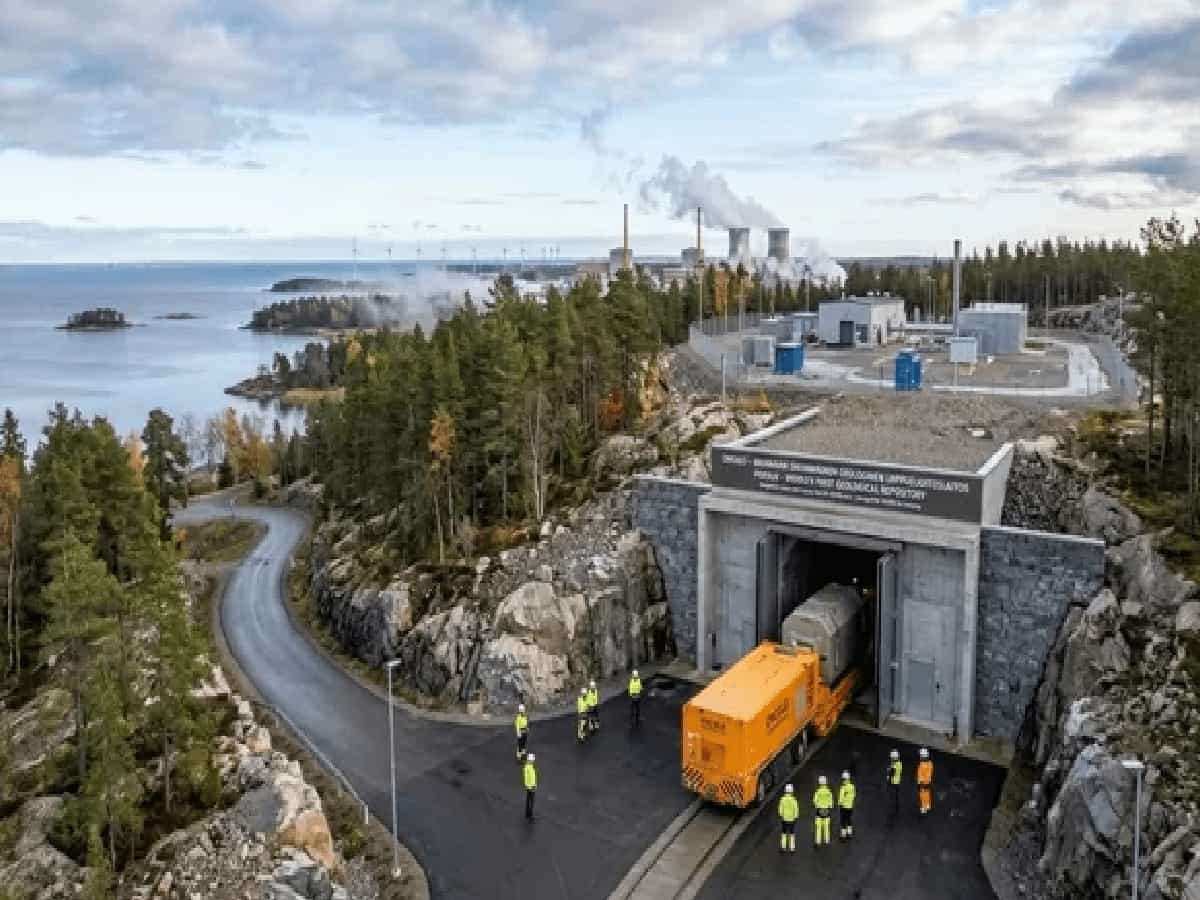
Finland's 100,000-Year Onkalo Repository Secures Historic Operating License
Marking a historic milestone for global clean energy infrastructure, Finland has officially become the first nation in the world to authorize a permanent deep geological repository for spent nuclear fuel. Following decades of rigorous geotechnical evaluations, geological pressure assessments, and comprehensive environmental impact audits, Finnish regulatory authorities have granted an official operating license to the Onkalo disposal facility. Until now, every nuclear-powered nation across the globe has stored hazardous radioactive byproducts in interim, surface-level pools or above-ground dry casks subject to ongoing maintenance and environmental vulnerability. Located on the island of Olkiluoto, the pioneering subterranean complex provides a permanent terminal solution engineered to isolate high-level nuclear fuel from the biosphere for at least 100,000 years without risking radiation leakage.
The Onkalo Subterranean Architecture: Engineering a 6,500-Ton Bedrock Sanctuary
Conceived and initiated over twenty-two years ago, the Onkalo project resolves one of commercial nuclear power's greatest operational dilemmas:
-
Two Decades of Bedrock Excavation: Carved more than 400 meters deep into stable two-billion-year-old crystalline bedrock, Onkalo's subterranean tunnel network has been undergoing structural testing and expansion since initial excavation began in 2004.
-
National Fleet Capacity: The subterranean installation is engineered to accommodate all high-level radioactive waste generated across Finland's five commercial nuclear reactors, possessing a total entombment capacity of roughly 6,500 tons of uranium.
-
Transition from Interim Storage: The operational licensing establishes a global regulatory benchmark, demonstrating that permanent geological isolation can replace temporary dry-storage vaults that demand perpetual human surveillance.
The Multi-Barrier Sealing Protocol: Rust-Proof Copper, Bentonite Clay, and Concrete
Ensuring zero radiological risk over millennia relies on a sophisticated multi-barrier containment methodology:
-
Corrosion-Resistant Copper Canisters: Spent fuel assemblies are first packed into specialized, thick-walled copper canisters designed specifically to withstand groundwater chemical erosion and oxidation for hundreds of millennia.
-
Bentonite Clay Buffer: Each canister is placed vertically into designated bedrock deposition holes lined with swelling bentonite clay, an impermeable soil barrier that absorbs incoming moisture, cushions against seismic shifts, and seals fractures.
-
Permanent Concrete Sealing: Once loaded, access tunnels are completely backfilled with structural clay blocks and sealed off with heavy reinforced concrete plugs, locking the radioactive materials hundreds of meters below the Earth's surface.
-
The 100,000-Year Decay Horizon: Nuclear engineers calculate that over a span of 100,000 years, the radioactive decay of the encapsulated isotopes will diminish exponentially, eventually dropping to ambient background radiation levels equivalent to naturally occurring uranium ore deposits.
Global Disposal Paradigms: India's Closed Fuel Cycle vs. Permanent Geological Entombment
The commissioning of Onkalo highlights sharply contrasting international strategies for managing spent atomic resources:
-
India's Three-Stage Closed Nuclear Cycle: Unlike nations relying on direct once-through geological burial, India operates 24 active nuclear reactors under a comprehensive closed fuel cycle framework where spent fuel is not simply treated as final waste.
-
Fuel Reprocessing and Resource Recovery: India reprocesses spent fuel to recover unspent uranium and plutonium to power Fast Breeder Reactors (FBRs), dramatically reducing the final volume of high-level waste before the vitrified remainder is consigned to deep geological storage.
-
The Looming Cost of Decommissioning: Safely shutting down obsolete reactors and securing radioactive legacies demands billions of dollars in specialized engineering; global safety failures, such as the 1986 Chernobyl disaster, underscore that regulatory transparency and robust long-term monitoring remain non-negotiable.
-
Global Reactor Decommissioning Tally: The United States leads the world in shut-down nuclear units with over 40 decommissioned reactors, followed closely by the United Kingdom with 36, Japan with 24, France with 15, and Russia with 11 retired commercial installations.




